Why this works
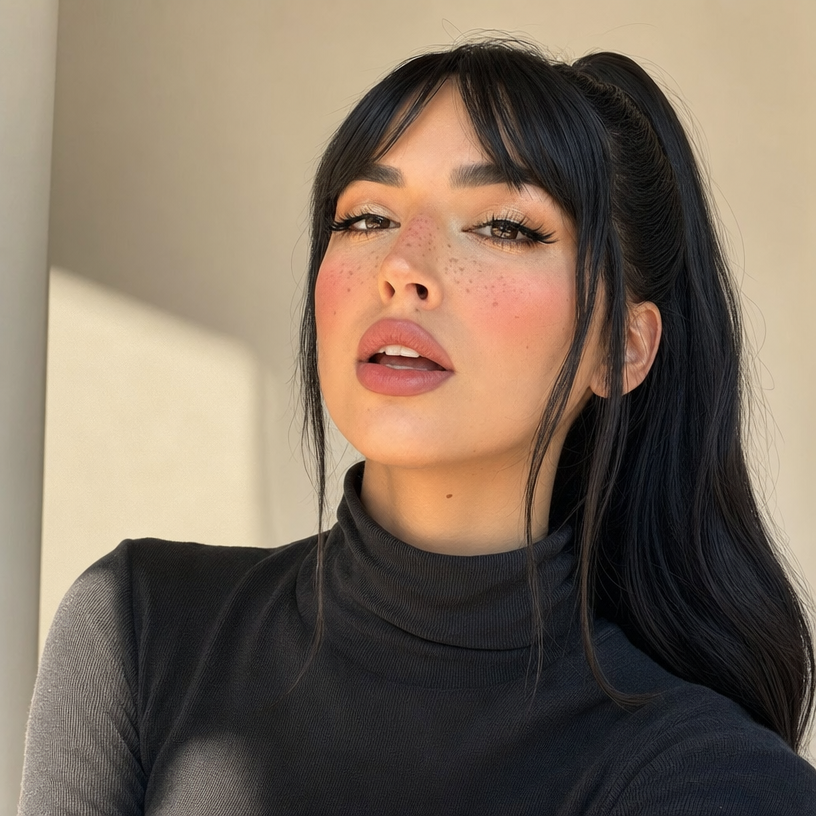
The warm, cohesive color story comes straight from naming specific pigments rather than general terms: 'minimalist bronze eyeliner and warm gold eyeshadow,' 'soft mauve matte lips,' and 'warm peachy blush' all sit in the same tonal family as the 'rich deep bronzed skin,' so nothing fights for attention. 'Diffused natural window lighting creating gentle shadows' is what gives the skin its soft, dimensional glow instead of flattening it, and that phrase is doing more work for the mood than the color palette itself. The 'high-neck charcoal ribbed turtleneck' against a 'soft cream background' sets up the black-and-neutral frame that lets the black hair and makeup read as bold without visual clutter, and 'close-up beauty shot with sharp focus' is what forces every one of those small details, like the 'light freckling' and 'subtle silver thread woven through strands,' to actually register instead of getting lost.
Learn the technique behind this
- Why can't AI spell, and how do I get readable text in an image? — Older diffusion models had no character-level representation of text, so they produced letterform-shaped texture instead of words.
- How should a prompt be structured, and does word order matter? — A prompt that behaves predictably names one subject first, then what it is doing, then where, then the light, then the lens or medium, then the style.
- Why does AI get hands and faces wrong, and how do I fix it? — Hands fail because they're small in frame, extremely variable in pose, and self-occluding — the model has less usable signal per pixel than for any other body part.
Related prompts
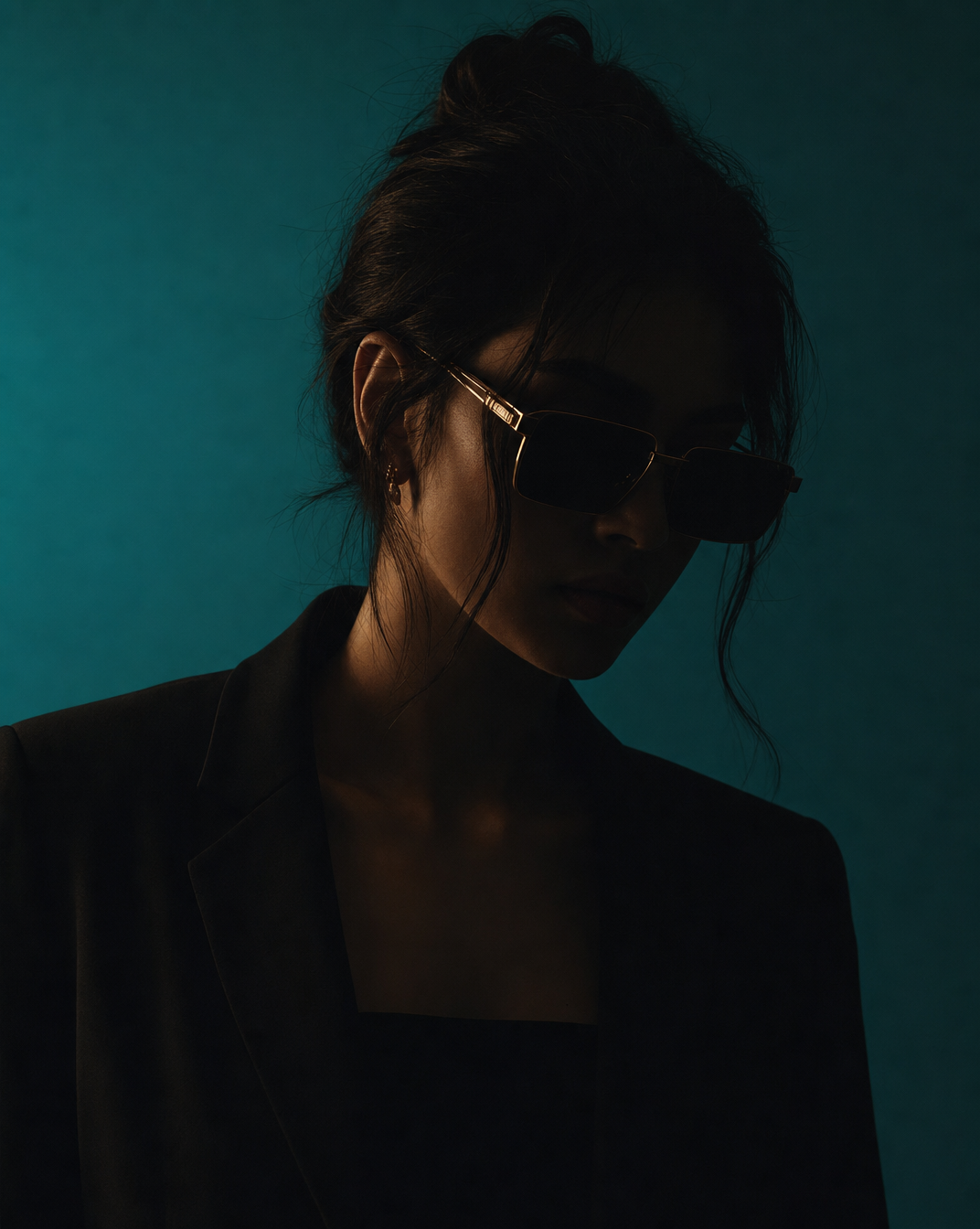
Woman in Teal Light, Shadowed Fashion Portrait
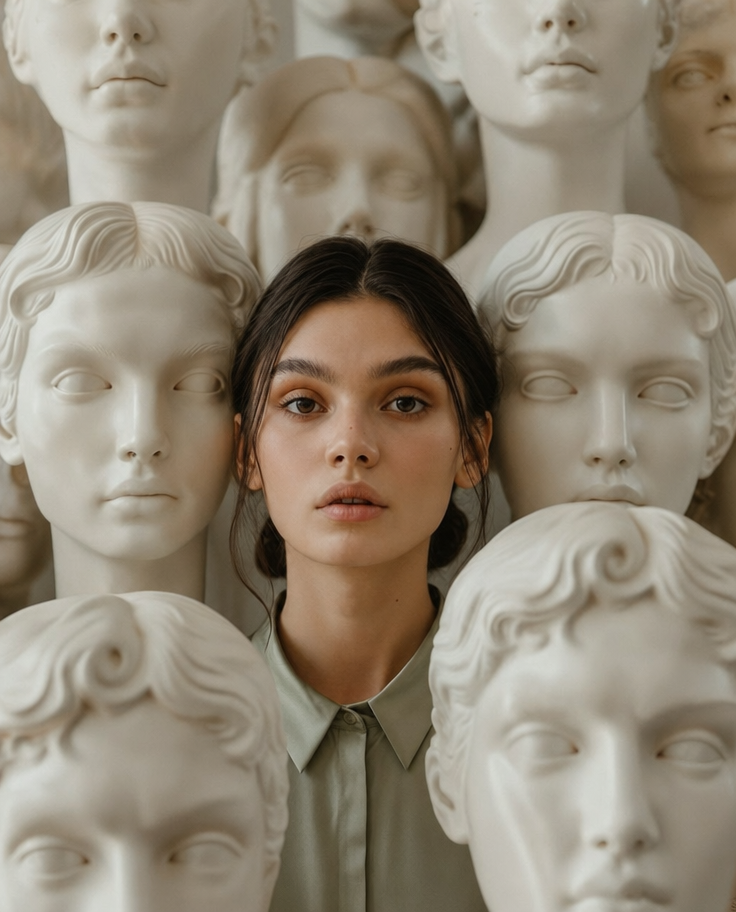
Eerie Elegance Among Marble Busts
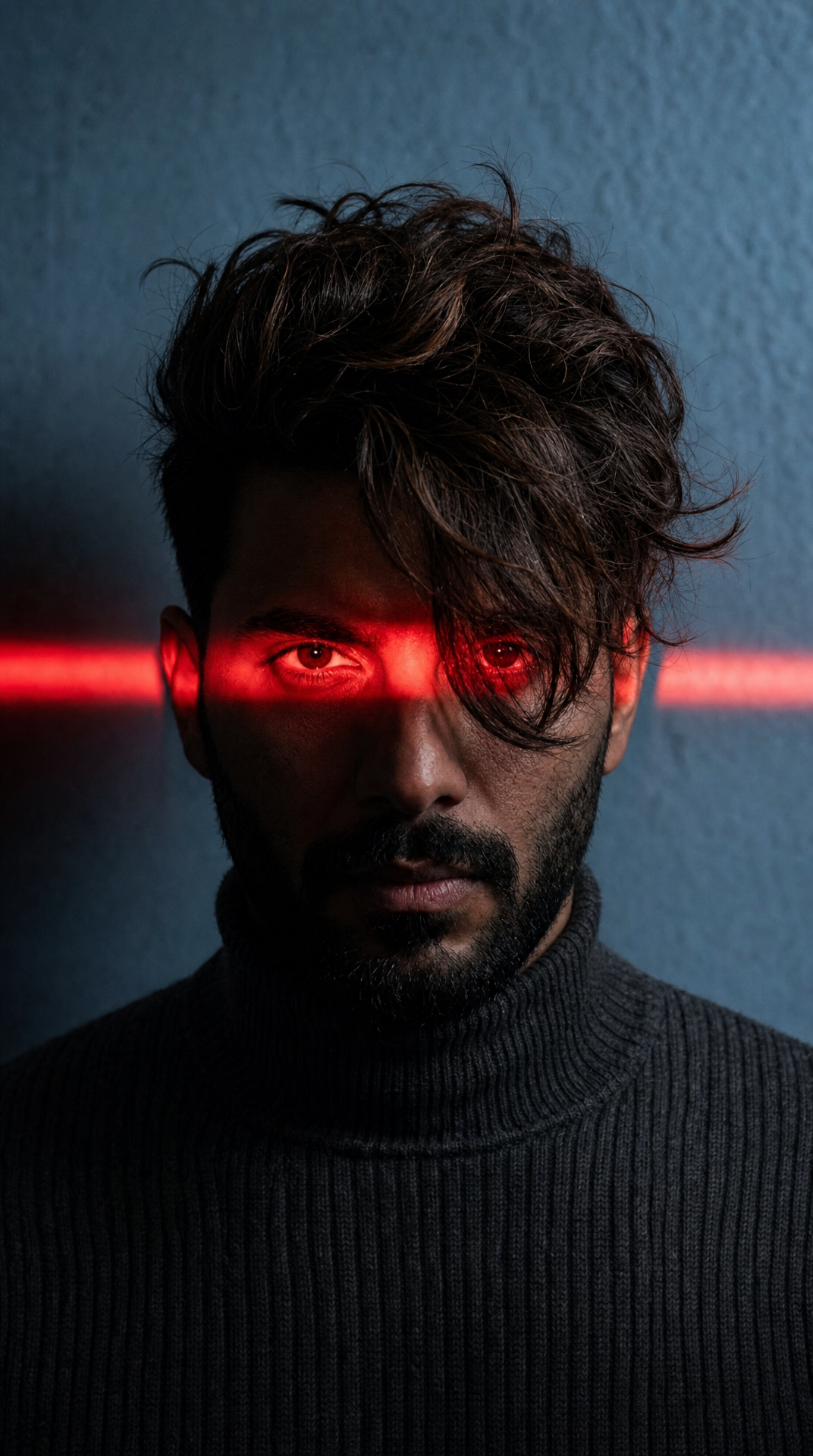
Charcoal turtleneck with red eye-beam
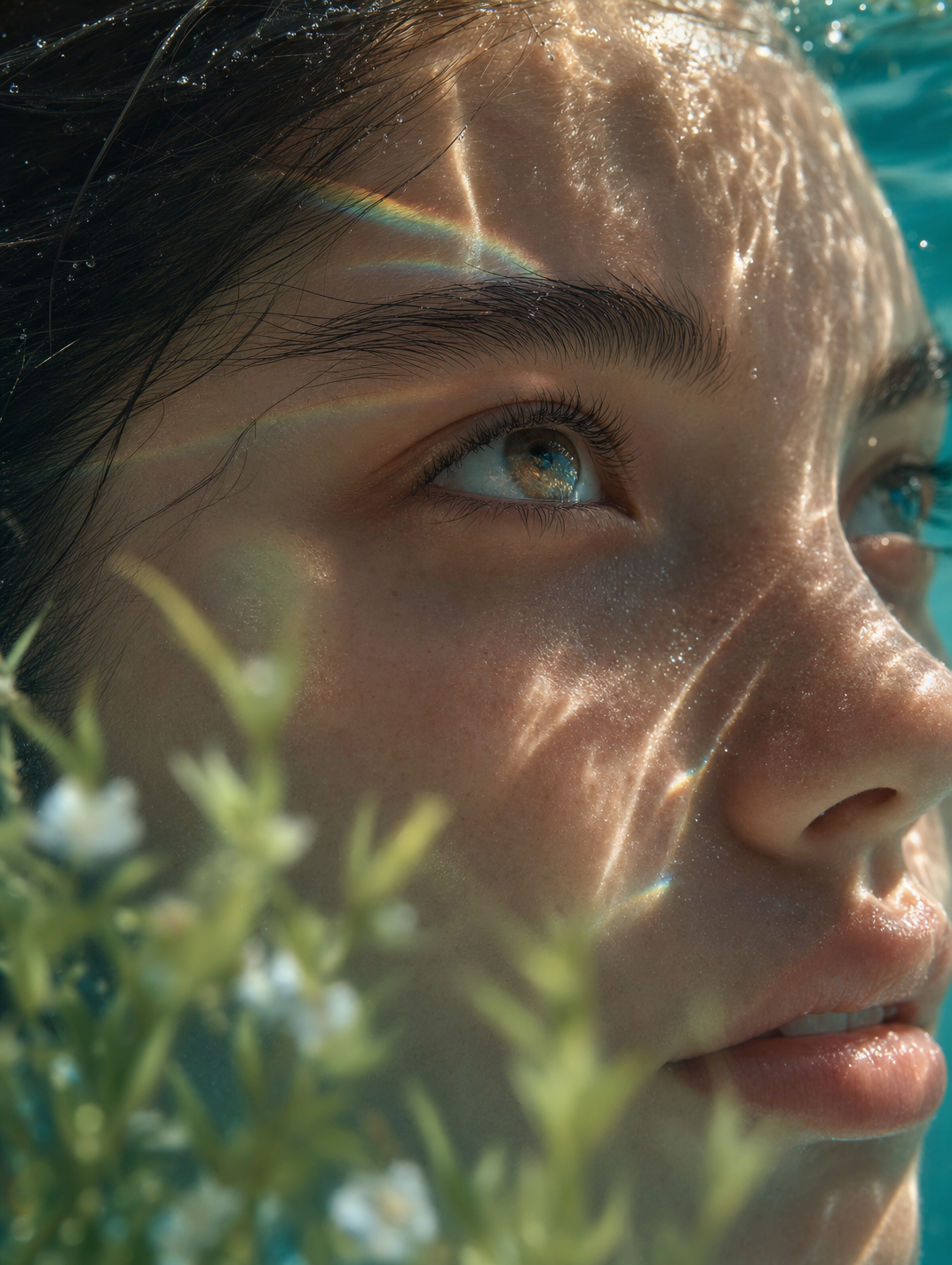
Dreamy Macro Portrait in Cool Water