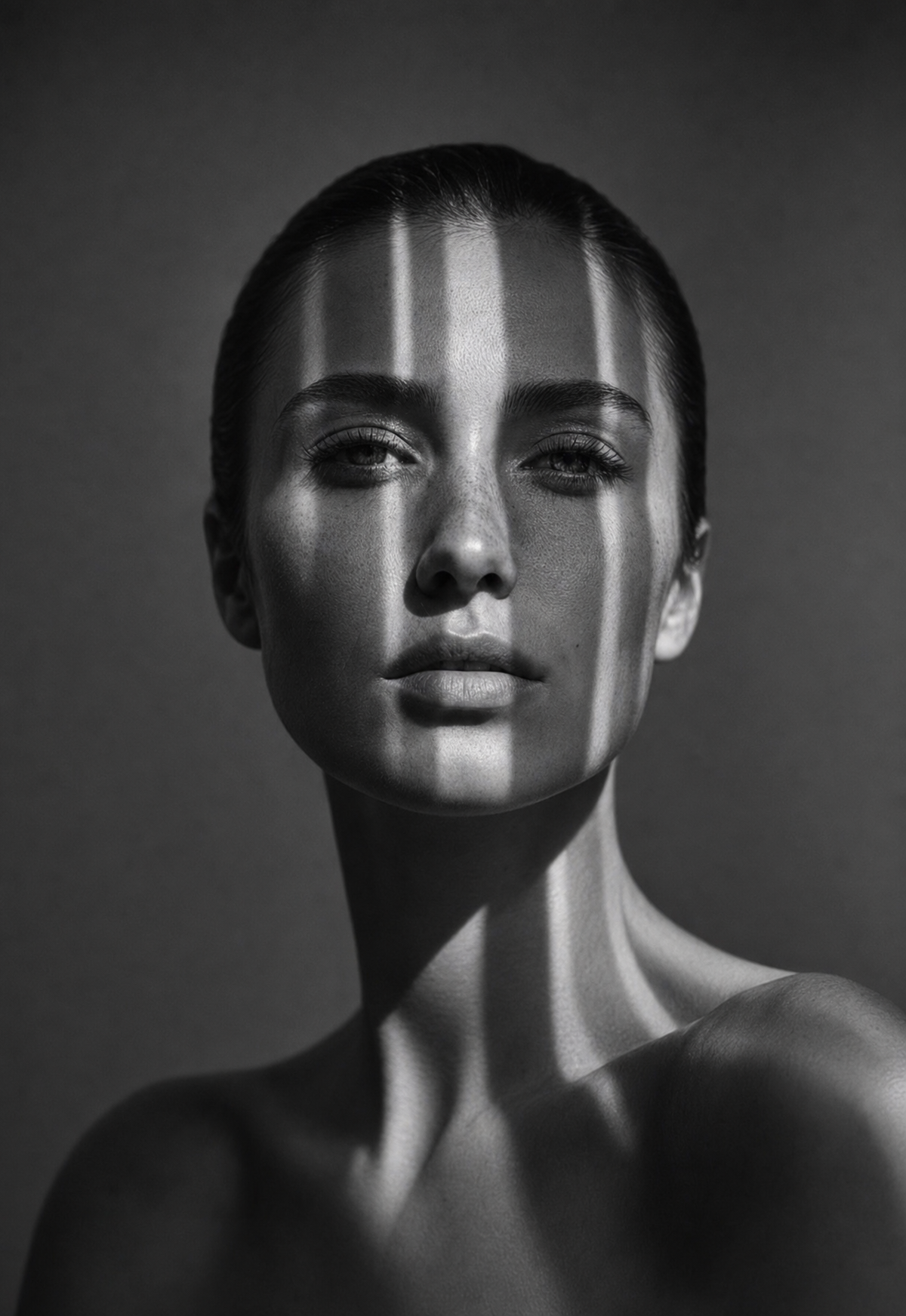
Why this works
The phrase 'geometric shards of light that cascade vertically down one side, creating sharp striations across her skin like venetian blinds' is what builds the striped chiaroscuro pattern readers see across the face, not the black-and-white treatment alone. 'Zero saturation' and 'extremely high black contrast' are the words doing the work of that stark charcoal-and-white palette, while 'the grain is intentional, resembling fine film texture' is what keeps the image from looking like a flat digital render and gives it that analog authenticity. The close portrait framing combined with 'her vivid eyes gleam even in monochrome, serving as the emotional anchor' is the specific instruction pulling focus to the eyes as the one point of true brightness against all that shadow. 'Softly blurred into deep charcoal tones, with faint geometric light patterns echoing the main illumination' is what keeps the background from competing with her face, reinforcing the tight portrait-closeup composition.
Learn the technique behind this
- Why can't AI spell, and how do I get readable text in an image? — Older diffusion models had no character-level representation of text, so they produced letterform-shaped texture instead of words.
- How should a prompt be structured, and does word order matter? — A prompt that behaves predictably names one subject first, then what it is doing, then where, then the light, then the lens or medium, then the style.
- Do negative prompts work, and what should go in one? — Negative prompts work on models that support a separate negative conditioning channel — mainly Stable Diffusion and FLUX-family models.
Related prompts
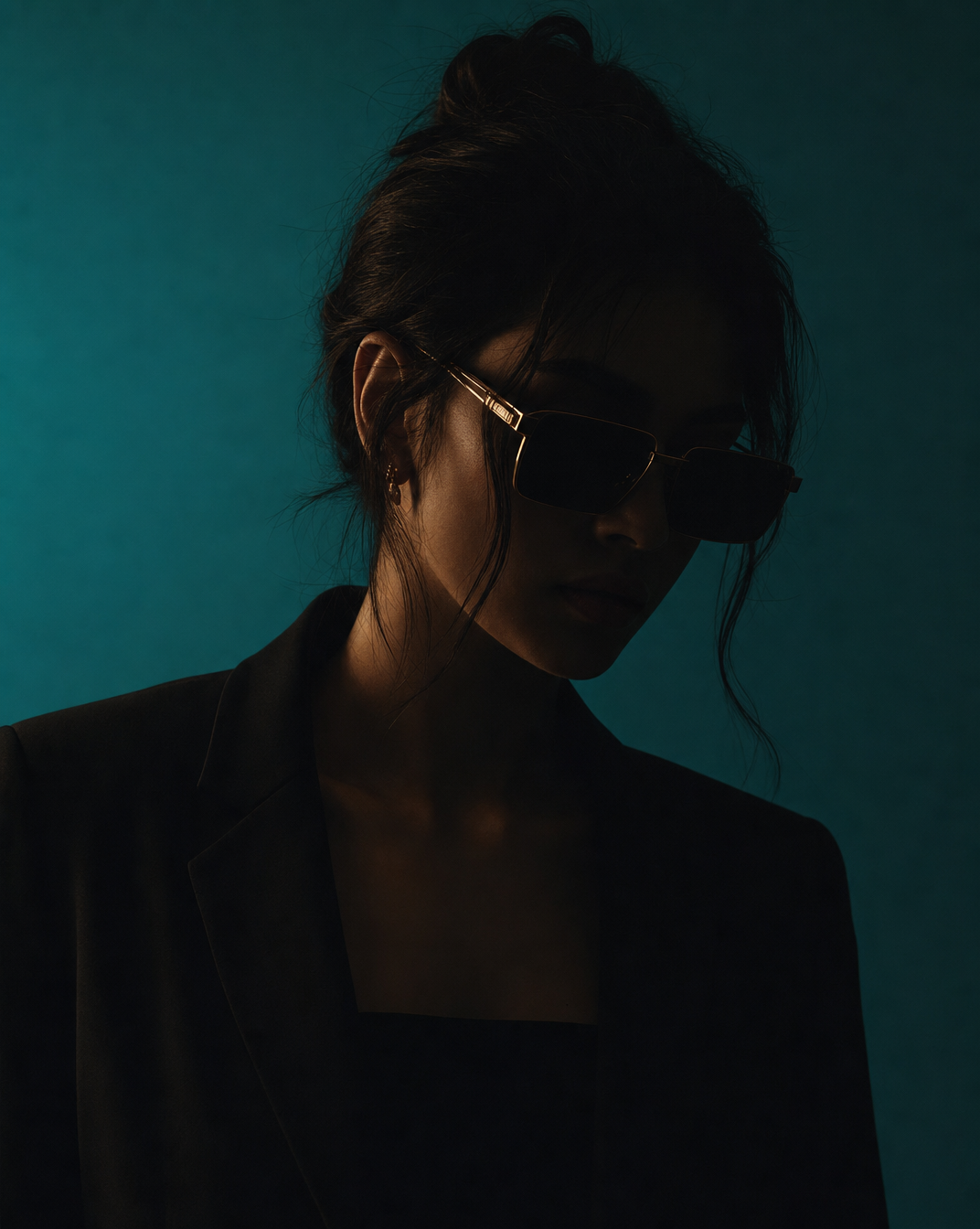
Woman in Teal Light, Shadowed Fashion Portrait

Eerie Elegance Among Marble Busts
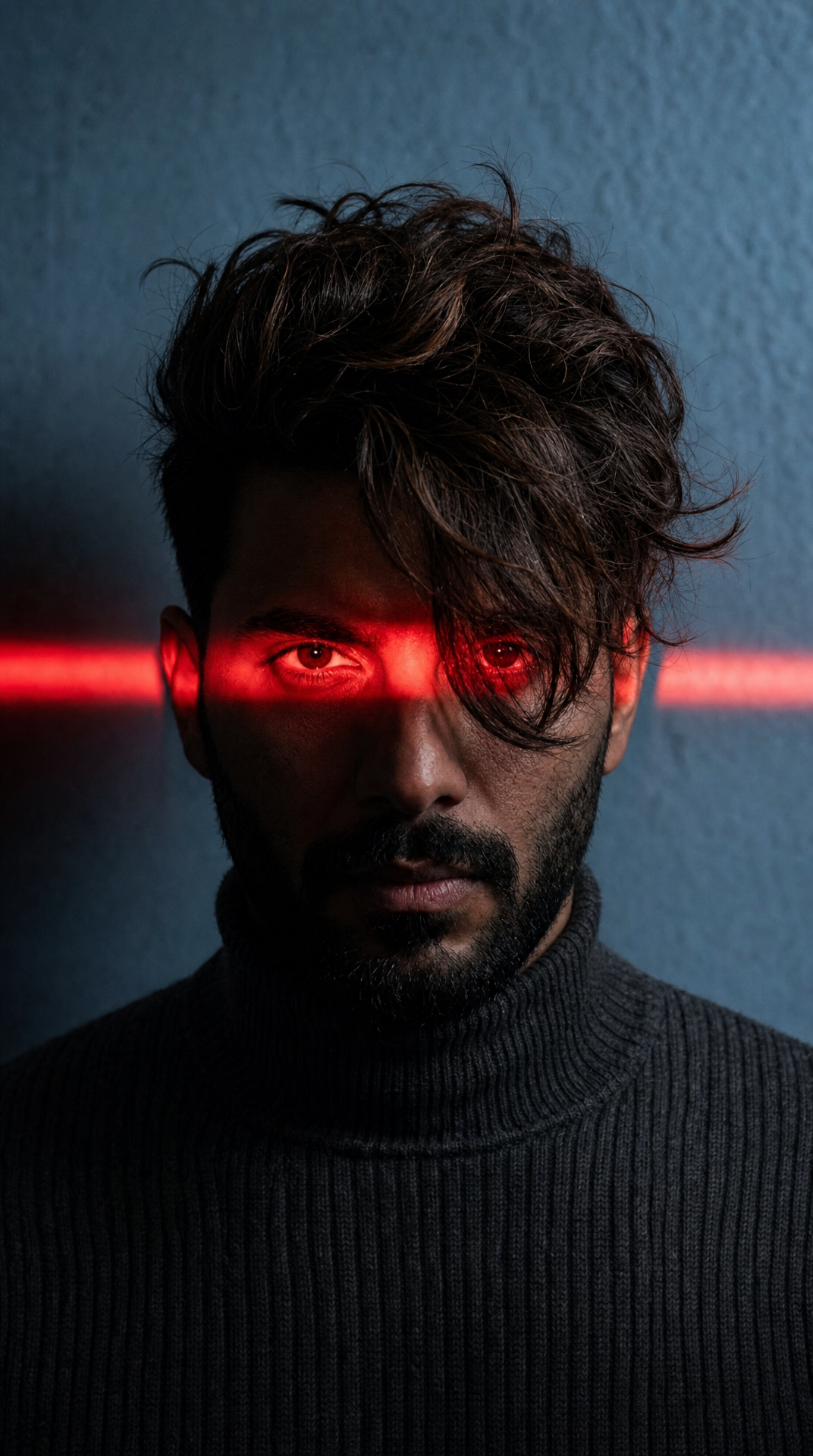
Charcoal turtleneck with red eye-beam

Dreamy Macro Portrait in Cool Water