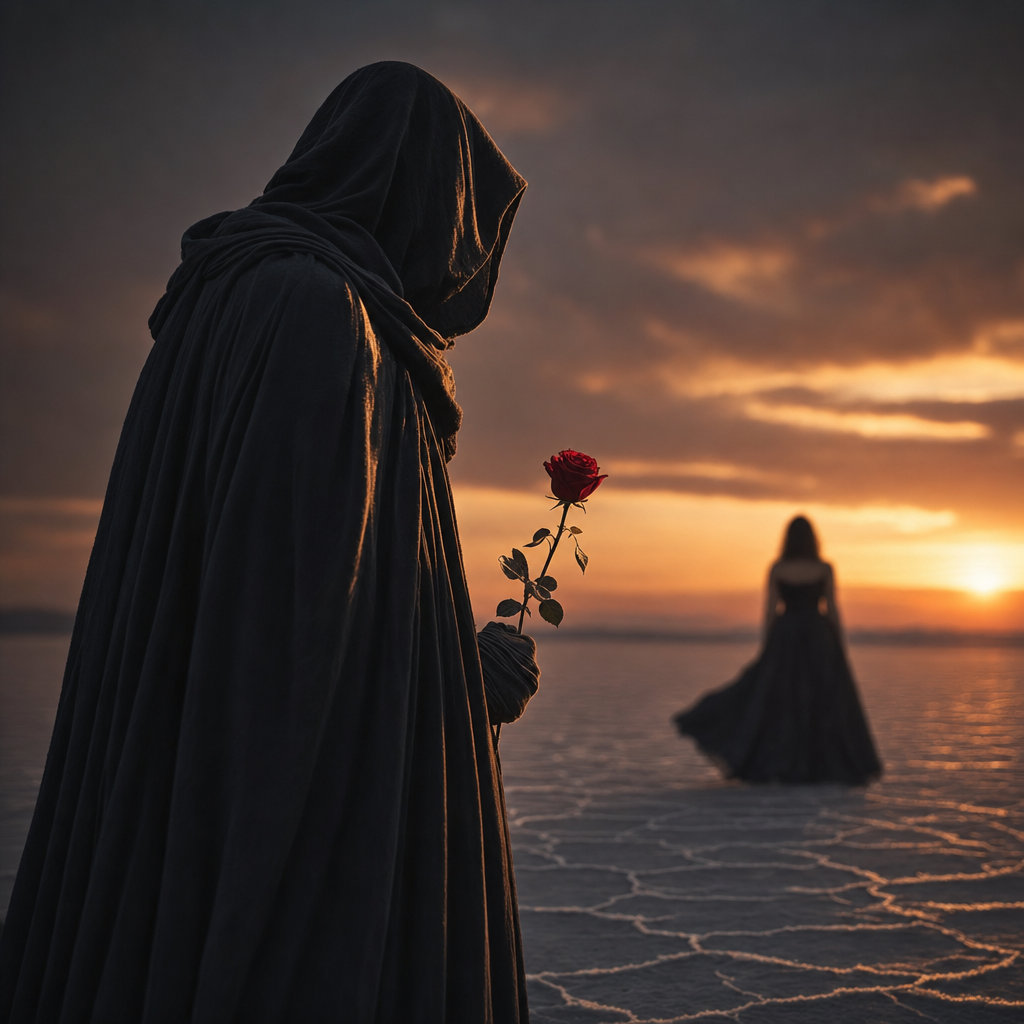
Same prompt, generated with each model separately — click one to see how it holds up.
Why this works
The phrase “foreground figure sharply in focus and the distant figure blurred” establishes a clear rule-of-thirds hierarchy, while “a single crimson rose at chest height” supplies the visual accent against the dominant gray salt flat and orange late-evening glow. “Low side backlighting creating strong rim light” separates the charcoal cloak from the horizon, and “soft atmospheric haze drifting near the ground” gives the scene its somber, surreal depth. The combination of “cracked salt flat,” “second cloaked figure...on the horizon,” and “surreal and mysterious atmosphere” creates scale and unease without overcrowding the frame.
FAQ
→How do I make the crimson rose the main focal point instead of the hooded figure?
Replace “holding a single crimson rose at chest height” with “extending a single crimson rose toward the camera in the exact center foreground, petals sharply detailed,” and change “foreground figure sharply in focus” to “the rose in razor-sharp focus while the hooded figure falls slightly soft.” Keep “shallow depth of field” to preserve the isolated focal point.
→How do I make the scene feel warmer and less somber?
Replace “muted earth-and-stone palette with slight blue shadows” with “burnished amber, rust, and dusty-gold palette with warm orange shadows,” and change “moody, mysterious, surreal atmosphere” to “quietly hopeful, sun-warmed surreal atmosphere.” Retain “low side backlighting” but specify “golden-hour backlighting” for a stronger warm glow.
→How do I build a series of variations while keeping this composition recognizable?
Keep “a hooded figure...holding a single crimson rose,” “cracked salt flat horizon,” “foreground figure sharply in focus and the distant figure blurred,” and “rule-of-thirds,” then swap the setting phrase for options such as “windswept black volcanic beach,” “bleached desert canyon,” or “frozen lake at blue hour.” Match each replacement with a related palette, such as “charcoal and copper” for the volcanic beach or “white and cobalt” for the frozen lake.
Learn the technique behind this
- Why can't AI spell, and how do I get readable text in an image? — Older diffusion models had no character-level representation of text, so they produced letterform-shaped texture instead of words.
- How should a prompt be structured, and does word order matter? — A prompt that behaves predictably names one subject first, then what it is doing, then where, then the light, then the lens or medium, then the style.
- How do I keep one consistent style across a whole set of images? — Style consistency is more achievable than character consistency because style lives in describable attributes.
Related prompts

Young girl with dog in tornado
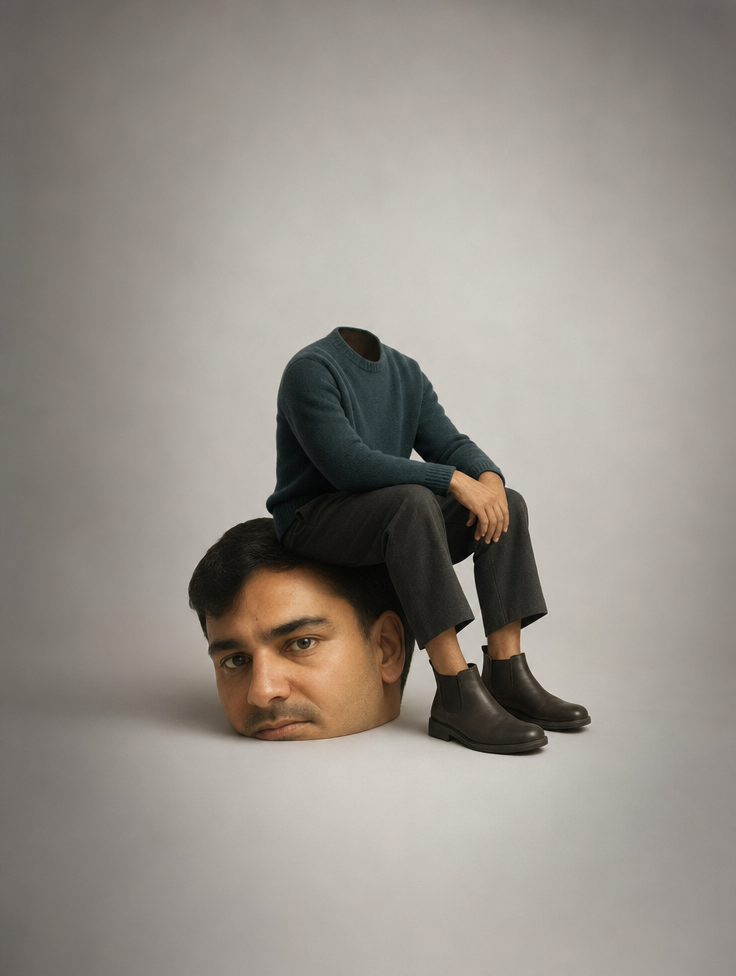
Headless sitter atop a giant head
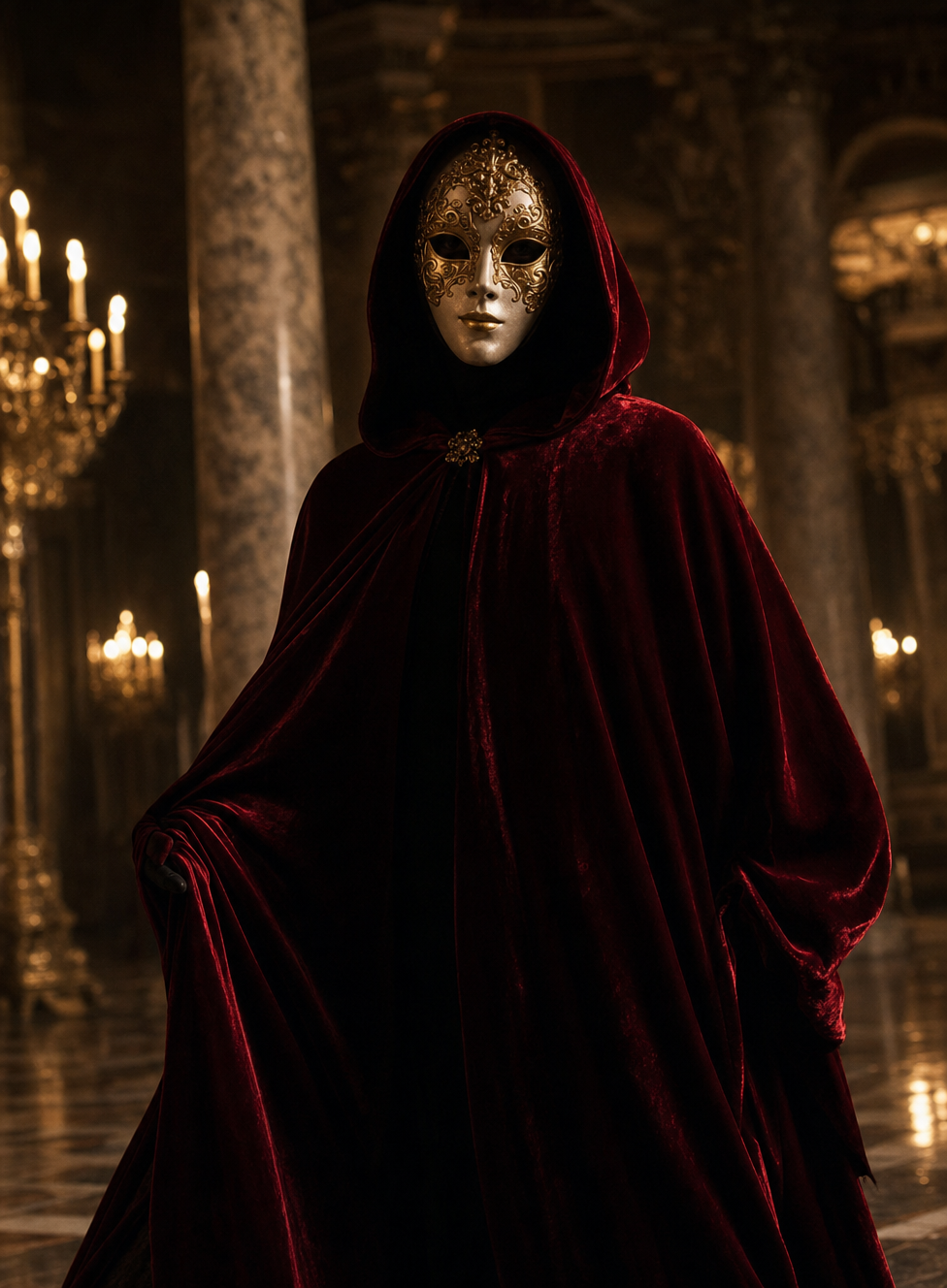
Crimson-Cloaked Specter in Candlelit Ballroom
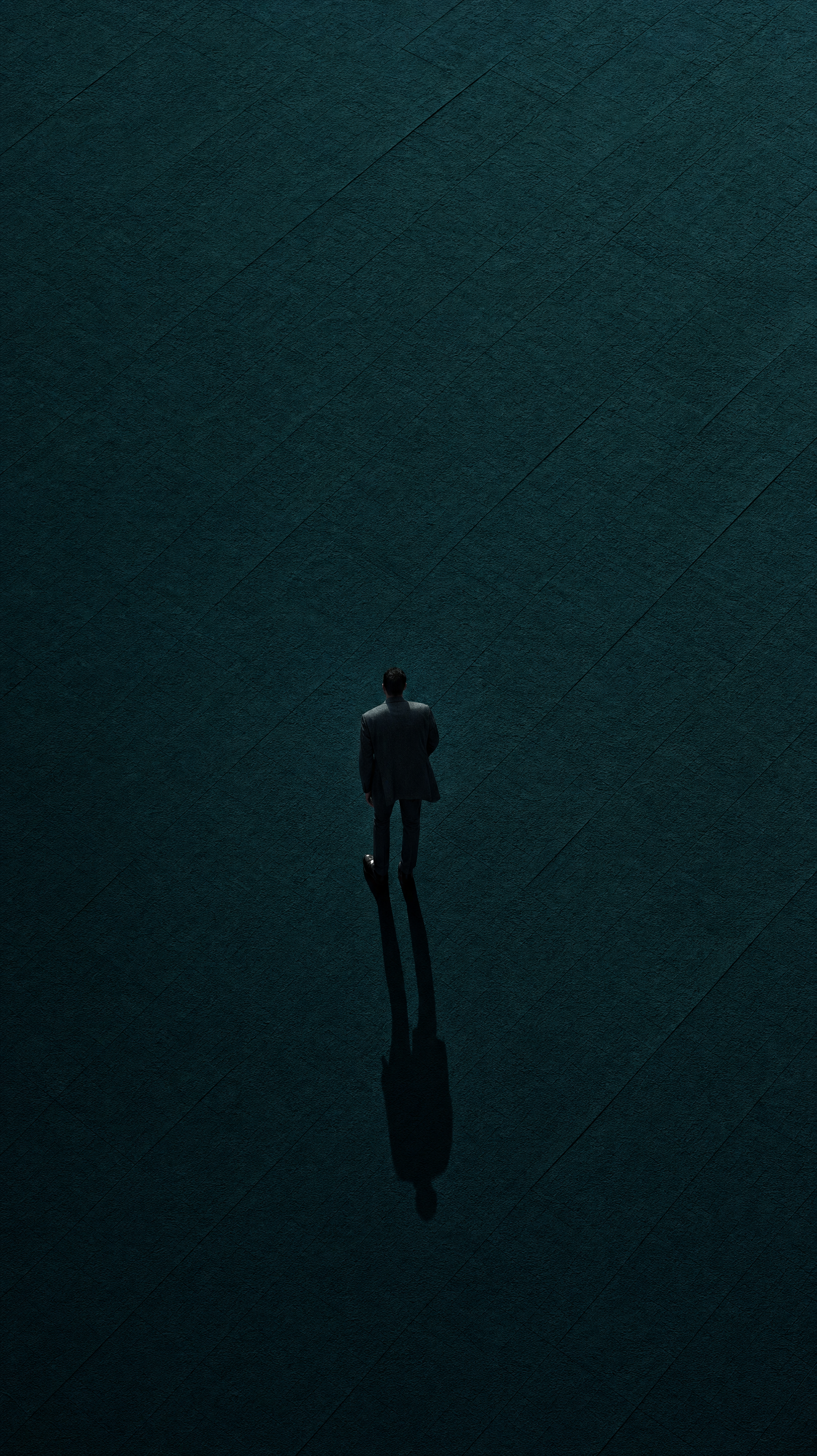
Charcoal-suited man on teal plane