Same prompt, generated with each model separately — click one to see how it holds up.
Why this works
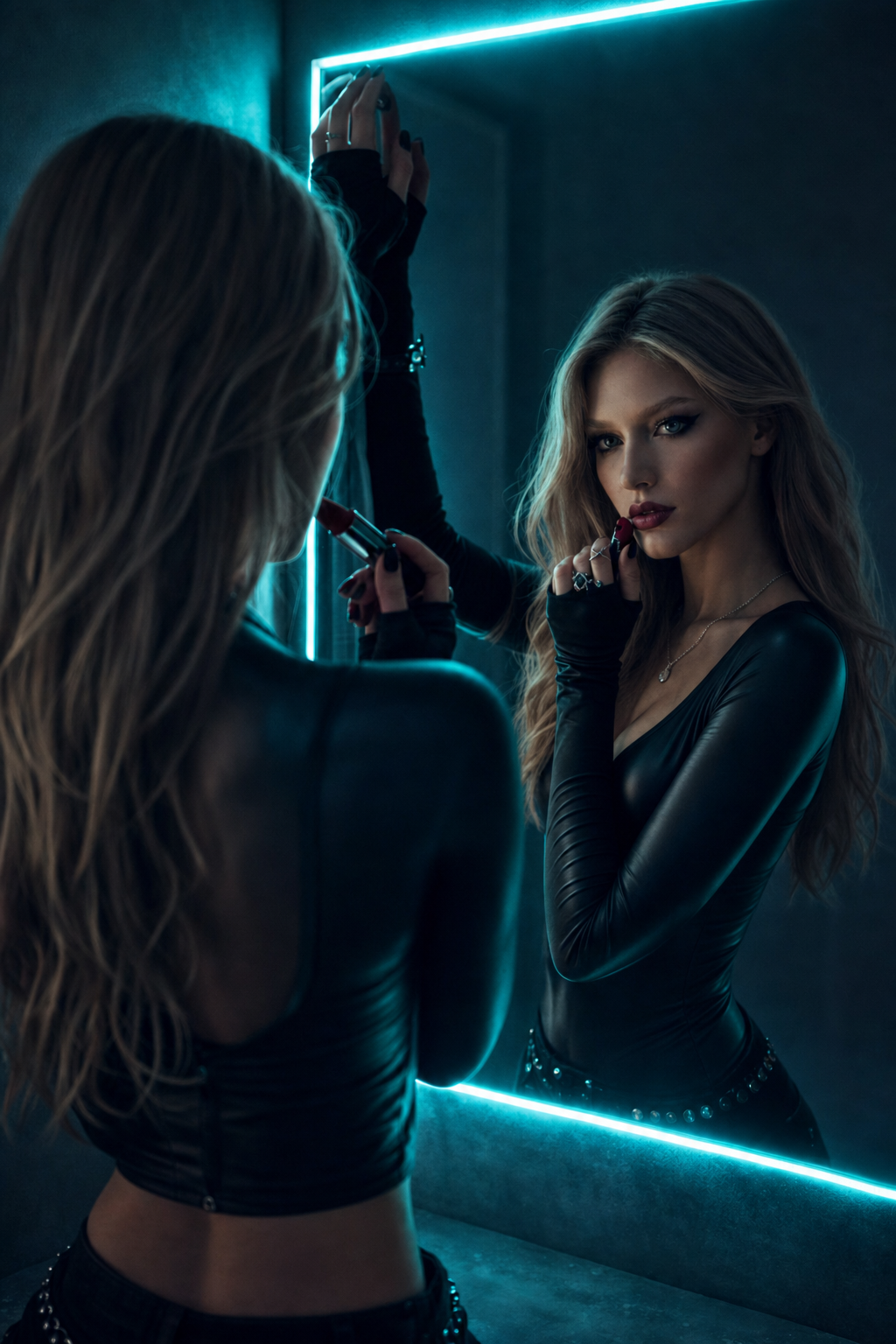
The phrase “seen from behind with her reflection visible” creates the image’s layered full-body composition, while “applying lipstick in front of a mirror” gives both the pose and the reflection a clear narrative purpose. “Moody teal neon lighting” supplies the dominant teal-gray palette, and “cinematic high-contrast shadows” separates the brunette figure, satin bodysuit, and mirror image against the dark dressing room. “Shallow depth of field” keeps the subject and reflection prioritized, while “realistic skin texture and detailed hair strands” anchor the glamorous styling in photorealistic detail.
FAQ
→How do I change this prompt to make the reflection more prominent than the woman’s back?
Replace “seen from behind with her reflection visible” with “the mirror reflection is the primary subject, with the woman’s back softly visible in the foreground,” and change “portrait-full-body” to “mirror-centered medium shot.” Keep “applying lipstick” so the reflection retains a specific action.
→How do I make the scene warmer and more luxurious instead of teal and moody?
Replace “moody teal neon lighting” with “warm amber vanity bulbs mixed with soft champagne rim light,” and replace “dark upscale dressing room” with “opulent cream-and-brass dressing room.” Change “cinematic high-contrast shadows” to “soft luminous contrast” to reduce the severe nightlife tone.
→How do I build a series of variations while keeping this fashion concept recognizable?
Keep “photorealistic fashion portrait,” “satin long-sleeve bodysuit,” “elbow-length fingerless gloves,” and “silver pendant necklace” unchanged, then swap “applying lipstick” for actions such as “adjusting an earring,” “fastening a bracelet,” or “brushing hair.” For location variations, replace “dark upscale dressing room” with “luxury hotel bathroom,” “backstage makeup station,” or “neon-lit boutique fitting room,” while retaining “seen from behind with her reflection visible.”
Learn the technique behind this
- Why can't AI spell, and how do I get readable text in an image? — Older diffusion models had no character-level representation of text, so they produced letterform-shaped texture instead of words.
- Which aspect ratio should I use, and how does it change the image? — Aspect ratio determines what the model composes, not how it's cropped afterwards.
- Why does AI get hands and faces wrong, and how do I fix it? — Hands fail because they're small in frame, extremely variable in pose, and self-occluding — the model has less usable signal per pixel than for any other body part.
Related prompts
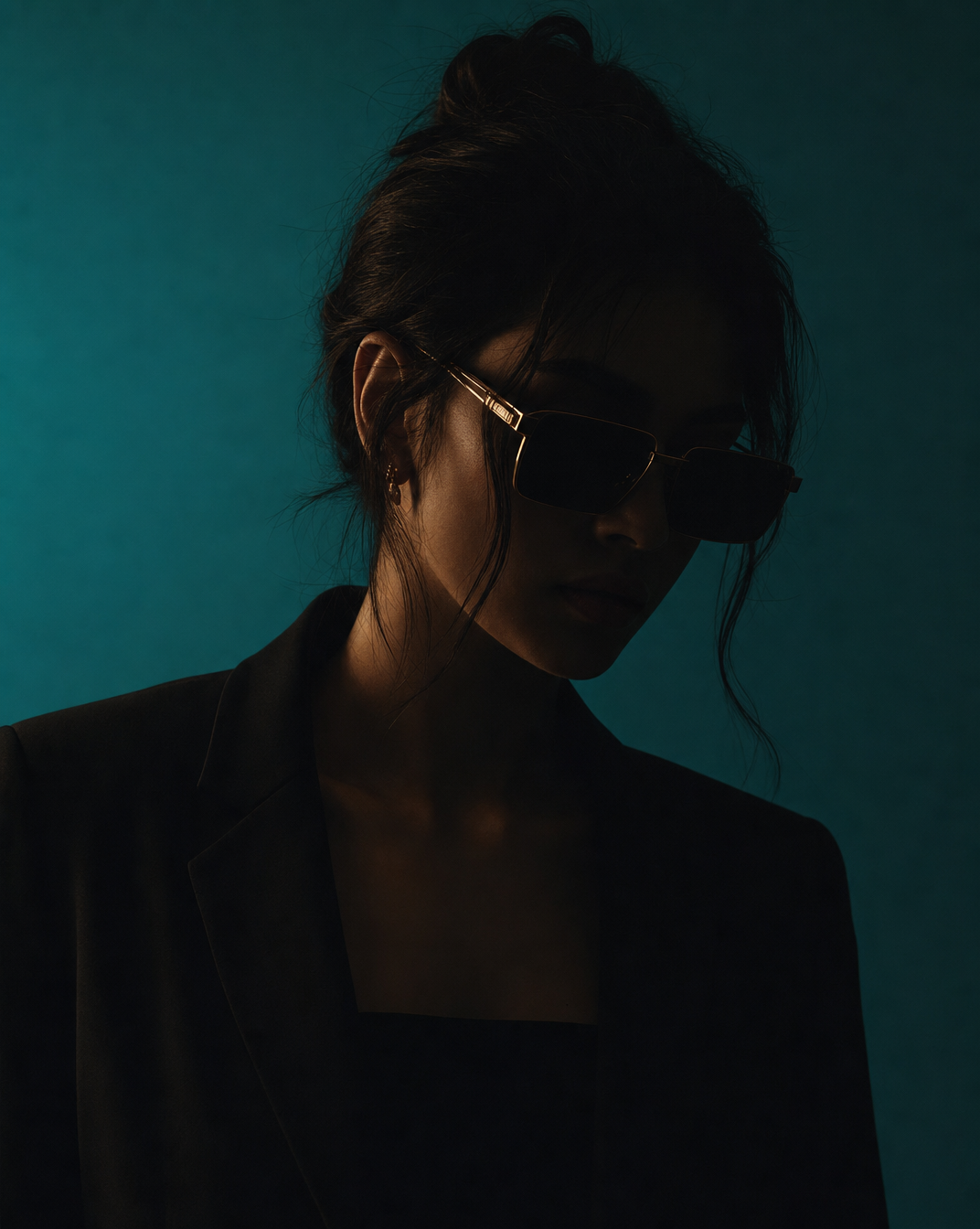
Woman in Teal Light, Shadowed Fashion Portrait
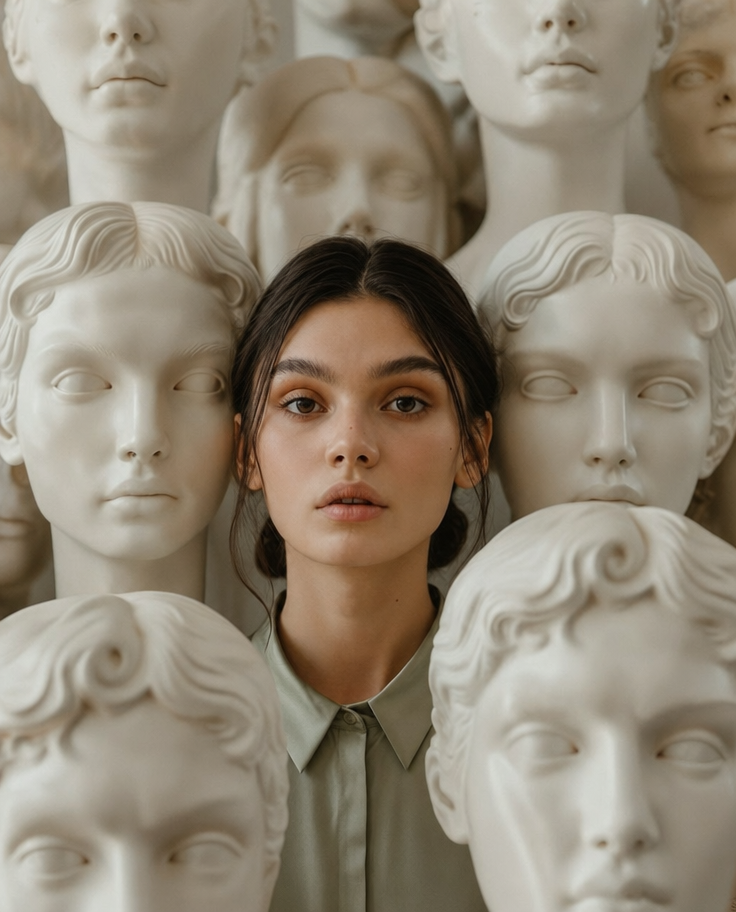
Eerie Elegance Among Marble Busts
Charcoal turtleneck with red eye-beam
Dreamy Macro Portrait in Cool Water