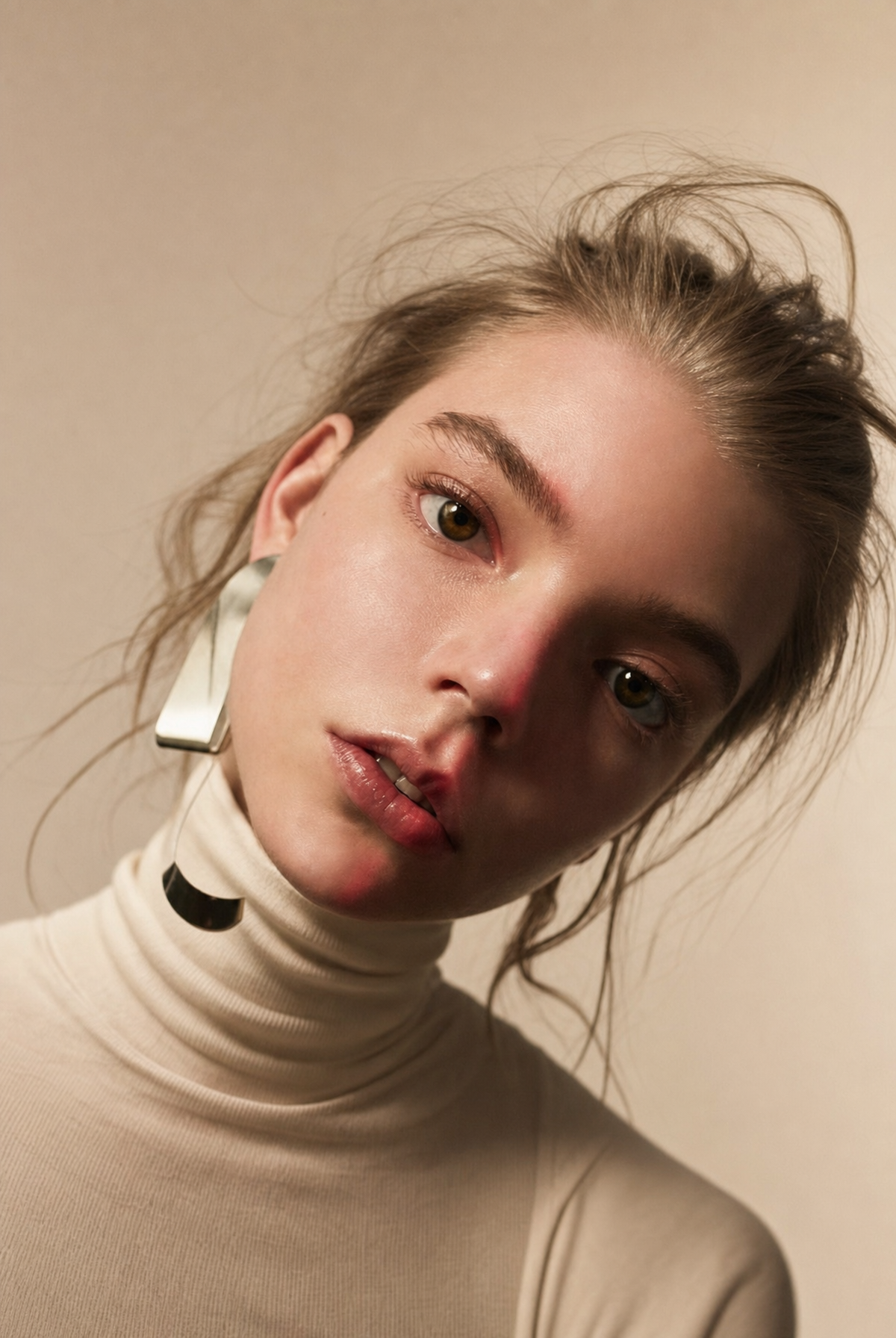
Same prompt, generated with each model separately — click one to see how it holds up.
Why this works
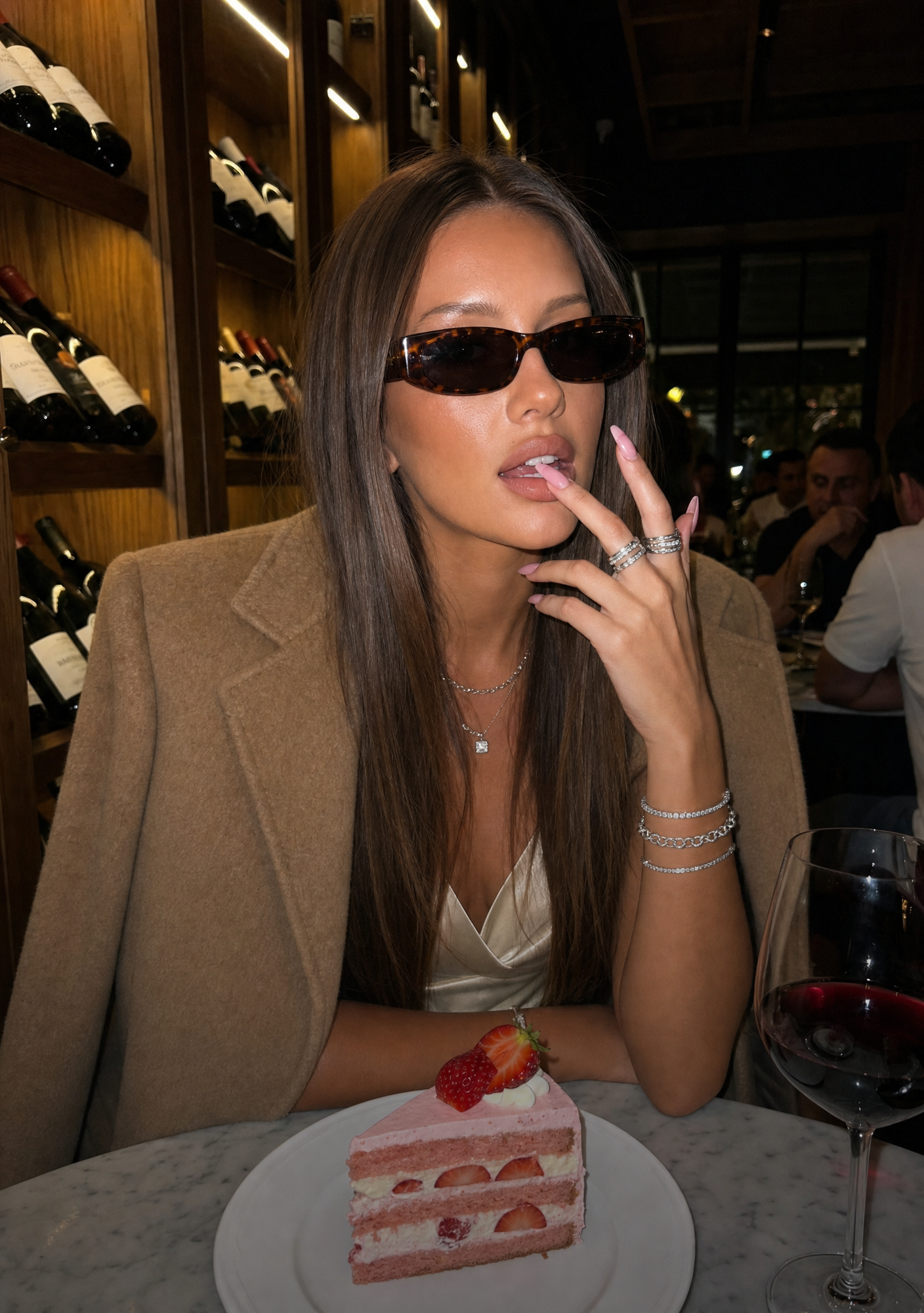
The close framing is anchored by “photorealistic close-up portrait” and “shallow depth of field,” keeping the brunette’s sunglasses, matte lips, skin, and hair sharper than the restaurant background. “Soft on-camera flash with gentle falloff” gives the face a polished editorial presence, while “warm ambient reflections” and the camel coat, cream satin top, and silver jewelry create quiet luxury against the dominant black, beige, pink, and gray palette. The upscale mood comes from the specific combination of “fine dining table,” “wine glasses,” and “luxury lifestyle editorial,” rather than from the color palette alone.
FAQ
→How do I make the woman’s eyes and expression more central than the sunglasses?
Replace “wearing narrow tortoiseshell sunglasses” with “sunglasses pushed up onto her head, revealing direct eye contact and a subtle confident expression.” Keep “photorealistic close-up portrait” and add “eyes in sharp focus” to make the face carry the composition.
→How do I shift this from seductive luxury to a softer daytime editorial mood?
Replace “upscale dimly lit restaurant” with “sunlit Parisian café with pale stone walls,” and change “soft on-camera flash with gentle falloff” to “diffused natural window light.” Swap “quiet luxury, glamorous and seductive mood” for “fresh, understated daytime elegance” while keeping the camel coat and cream satin top for continuity.
→How do I build a matching series with different settings while preserving this visual identity?
Keep the subject wording, “tailored camel wool coat,” “cream satin top,” “layered silver jewelry,” “shallow depth of field,” “highly detailed skin and hair,” and “realistic colors” unchanged. Replace only “upscale dimly lit restaurant” and “fine dining table with wine glasses” with locations such as “marble hotel lobby with sculptural seating,” “rainy city sidewalk beside a black car,” or “quiet art gallery with concrete walls,” then retain “soft on-camera flash with gentle falloff” across every variation.
Learn the technique behind this
- Why can't AI spell, and how do I get readable text in an image? — Older diffusion models had no character-level representation of text, so they produced letterform-shaped texture instead of words.
- How should a prompt be structured, and does word order matter? — A prompt that behaves predictably names one subject first, then what it is doing, then where, then the light, then the lens or medium, then the style.
- Why does AI get hands and faces wrong, and how do I fix it? — Hands fail because they're small in frame, extremely variable in pose, and self-occluding — the model has less usable signal per pixel than for any other body part.
Related prompts
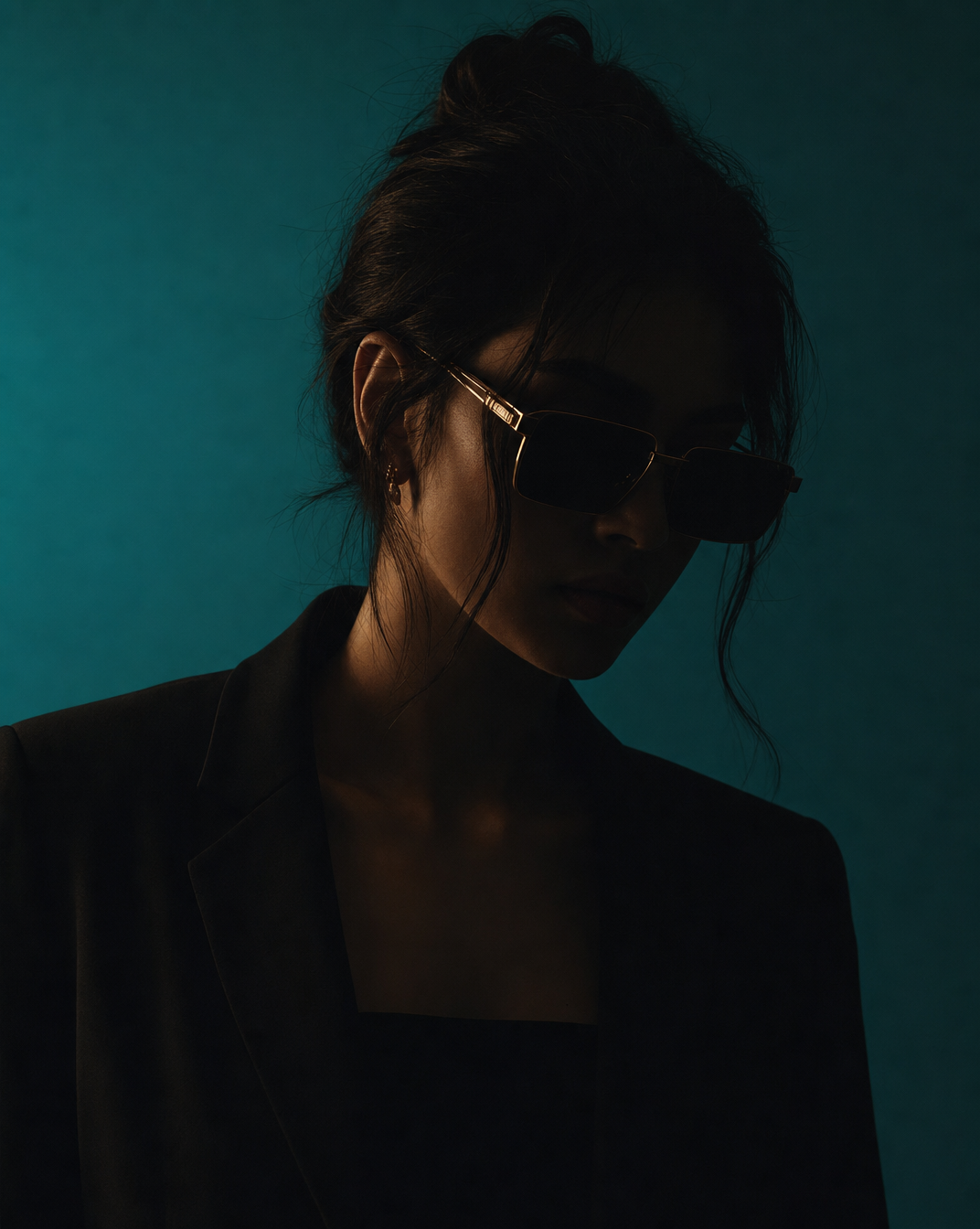
Woman in Teal Light, Shadowed Fashion Portrait
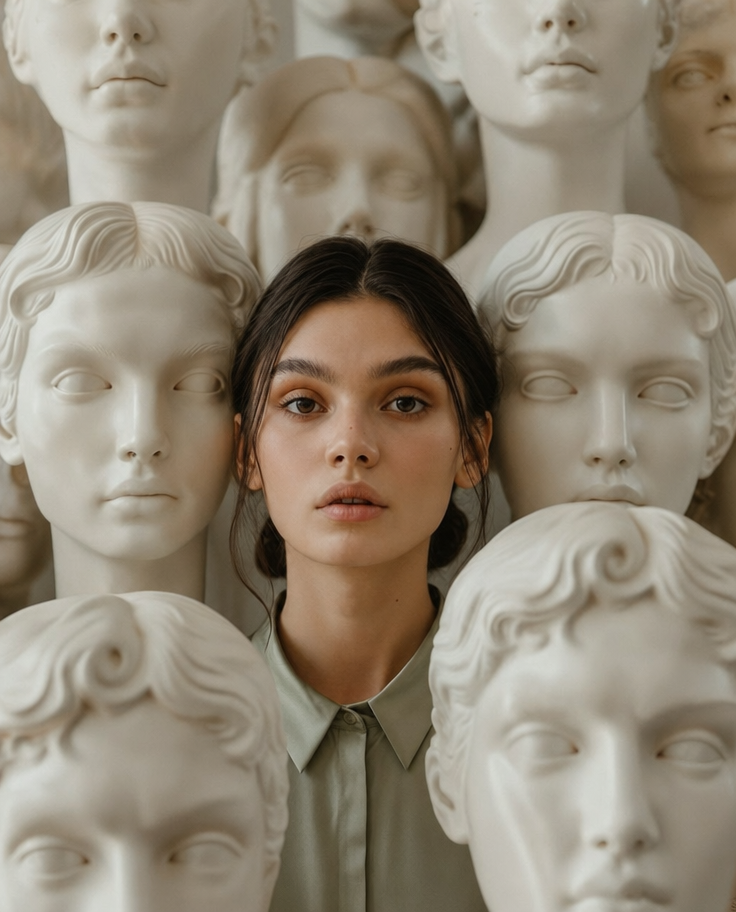
Eerie Elegance Among Marble Busts
Charcoal turtleneck with red eye-beam
Dreamy Macro Portrait in Cool Water