Why this works
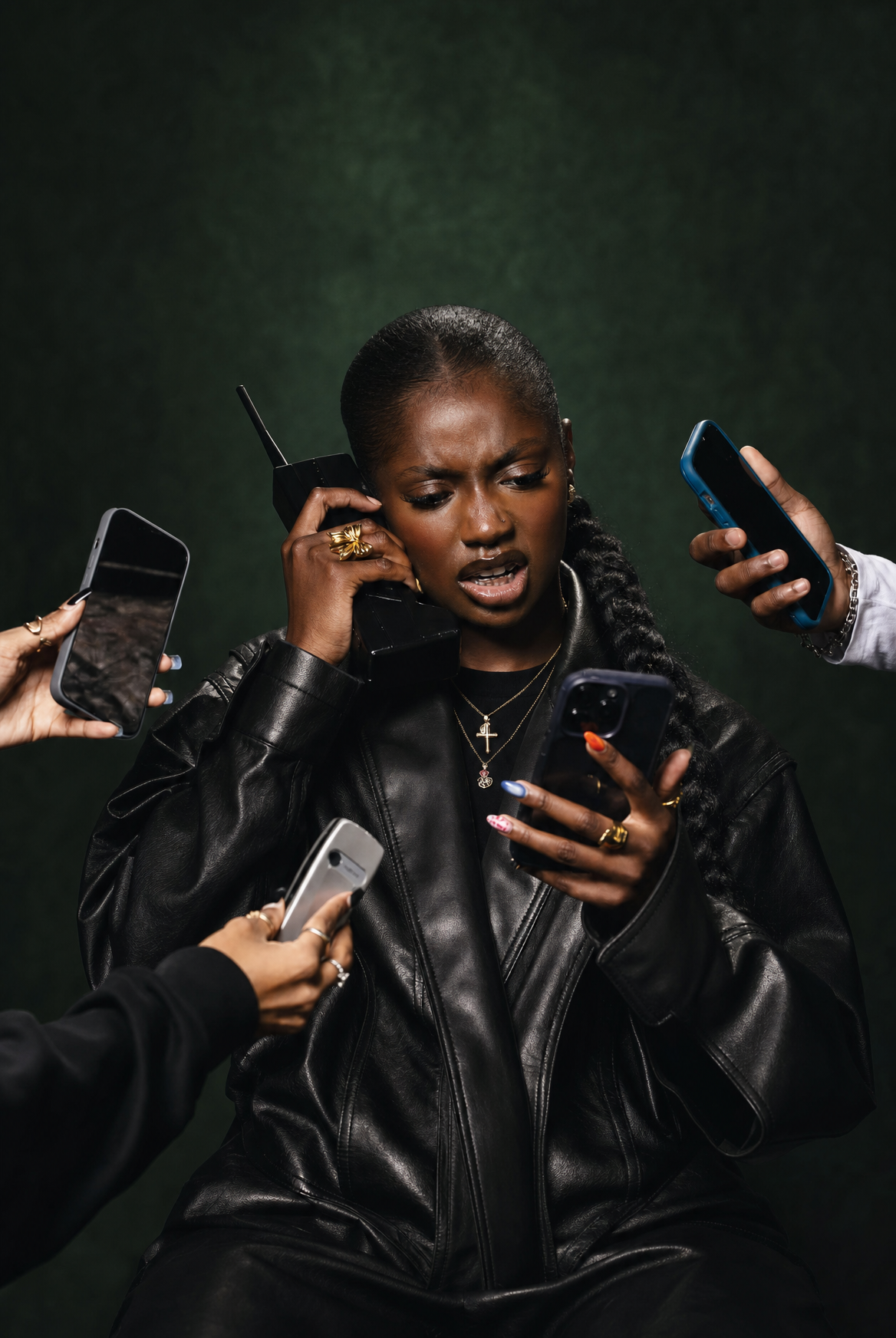
The phrase “several hands extending smartphones toward her from all sides” makes the seated woman the visual pressure point, while “studio portrait framing” and the portrait-closeup composition keep her face and jacket dominant despite the crowd. “Textured deep-green backdrop” supplies the main green field, and the black leather jacket, gray phone bodies, and “dramatic side lighting with crisp highlights” create a restrained gray-green palette with sharp contrast. The tense mood comes from “tense crowding composition” and “dramatic side lighting,” while “realistic skin texture” prevents the high-contrast editorial treatment from making her face look artificial.
FAQ
→How do I make the woman feel more powerful and central instead of overwhelmed by the phones?
Replace “several hands extending smartphones toward her from all sides” with “a few smartphones held lower in the foreground, leaving clear space around her shoulders,” and change “tense crowding composition” to “commanding centered composition with the subject looking directly into the camera.” Keep “portrait-closeup” to preserve her facial prominence.
→How do I shift this from moody and confrontational to a colder, more clinical editorial mood?
Replace “textured deep-green backdrop” with “smooth cool-gray studio backdrop,” and change “dramatic side lighting with crisp highlights” to “flat overhead studio lighting with cool white illumination and minimal shadow.” Swap “tense” for “detached” and retain “realistic skin texture” for the documentary fashion-photography finish.
→How do I build a series of variations while keeping the same visual concept?
Keep “young Black woman with a sleek braided hairstyle pulled back (no bangs),” “black leather jacket with a satin collar,” “portrait-closeup,” and “several hands extending smartphones,” then vary one setting phrase at a time: replace “textured deep-green backdrop” with “textured burgundy backdrop,” “concrete-gray backdrop,” or “deep cobalt-blue backdrop.” For lighting variations, replace “dramatic side lighting with crisp highlights” with “soft frontal beauty lighting,” “hard top lighting,” or “split lighting with a narrow highlight across one cheek.”
Learn the technique behind this
- Why does AI get hands and faces wrong, and how do I fix it? — Hands fail because they're small in frame, extremely variable in pose, and self-occluding — the model has less usable signal per pixel than for any other body part.
- Why can't AI spell, and how do I get readable text in an image? — Older diffusion models had no character-level representation of text, so they produced letterform-shaped texture instead of words.
- How should a prompt be structured, and does word order matter? — A prompt that behaves predictably names one subject first, then what it is doing, then where, then the light, then the lens or medium, then the style.
Related prompts
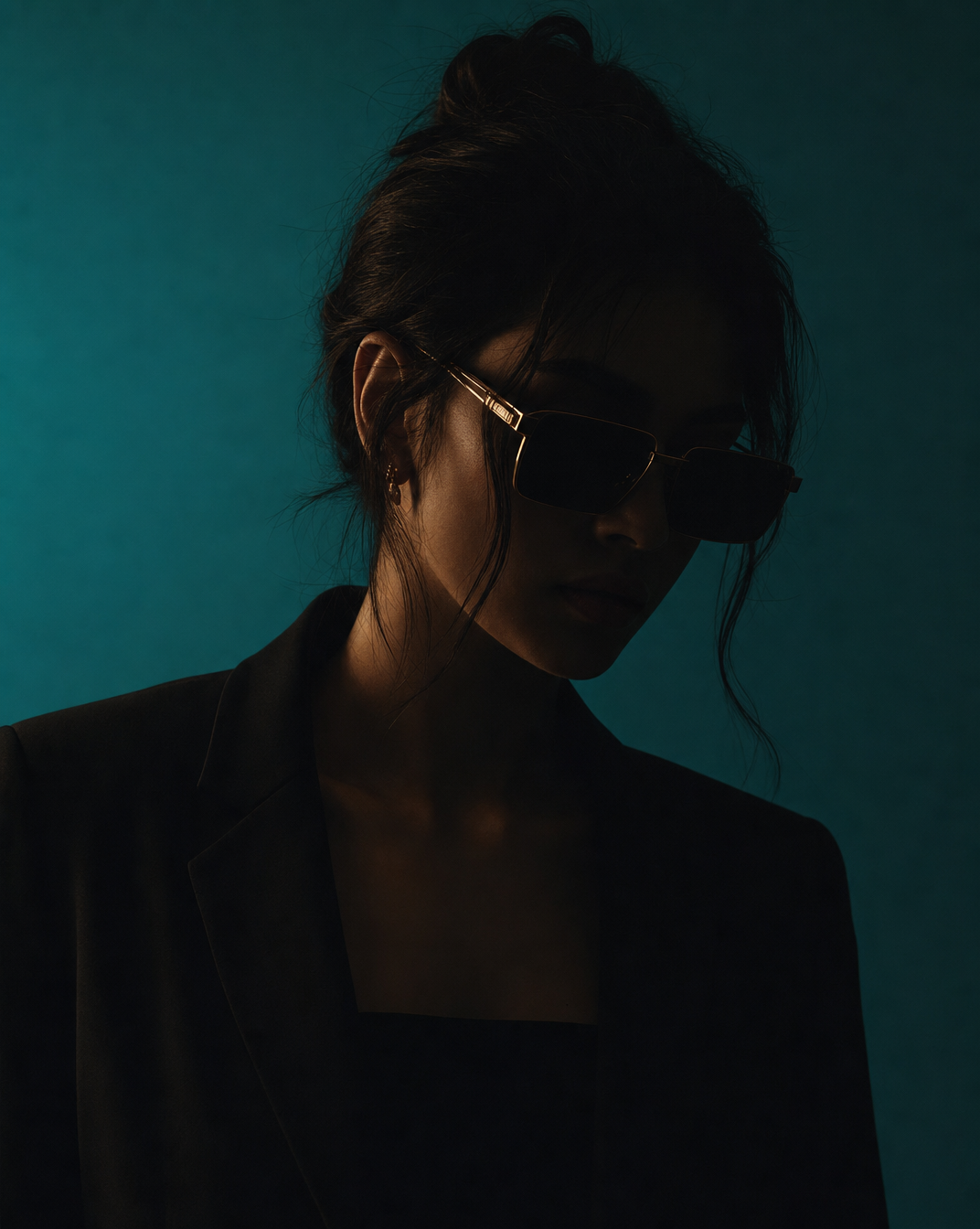
Woman in Teal Light, Shadowed Fashion Portrait
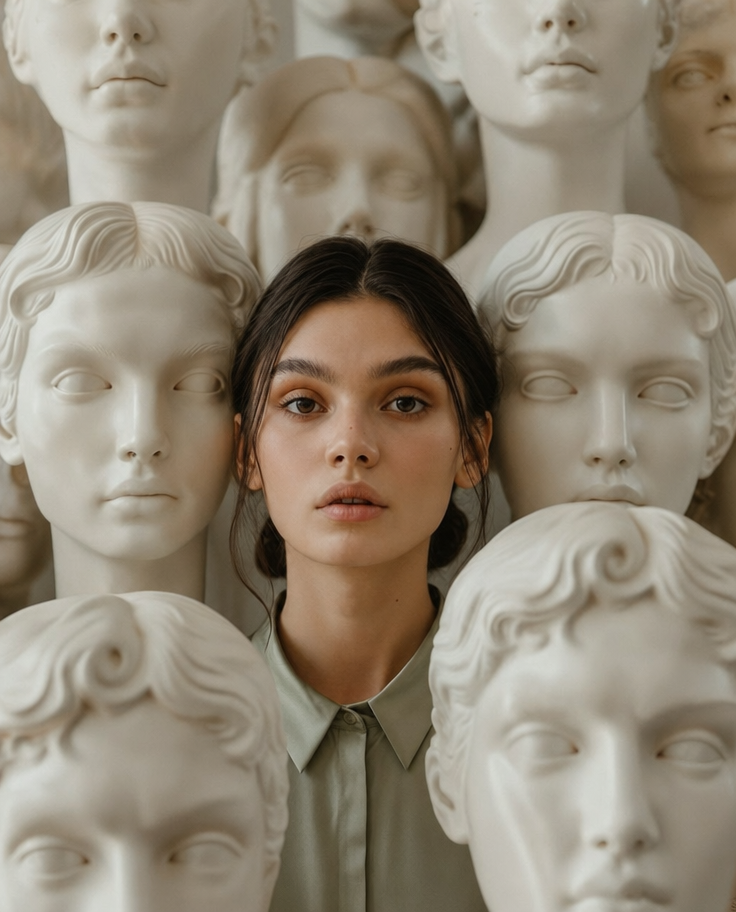
Eerie Elegance Among Marble Busts
Charcoal turtleneck with red eye-beam
Dreamy Macro Portrait in Cool Water