Why this works
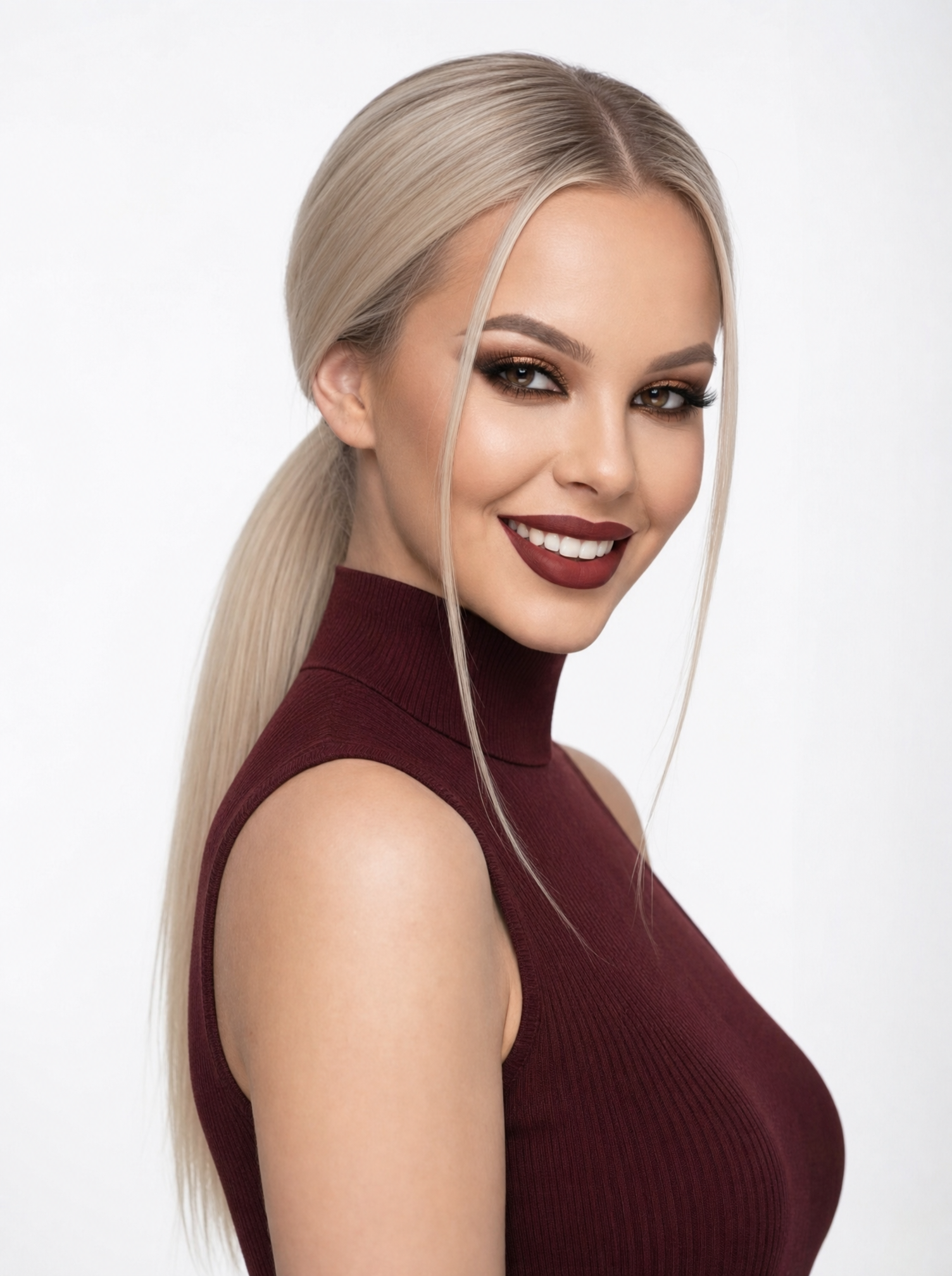
The burgundy-and-bronze color scheme against 'plain white background' is what makes the black and tan dominant colors read as intentional rather than accidental - the white backdrop strips away every distraction so the 'matte deep burgundy lips' and 'subtle warm bronze eyeshadow' become the only color story in the frame. 'Confident direct gaze' is doing the compositional work here, not the camera settings - it's the specific phrase that locks the subject's eye contact and gives the portrait-closeup its sense of authority rather than passivity. 'Soft studio lighting' paired with 'smooth radiant skin with a light sheen' is what produces the gentle highlight roll-off on the skin instead of harsh beauty-shot glare, and 'sharp focus, high detail' is what keeps the eyeliner and skin texture crisp even though the lighting itself is soft.
FAQ
→How do I make the makeup the clear focal point instead of the face overall?
Push the framing tighter by changing 'direct portrait framing' to 'extreme close-up cropped at the eyes and lips' and add 'macro detail on eyeliner and lip texture' to the camera component. You could also drop 'wearing a charcoal grey sleeveless ribbed turtleneck top' since removing the clothing reference forces attention upward to the face.
→How do I shift this from a confident, elegant mood to something more moody or dramatic?
Replace 'soft studio lighting' with 'low-key lighting with hard shadow falloff' and swap 'plain white background' for 'dark charcoal or black background'. Change 'confident direct gaze' to 'intense, shadowed gaze' and consider swapping 'matte deep burgundy lips' for 'deep black-red lips' to keep the palette dark and unified.
→How do I turn this into a series with different subjects while keeping the same styling?
Keep the makeup and lighting language fixed - 'subtle warm bronze eyeshadow', 'defined dark eyeliner', 'matte deep burgundy lips', 'soft studio lighting', 'plain white background' - and just vary the subject line. Swap 'young man with short dark curly hair and sharp facial features' for descriptions like 'woman with long silver hair and freckles' or 'androgynous model with shaved head and angular jaw' so the beauty photography formula stays consistent across the set.
Learn the technique behind this
- Why can't AI spell, and how do I get readable text in an image? — Older diffusion models had no character-level representation of text, so they produced letterform-shaped texture instead of words.
- Why does AI get hands and faces wrong, and how do I fix it? — Hands fail because they're small in frame, extremely variable in pose, and self-occluding — the model has less usable signal per pixel than for any other body part.
- How should a prompt be structured, and does word order matter? — A prompt that behaves predictably names one subject first, then what it is doing, then where, then the light, then the lens or medium, then the style.
Related prompts
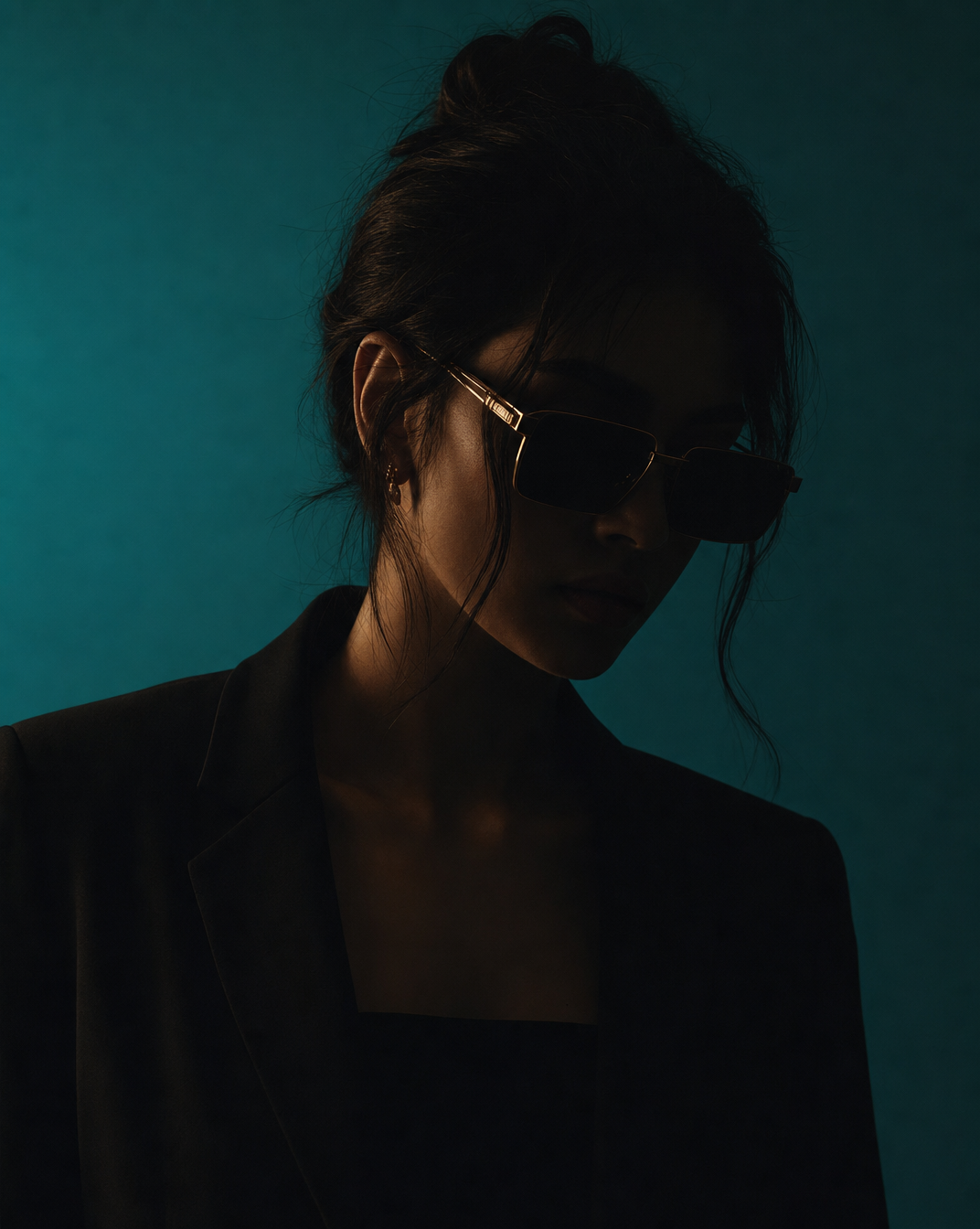
Woman in Teal Light, Shadowed Fashion Portrait
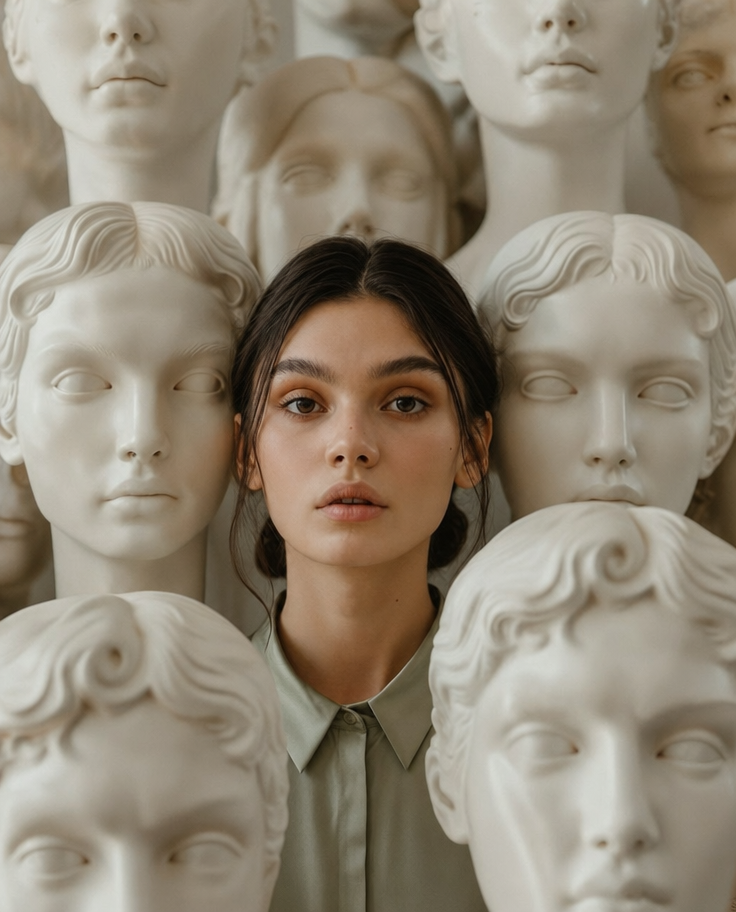
Eerie Elegance Among Marble Busts
Charcoal turtleneck with red eye-beam
Dreamy Macro Portrait in Cool Water