Why this works
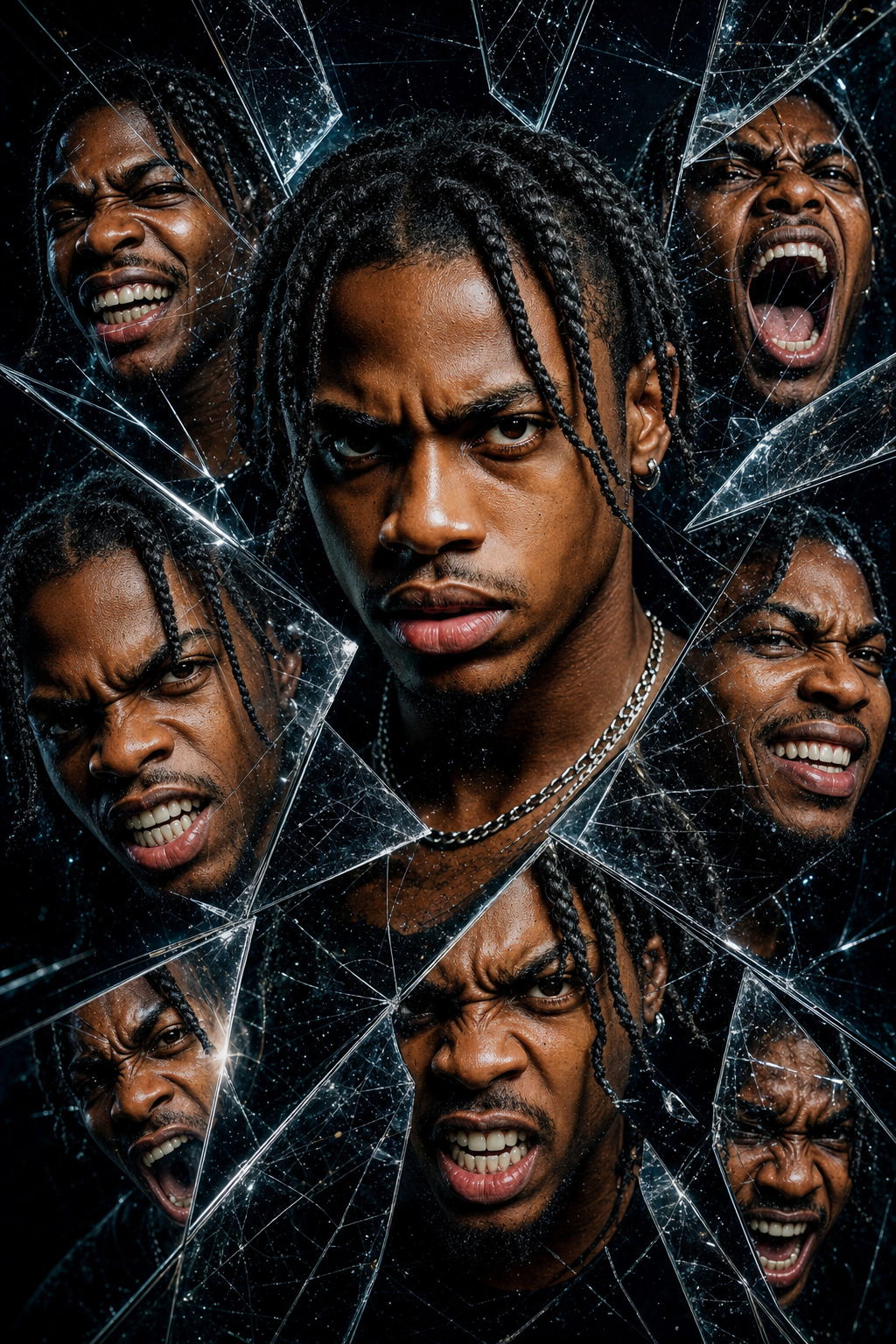
The centered poster-style close portrait composition makes the serious central face the visual anchor, while “face framed by shattered glass fragments” turns the surrounding expressions into a rigid fractured border. “High-contrast cinematic lighting with sharp highlights and dramatic shadows” supplies the intense, aggressive mood, reinforced by “gritty highlights” and the deep moody black background. Gray and brown dominate because the prompt emphasizes cracked glass, skin texture, and muted cinematic contrast rather than saturated color, while “pores, fine wrinkles,” “razor-sharp reflections,” and “crisp fractured edges” load the image with tactile detail.
FAQ
→How do I make one distorted expression more central and prominent?
Replace “several surrounding shards show different distorted versions of the same man” with “a large foreground shard dominates the upper-right frame, showing an enlarged open-mouthed yell,” and change “poster-style close portrait composition focused on the central face” to “asymmetrical close portrait composition split between the central face and the dominant shard.” Keep “serious central expression” if you want the contrast between controlled center and aggressive reflection.
→How do I shift the mood from aggressive to eerie and psychologically unsettling?
Replace “serious and confrontational” with “emotionless, uncanny stare,” and replace “high-contrast cinematic lighting with sharp highlights and dramatic shadows” with “cold underlighting, weak reflected highlights, and soft shadows fading into darkness.” Changing “deep moody black background” to “featureless charcoal-black void with faint gray haze” will preserve the fractured composition while reducing the poster’s combative tone.
→How do I build a consistent series using different subjects or settings?
Keep the structural phrases “centered poster-style close portrait composition,” “face framed by shattered glass fragments,” “cracked-glass refractions,” and “deep moody black background,” then replace the subject block “young man with black braided dreadlocks” with a controlled variant such as “elderly woman with silver bob haircut” or “masked astronaut with reflective visor.” For a setting variation, replace “shattered glass fragments” with “splintered ice shards” or “fractured antique mirrors,” while retaining “multiple distorted versions of the same subject” so every image keeps the same visual grammar.
Learn the technique behind this
- Why can't AI spell, and how do I get readable text in an image? — Older diffusion models had no character-level representation of text, so they produced letterform-shaped texture instead of words.
- How do I keep the same character across multiple images? — Text prompts alone won't hold a face across images — a description defines a type, not a person.
- How should a prompt be structured, and does word order matter? — A prompt that behaves predictably names one subject first, then what it is doing, then where, then the light, then the lens or medium, then the style.
Related prompts
Woman in Teal Light, Shadowed Fashion Portrait
Eerie Elegance Among Marble Busts
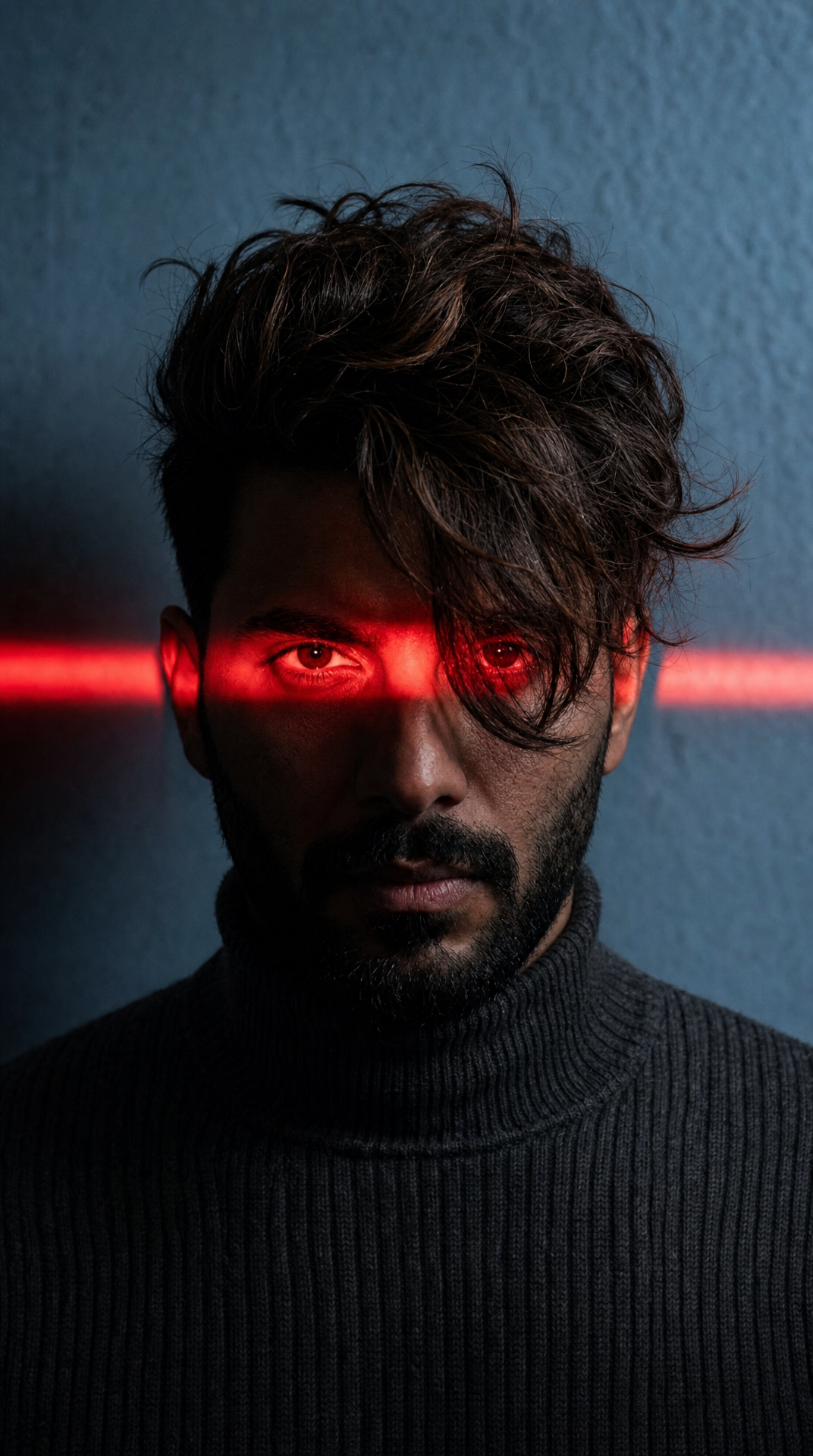
Charcoal turtleneck with red eye-beam
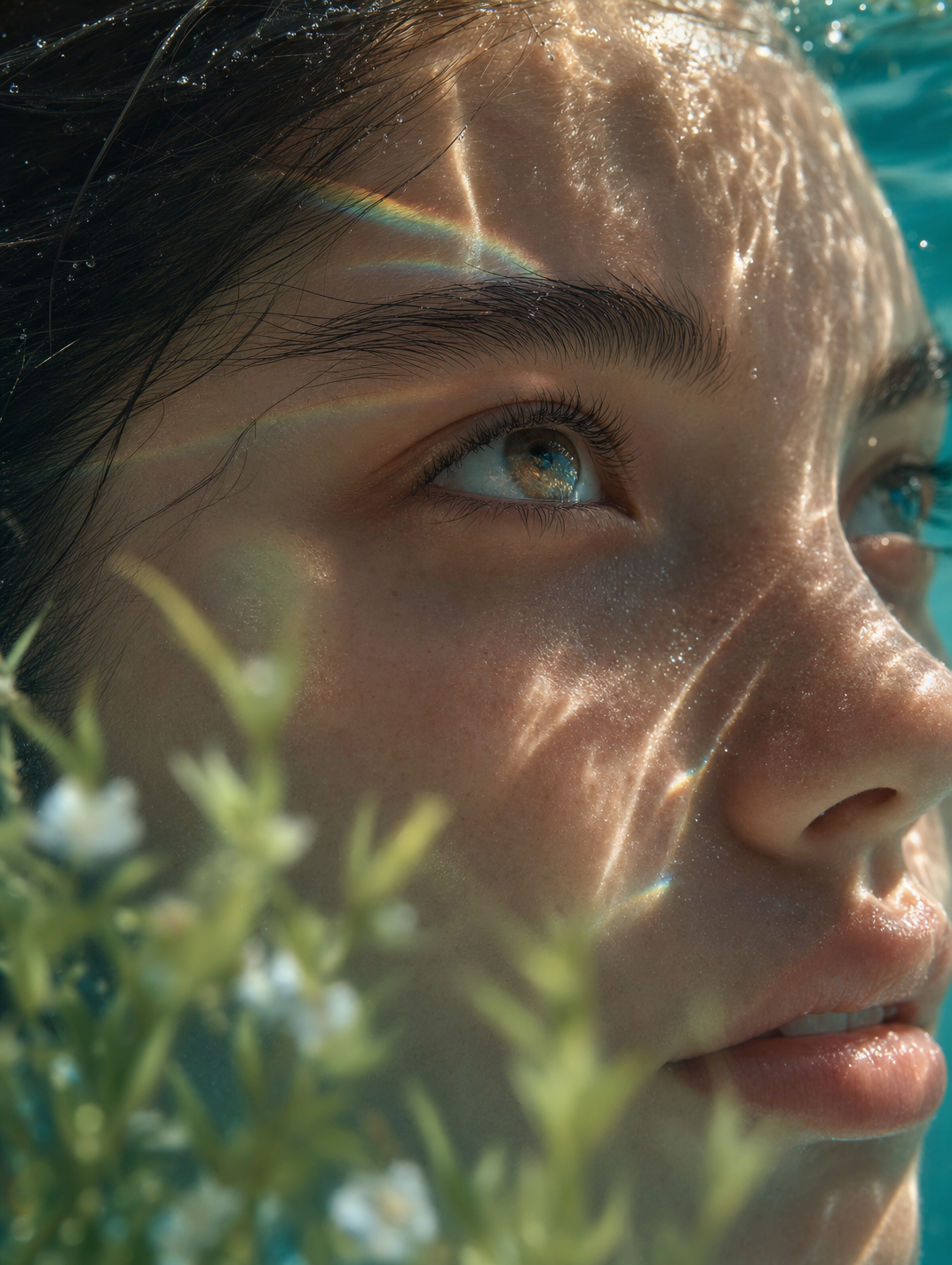
Dreamy Macro Portrait in Cool Water