Why this works
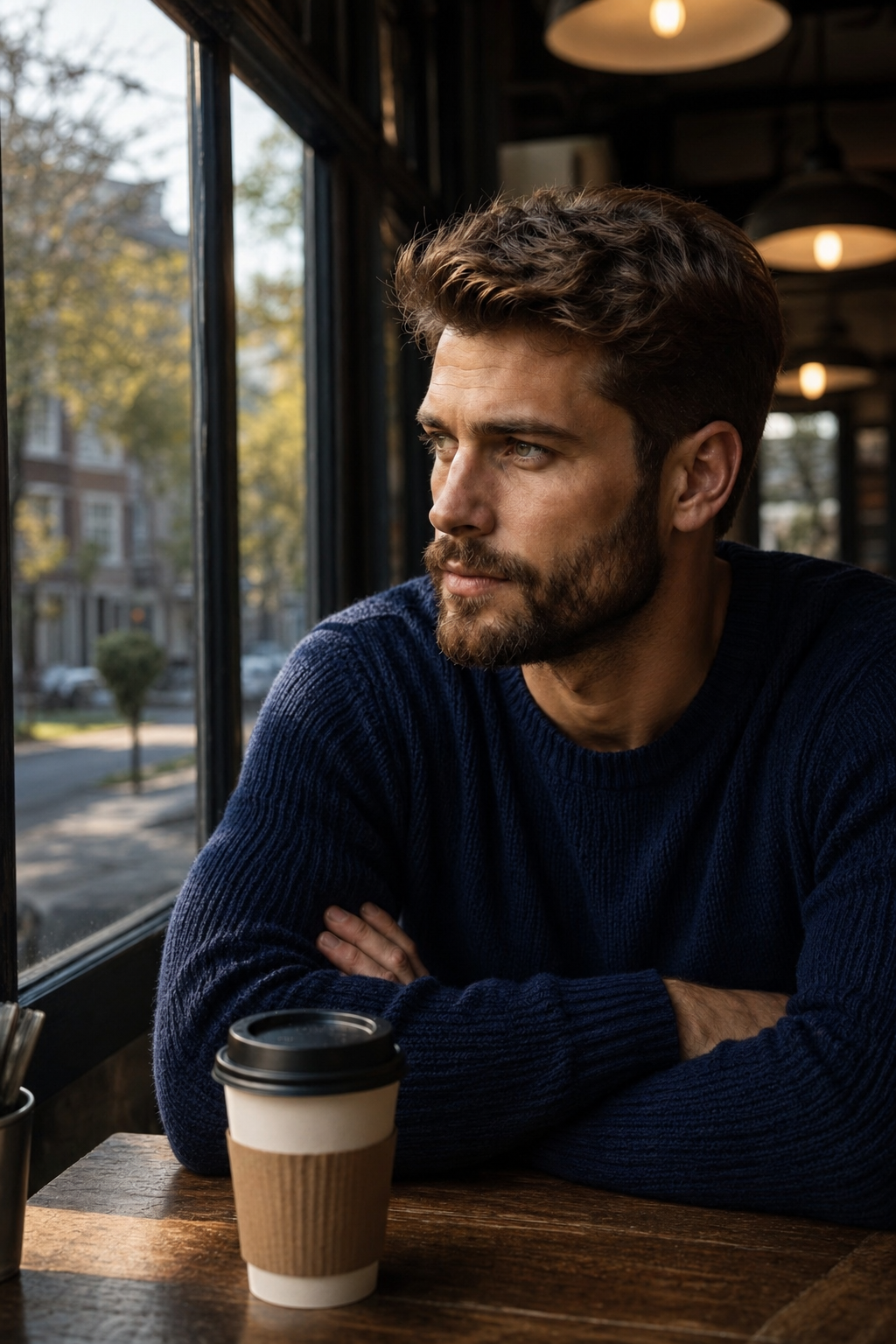
The introspective mood is anchored by “gazes out the window with an introspective expression,” while “dark navy knit sweater” adds a restrained, cooler note to the otherwise brown, black, and beige interior palette. “Ceramic cup of coffee in the foreground” and “cinematic editorial framing with shallow depth of field” create close portrait framing with a tactile foreground anchor, and “gentle bokeh” keeps the residential street secondary. The contrast between “cooler late-afternoon light through the window” and “warm interior accents” gives the image its cinematic color separation without losing the cozy cafe atmosphere.
FAQ
→How do I make the man’s expression and face more prominent?
Replace “portrait-closeup” and “cinematic editorial framing” with “tight head-and-shoulders portrait, face dominant in the frame,” and change “ceramic cup of coffee in the foreground” to “coffee cup softly blurred at the lower edge.” Keep “gazes out the window” if you want introspection, or replace it with “looks slightly past the camera” for a more direct portrait.
→How do I make the scene feel moodier and more dramatic?
Replace “natural soft lighting” with “low-key directional window light with deeper shadows,” and change “slightly cooler late-afternoon feel” to “blue-hour window light.” Reduce “warm accents in the interior” to “muted amber practical lights,” preserving the cool-blue and warm-amber contrast while making the cafe feel quieter and more cinematic.
→How do I create a series of variations without losing the visual identity?
Keep the fixed phrases “ultra-realistic photorealistic editorial lifestyle photography,” “dark navy knit sweater,” “cozy cafe table beside a large window,” and “cinematic composition.” For each variation, swap only the exterior and action clauses, such as replacing “softly blurred residential street” with “rain-streaked neighborhood rooftops” or “tree-lined suburban sidewalk,” and “arms crossed” with “one hand wrapped around the coffee cup,” while retaining “shallow depth of field” and “gentle bokeh.”
Learn the technique behind this
- Why can't AI spell, and how do I get readable text in an image? — Older diffusion models had no character-level representation of text, so they produced letterform-shaped texture instead of words.
- How should a prompt be structured, and does word order matter? — A prompt that behaves predictably names one subject first, then what it is doing, then where, then the light, then the lens or medium, then the style.
- Which aspect ratio should I use, and how does it change the image? — Aspect ratio determines what the model composes, not how it's cropped afterwards.
Related prompts
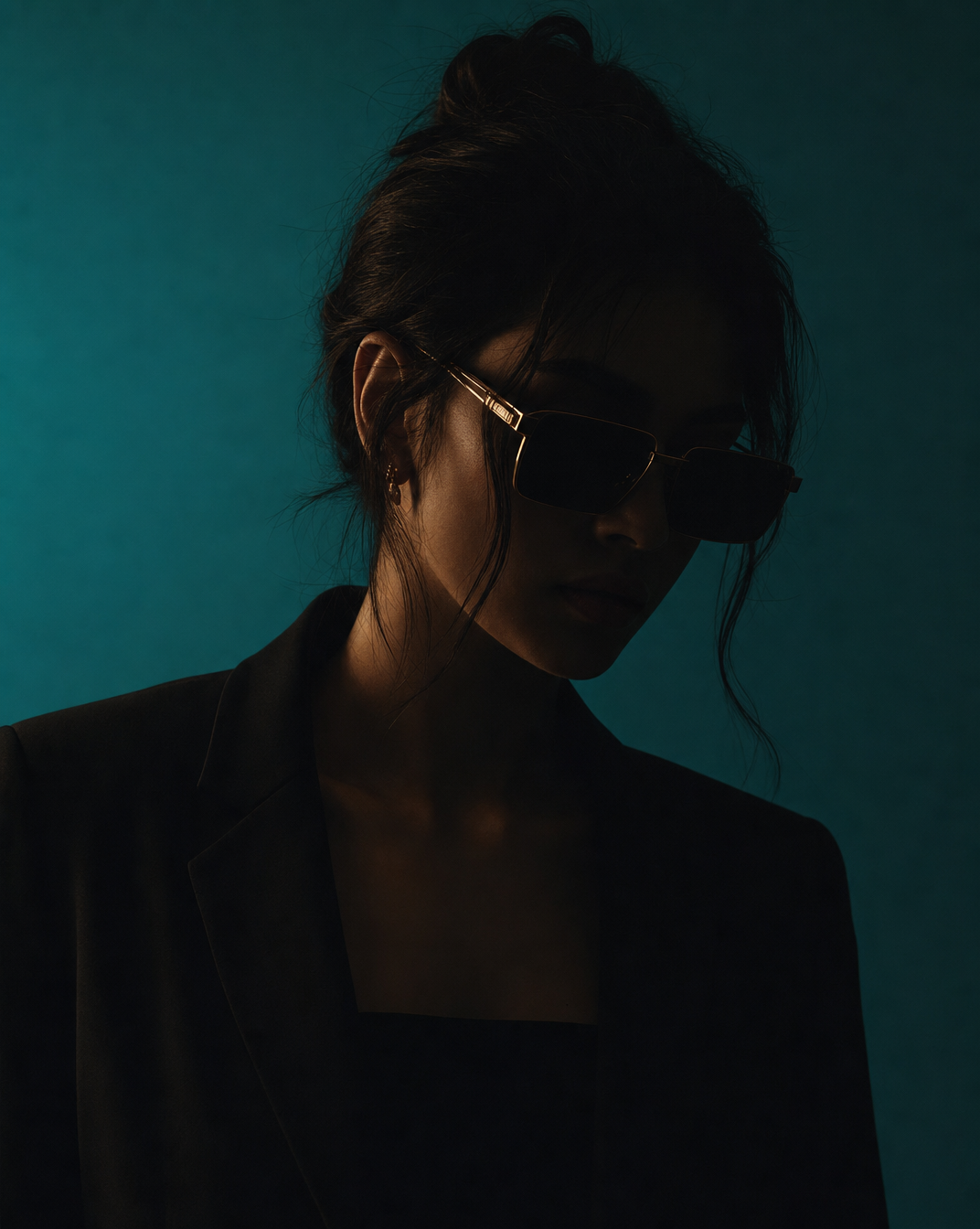
Woman in Teal Light, Shadowed Fashion Portrait
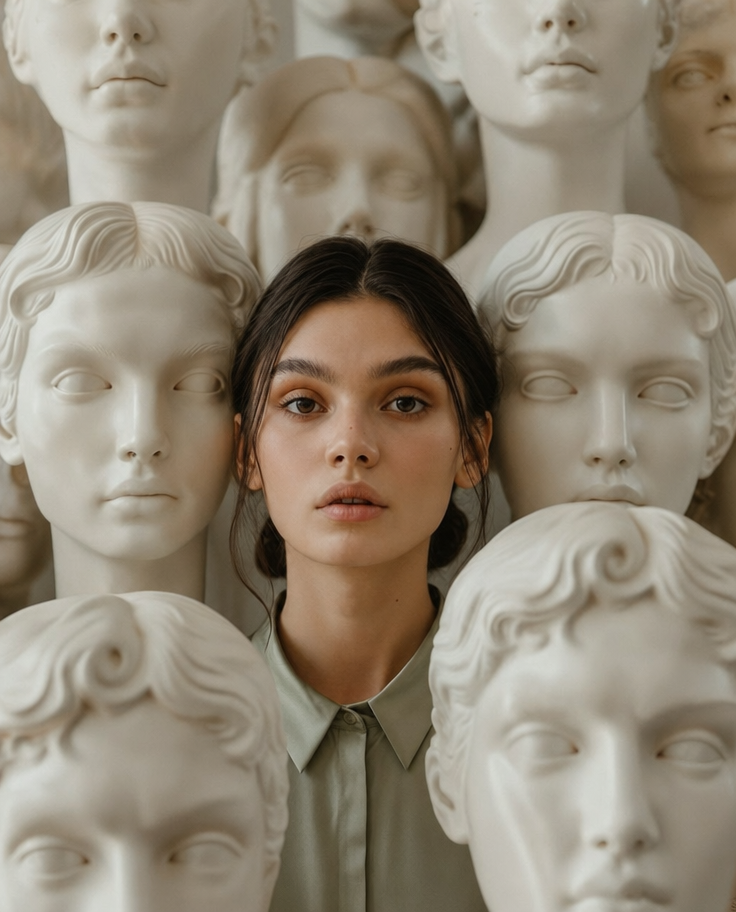
Eerie Elegance Among Marble Busts
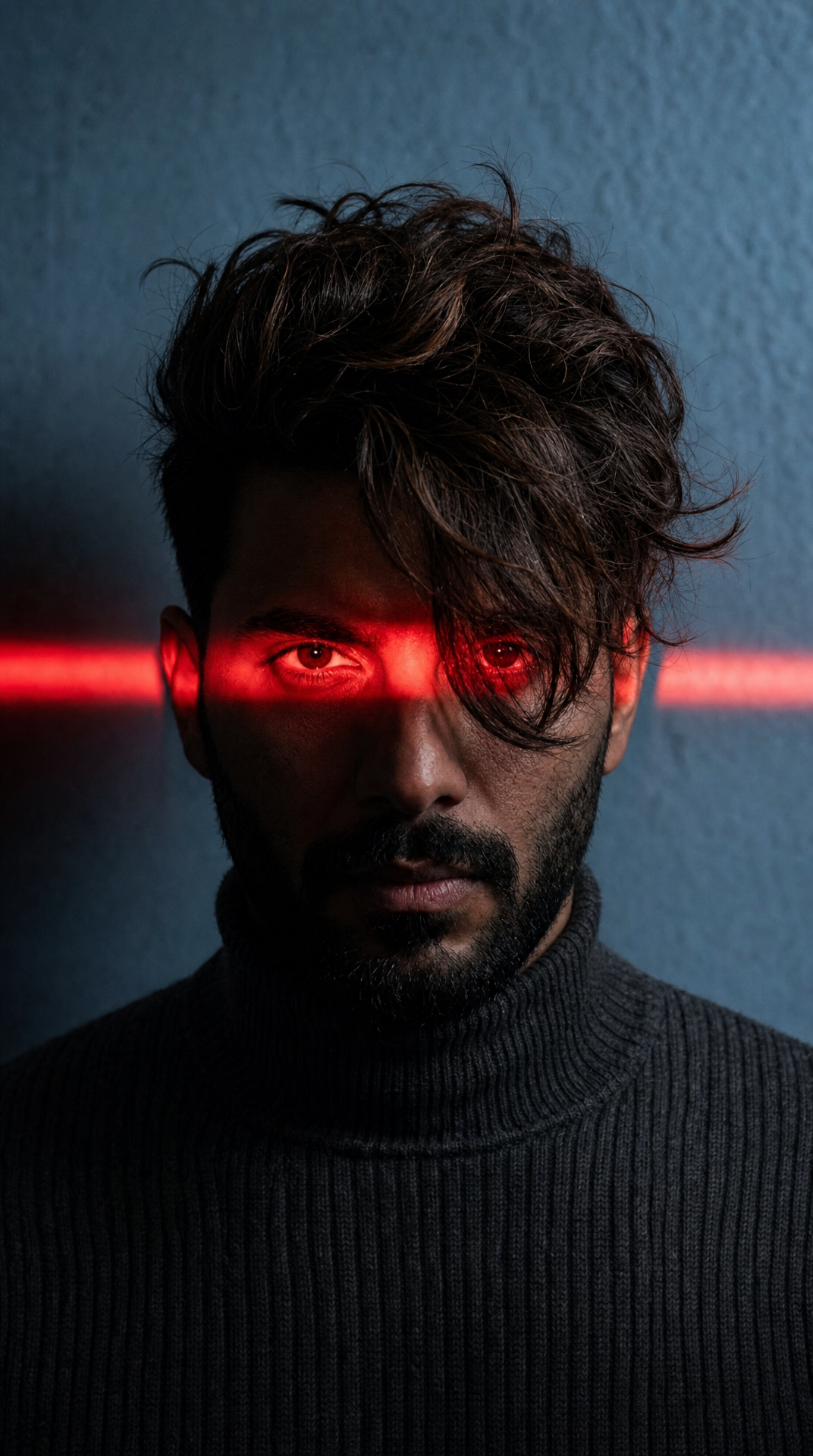
Charcoal turtleneck with red eye-beam
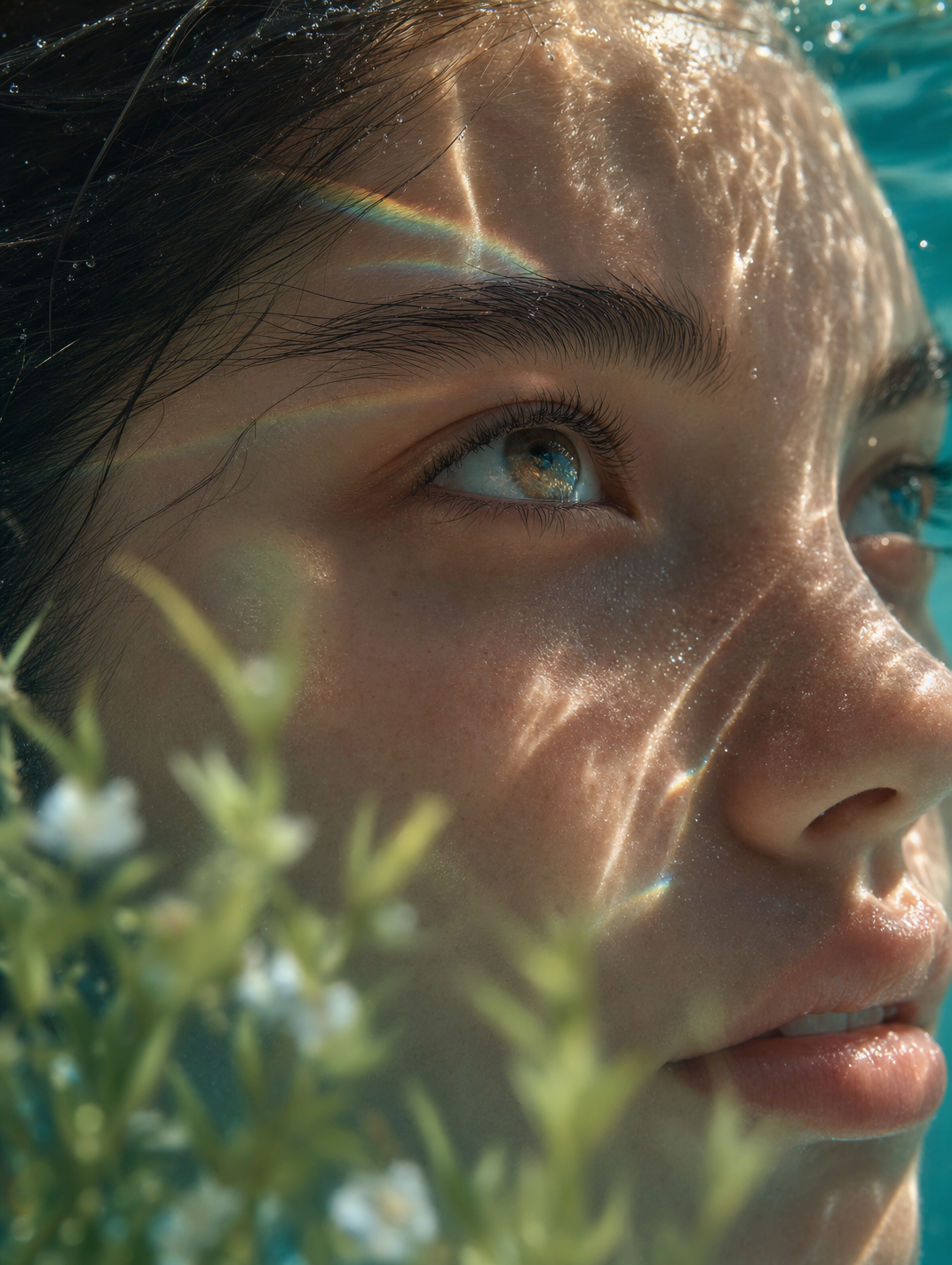
Dreamy Macro Portrait in Cool Water