Why this works
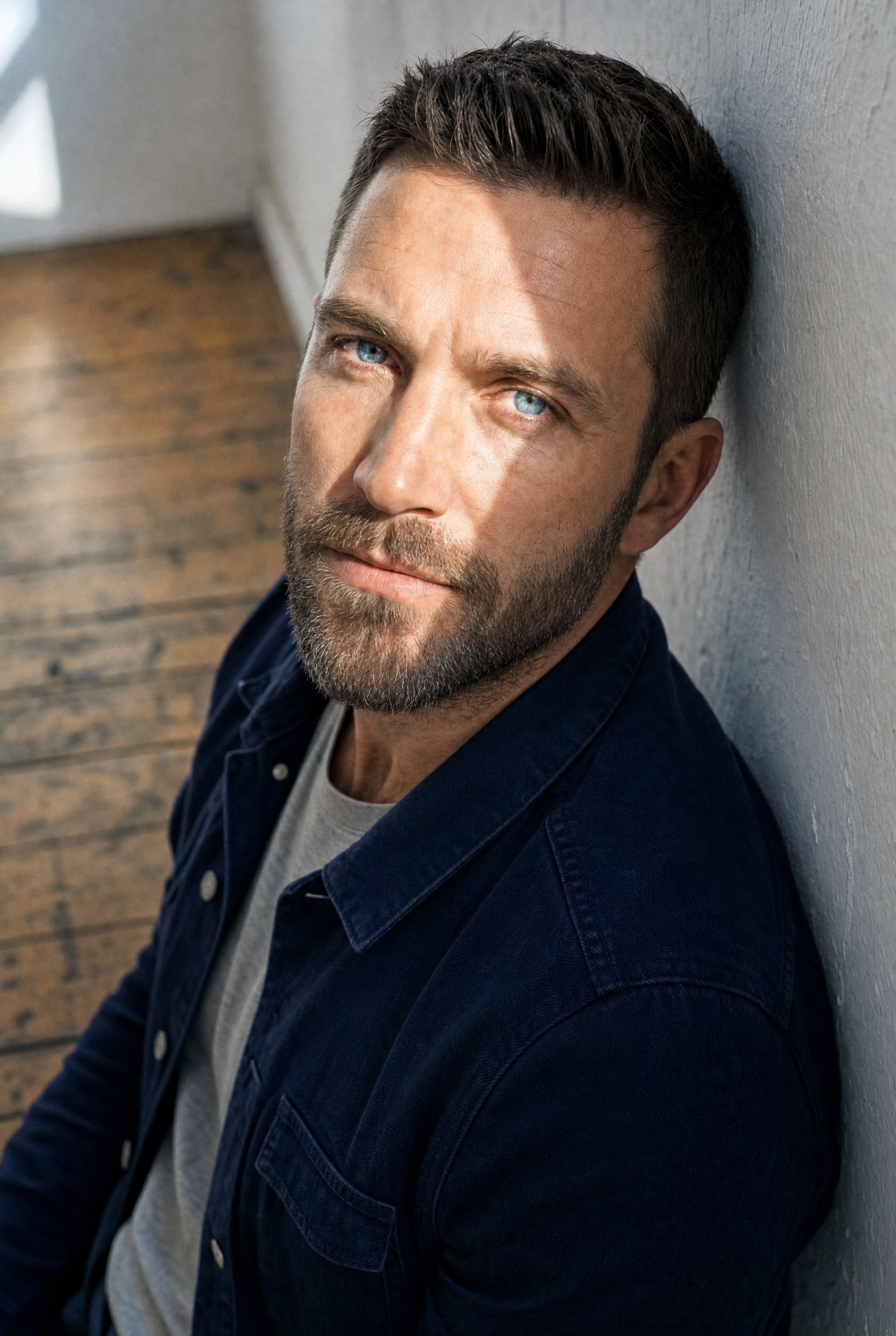
“Extreme close-up” and “looking directly at the camera” make the face and eye contact carry the portrait, while “shallow depth of field” reduces the wall to a quiet, soft backdrop. The cooler “late-afternoon window light” and “subtle diagonal highlights across his cheeks” create the restrained gray-and-tan palette and sculpt the beard without losing the “soft natural shadows.” “Navy shirt over a light gray T-shirt,” “neatly trimmed short beard,” and “cinematic moody feel” add controlled contrast and an intimate editorial tone rather than a heavily stylized fashion look.
FAQ
→How do I make the eyes and expression more central than the beard and clothing?
Keep “extreme close-up” but replace “bearded man leaning against a wall” with “tight head-and-shoulders portrait, eyes centered in the frame,” and add “direct, steady eye contact with a restrained, thoughtful expression.” Replace “navy shirt over a light gray T-shirt” with “collar and clothing barely visible at the lower edge” so the face occupies more of the composition.
→How do I shift this from moody and dramatic to brighter and more approachable?
Replace “cinematic moody feel” and “moody, intimate, dramatic” with “bright, calm, approachable editorial portrait.” Change “cool late-afternoon window light” to “soft diffused morning window light” and “soft natural shadows” to “gentle lifted shadows with even facial exposure,” while keeping the diagonal highlights subtle.
→How do I create a consistent series with different subjects or settings?
Preserve the fixed structure “extreme close-up photorealistic editorial portrait,” “looking directly at the camera,” “shallow depth of field,” and “soft natural shadows.” Swap “bearded man” for subjects such as “older woman with silver hair” or “young musician with curly hair,” and replace “wall background” with “weathered plaster wall,” “studio paper backdrop,” or “cafe window,” while retaining “cool late-afternoon window light” and “subtle diagonal highlights across the cheeks” for visual continuity.
Learn the technique behind this
- Why can't AI spell, and how do I get readable text in an image? — Older diffusion models had no character-level representation of text, so they produced letterform-shaped texture instead of words.
- How should a prompt be structured, and does word order matter? — A prompt that behaves predictably names one subject first, then what it is doing, then where, then the light, then the lens or medium, then the style.
- Do negative prompts work, and what should go in one? — Negative prompts work on models that support a separate negative conditioning channel — mainly Stable Diffusion and FLUX-family models.
Related prompts
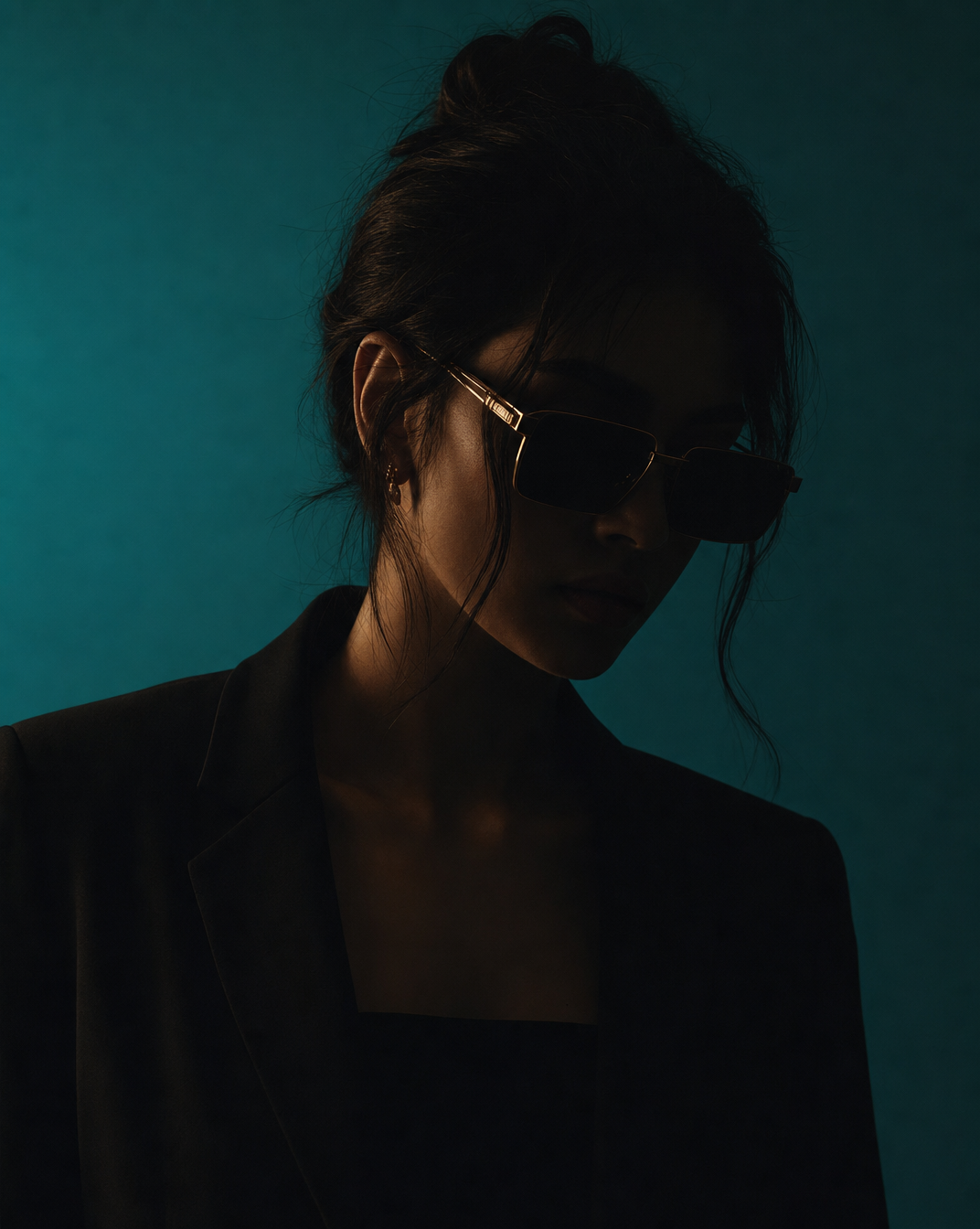
Woman in Teal Light, Shadowed Fashion Portrait
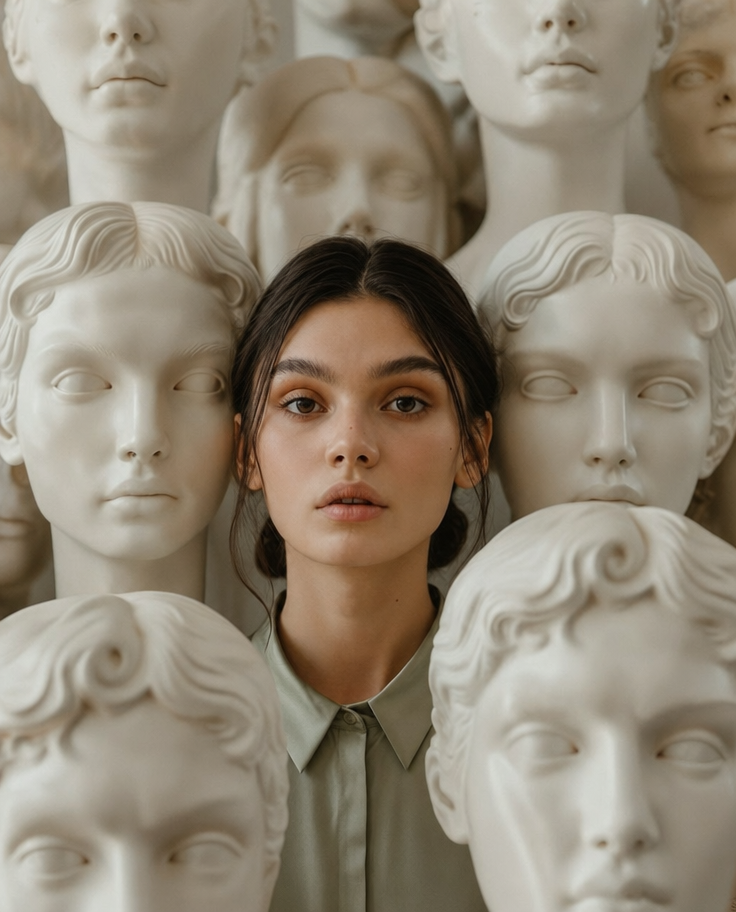
Eerie Elegance Among Marble Busts
Charcoal turtleneck with red eye-beam
Dreamy Macro Portrait in Cool Water