Why this works
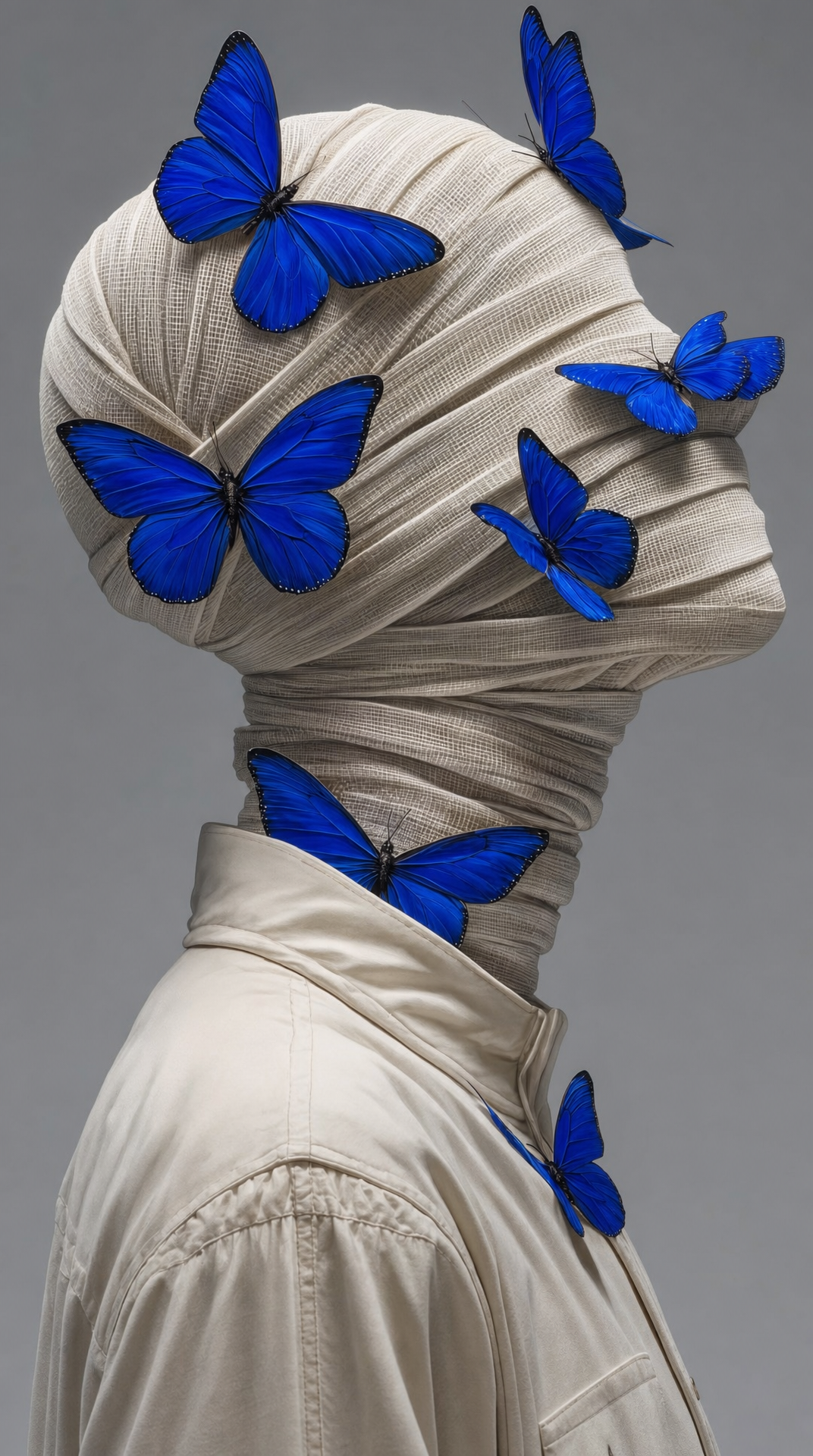
The surreal tension comes from “wrapped entirely in pale cream bandages” contrasted with “vivid cobalt-blue butterflies,” while the “plain cool gray studio background” keeps that color contrast isolated and controlled. “Half-body framing,” “centered composition,” and the “slight three-quarter turn” make the covered head and shoulder activity the visual anchor; “soft diffused lighting” and “subtle shadows” preserve the fabric’s realism without breaking the clean, mysterious mood. “Realistic shallow depth of field” separates the subject from the gray background, while “ultra-detailed fabric texture” gives the otherwise minimal portrait its tactile focus.
FAQ
→How do I make the butterflies feel more threatening and shift the portrait from elegant to ominous?
Replace “soft diffused lighting” with “hard directional top lighting with deep shadows,” change “vivid cobalt-blue butterflies” to “black butterflies with torn wings and sharp silhouettes,” and replace “clean minimal aesthetic” with “dark surreal horror editorial aesthetic.” Keep “plain cool gray studio background” to preserve the stark isolation.
→How do I make the bandaged man more dominant than the butterflies?
Replace “several vivid cobalt-blue butterflies perch on and flutter around his head and upper shoulders” with “one small cobalt-blue butterfly resting near his collarbone,” and change “half-body framing” to “tight chest-up portrait.” Add “face and bandage wrap occupy most of the frame” so the texture and upward head tilt carry the composition.
→How do I build a coordinated series of variations from this portrait?
Keep “photorealistic surreal studio photography,” “centered composition,” “soft diffused lighting,” and “ultra-detailed fabric texture” unchanged, then swap only the butterfly phrase and background color: use “amber moths” with “warm beige studio background,” “silver dragonflies” with “pale blue studio background,” or “white paper cranes” with “soft lavender studio background.” Retain “pale cream bandages” across all versions so the subject remains visually consistent.
Learn the technique behind this
- Why can't AI spell, and how do I get readable text in an image? — Older diffusion models had no character-level representation of text, so they produced letterform-shaped texture instead of words.
- How should a prompt be structured, and does word order matter? — A prompt that behaves predictably names one subject first, then what it is doing, then where, then the light, then the lens or medium, then the style.
- Which aspect ratio should I use, and how does it change the image? — Aspect ratio determines what the model composes, not how it's cropped afterwards.
Related prompts
Woman in Teal Light, Shadowed Fashion Portrait
Eerie Elegance Among Marble Busts
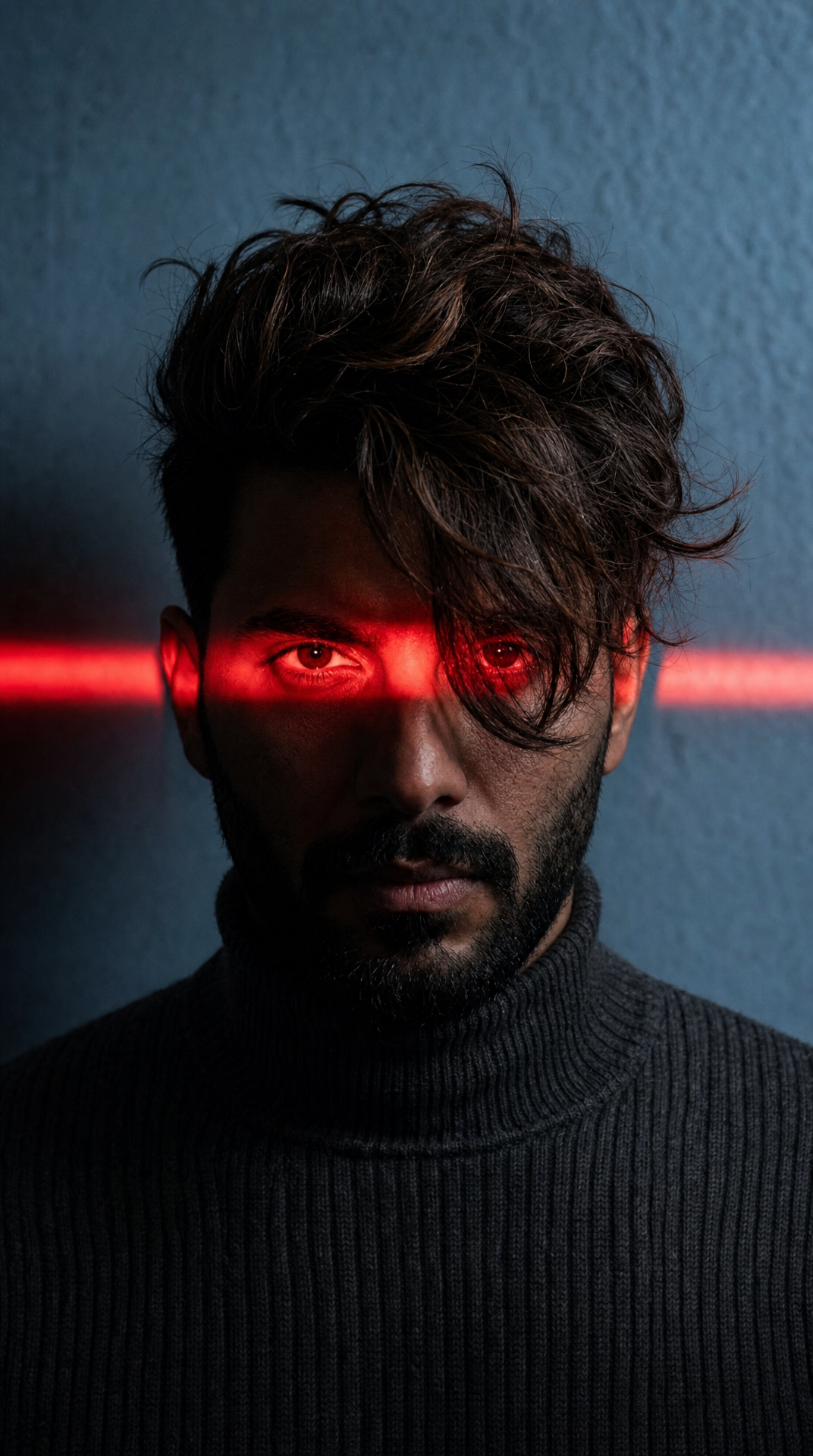
Charcoal turtleneck with red eye-beam
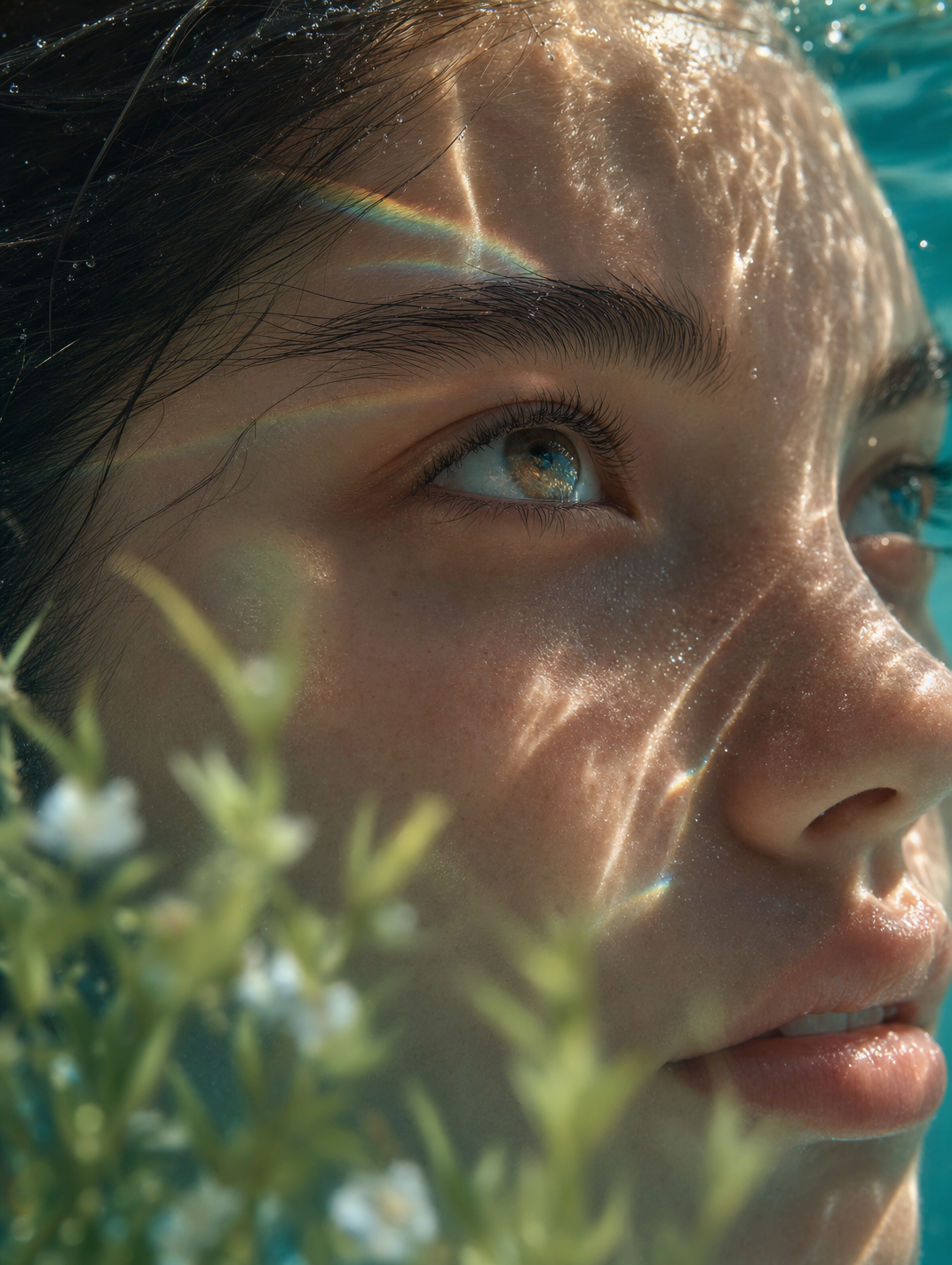
Dreamy Macro Portrait in Cool Water