Why this works
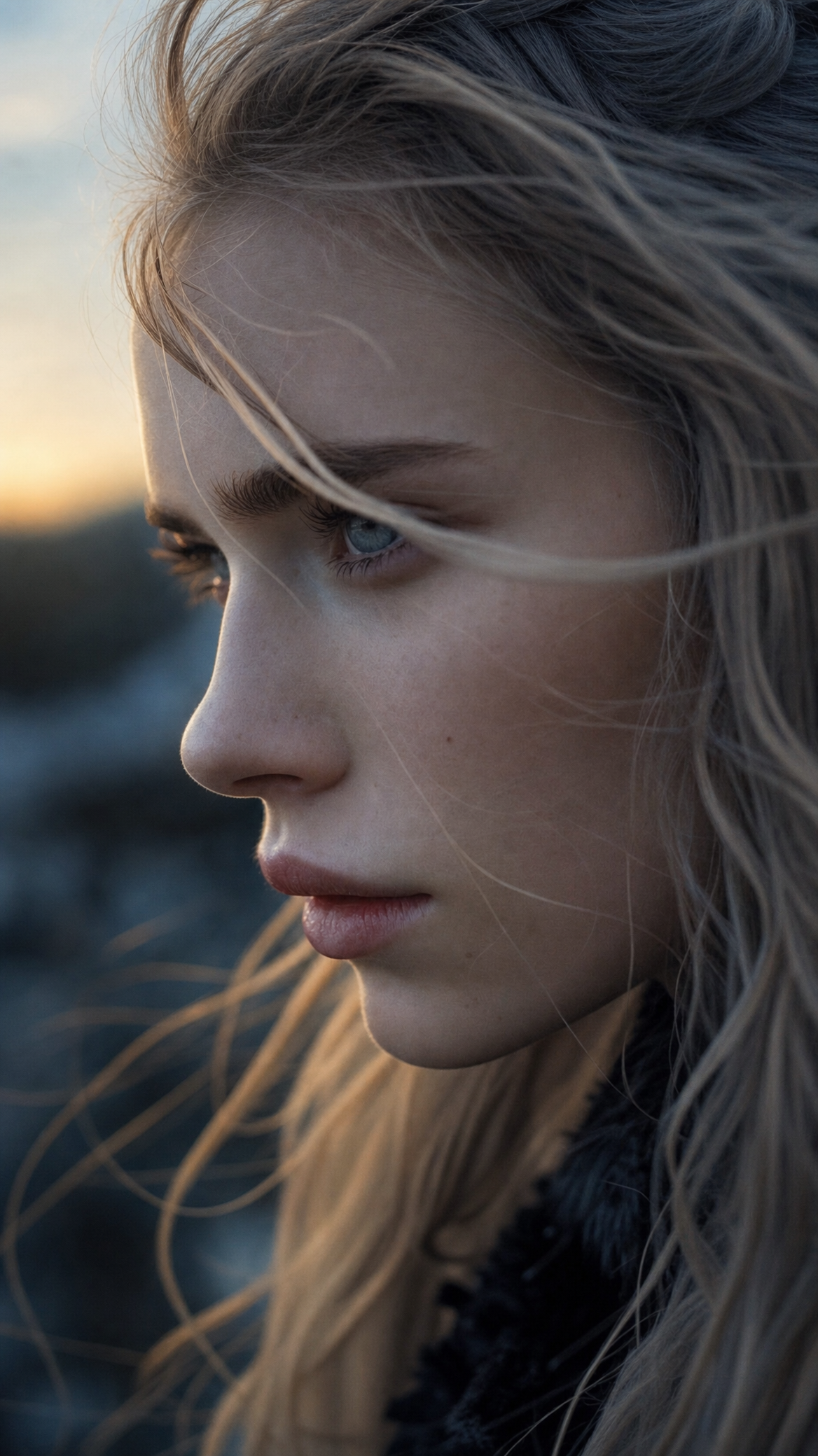
The close-up profile framing keeps the woman’s freckles, natural skin texture, and windblown strands crossing her cheek as the visual anchors, while “soft blurred outdoor background” removes competing detail. “Early evening golden-blue overcast lighting” supplies the cool blue and warm tan balance visible across the image, and “moody cinematic realism” with “introspective, ethereal atmosphere” sets the restrained emotional tone. “Shallow depth of field” concentrates focus on the face and hair while preserving the realistic photographic detail requested by “high detail” and “realistic photography.”
FAQ
→How do I change this prompt for a warmer, more optimistic portrait?
Replace “moody cinematic realism” and “introspective, ethereal atmosphere” with “warm, hopeful editorial realism,” and change “early evening golden-blue overcast lighting” to “soft late-afternoon golden sunlight with gentle warm rim light.” Keep “natural skin texture” and “realistic photography” to preserve the believable face.
→How do I make the freckles and eyes more visually prominent?
Replace “close-up profile portrait” with “tight three-quarter close-up portrait focused on the eyes and freckles,” and change “shallow depth of field” to “very shallow depth of field with crisp focus on the nearer eye, freckles, and eyelashes.” Replace “a few windblown strands crossing her cheek” with “loose strands framing the face without covering the eyes” so the hair remains a secondary detail.
→How do I build a series of variations while keeping this character consistent?
Keep the fixed subject phrase “pale young woman with ash-brown hair and subtle freckles” and the style phrases “natural skin texture” and “realistic photography,” then vary only the setting and lighting. For example, replace “soft blurred outdoor background” with “misty coastal cliff background” and “early evening golden-blue overcast lighting” with “cool dawn light with pale lavender shadows,” or use “rain-darkened city street” with “neon reflections and soft blue night lighting” for a more urban variation.
Learn the technique behind this
- Why can't AI spell, and how do I get readable text in an image? — Older diffusion models had no character-level representation of text, so they produced letterform-shaped texture instead of words.
- How should a prompt be structured, and does word order matter? — A prompt that behaves predictably names one subject first, then what it is doing, then where, then the light, then the lens or medium, then the style.
- Why does AI get hands and faces wrong, and how do I fix it? — Hands fail because they're small in frame, extremely variable in pose, and self-occluding — the model has less usable signal per pixel than for any other body part.
Related prompts
Woman in Teal Light, Shadowed Fashion Portrait
Eerie Elegance Among Marble Busts
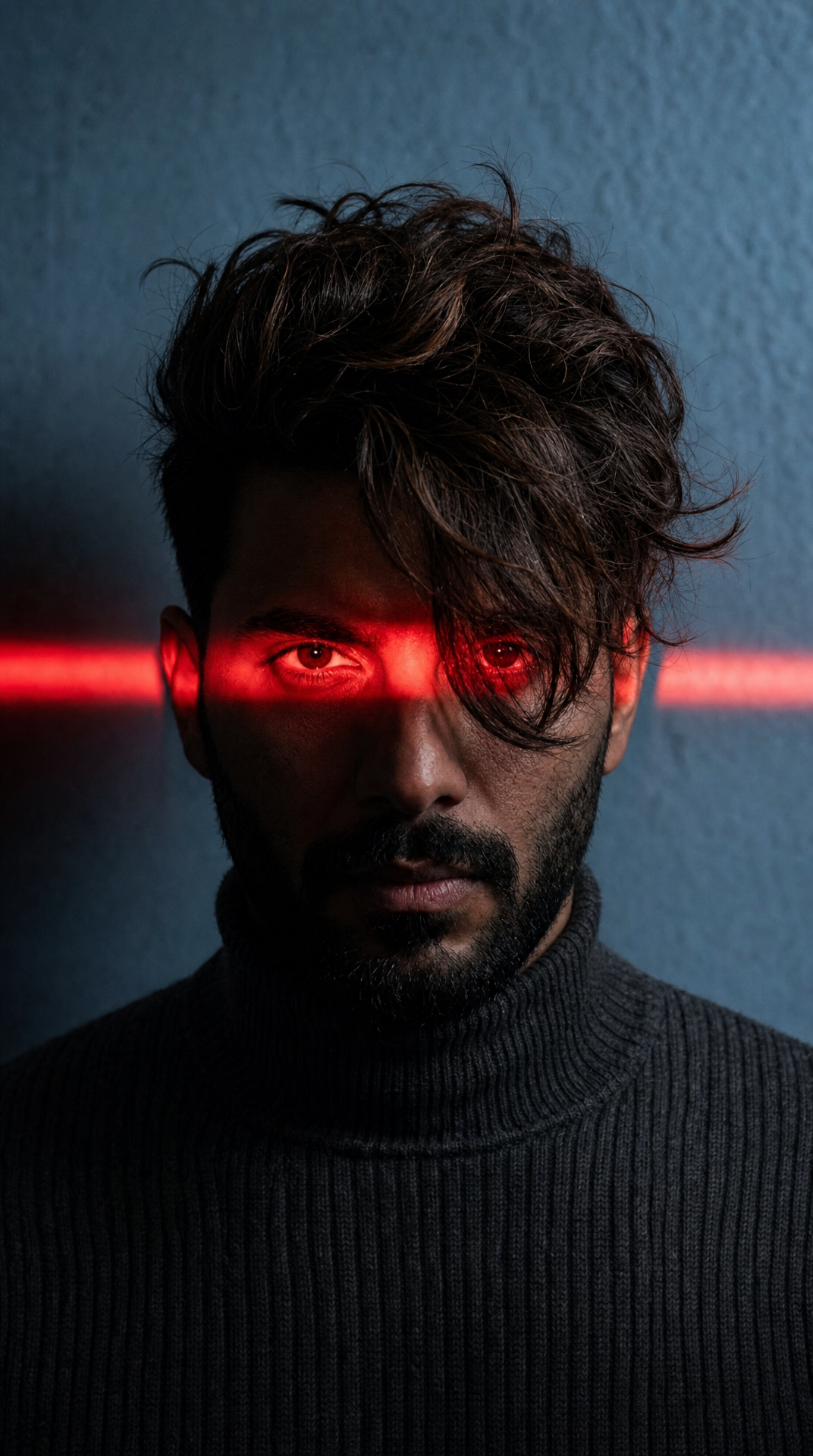
Charcoal turtleneck with red eye-beam
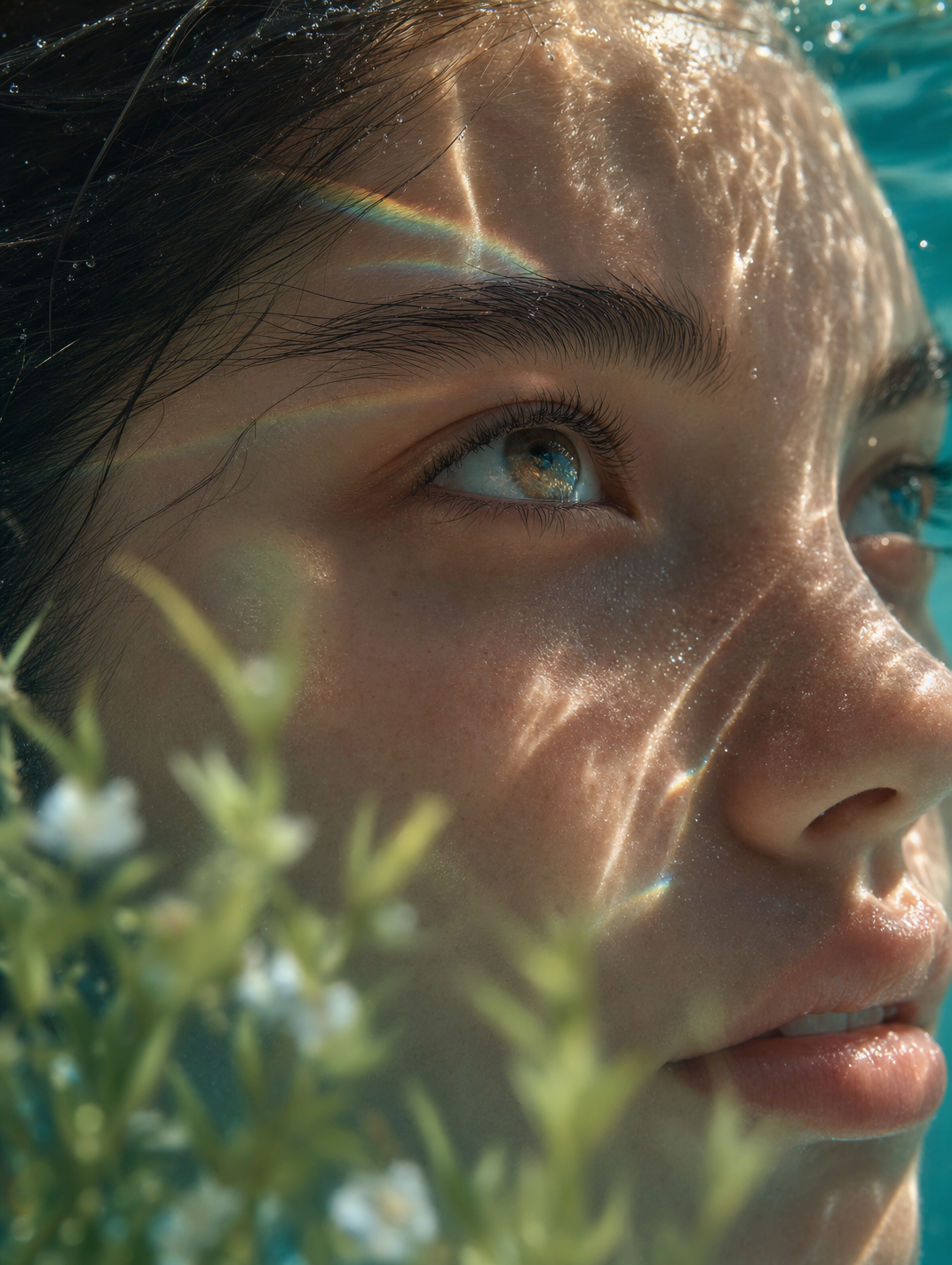
Dreamy Macro Portrait in Cool Water