Why this works
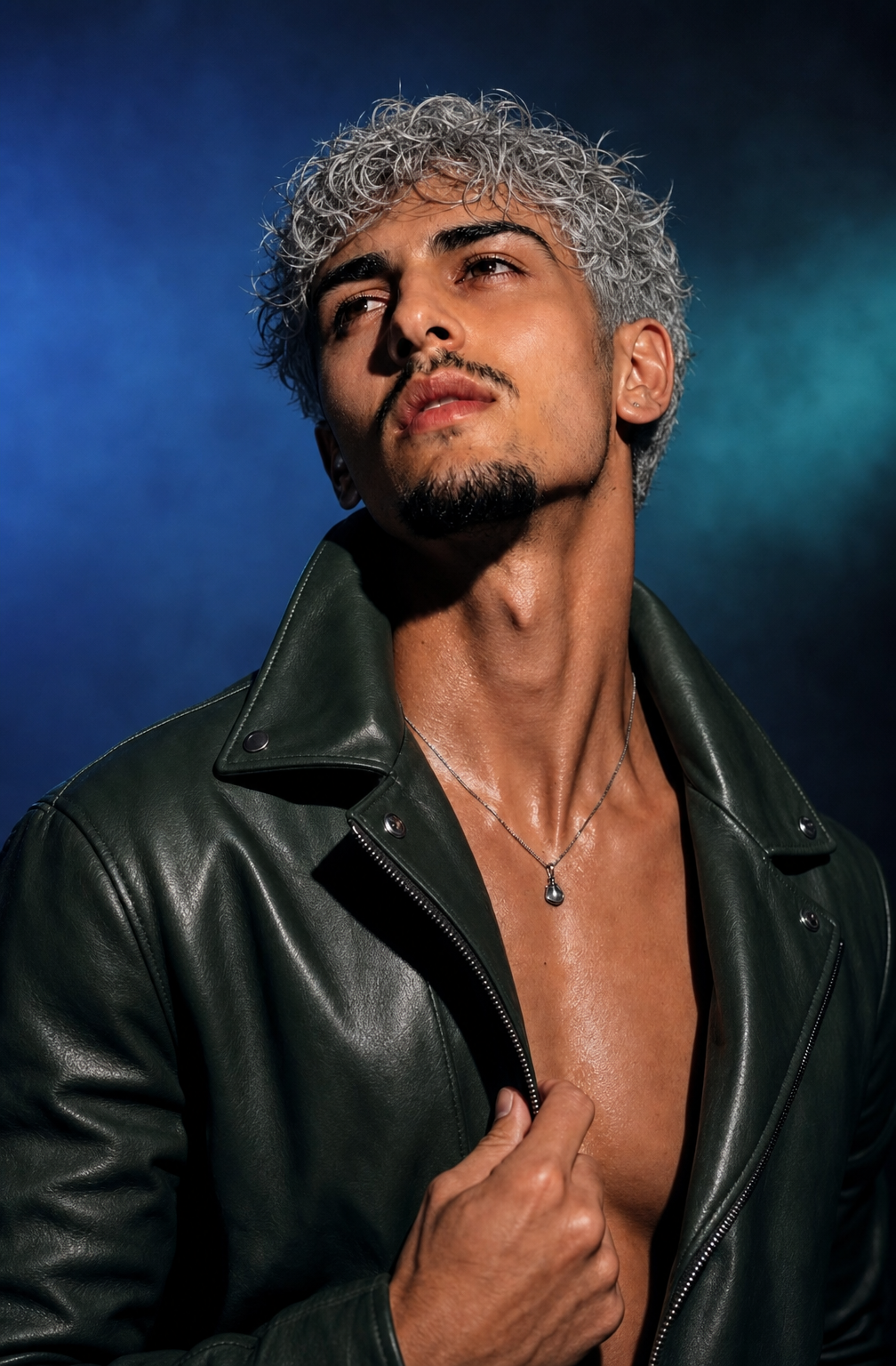
The tight studio framing and “emphasizing facial structure and jacket collar held by one hand” make the portrait-closeup feel assertive, with the hand creating a strong diagonal toward the face. “Short silver-gray curls,” the “deep forest-green leather jacket,” and the “cool twilight blue-to-teal gradient” build a controlled blue-gray palette, while “deep sculpted shadows on the neck and face” supplies the dramatic, sensual contrast. “Cinematic color grading with high contrast” keeps the pose and jawline crisp rather than letting the smooth gradient flatten the image.
FAQ
→How do I make the portrait feel softer and less intimidating?
Replace “deep sculpted shadows on the neck and face” and “high contrast” with “large diffused beauty light, soft wraparound shadows, and gentle tonal contrast.” Keep “realistic skin texture” so the softer lighting does not make the face look airbrushed.
→How do I make the pendant the central visual detail?
Change “small dark metal pendant on a thin chain” to “prominent brushed-silver pendant on a thicker chain, resting at the center of the open chest,” and replace “tight studio framing emphasizing facial structure and jacket collar” with “tight chest-up framing balancing the pendant and face.” Add “sharp focus on the pendant and eyes” to establish the new focal hierarchy.
→How do I create a coordinated series of variations from this portrait?
Keep the fixed anchors “androgynous young male fashion model,” “sharp cheekbones,” “defined jawline,” “light, natural stubble,” and “tight studio framing.” For each variation, swap only the jacket color and background gradient, such as “matte burgundy leather jacket with a plum-to-black gradient,” “matte ivory leather jacket with a cream-to-sand gradient,” or “matte cobalt leather jacket with a navy-to-electric-blue gradient,” while preserving “cinematic color grading” and “high contrast.”
Learn the technique behind this
- Why can't AI spell, and how do I get readable text in an image? — Older diffusion models had no character-level representation of text, so they produced letterform-shaped texture instead of words.
- How should a prompt be structured, and does word order matter? — A prompt that behaves predictably names one subject first, then what it is doing, then where, then the light, then the lens or medium, then the style.
- Why does AI get hands and faces wrong, and how do I fix it? — Hands fail because they're small in frame, extremely variable in pose, and self-occluding — the model has less usable signal per pixel than for any other body part.
Related prompts
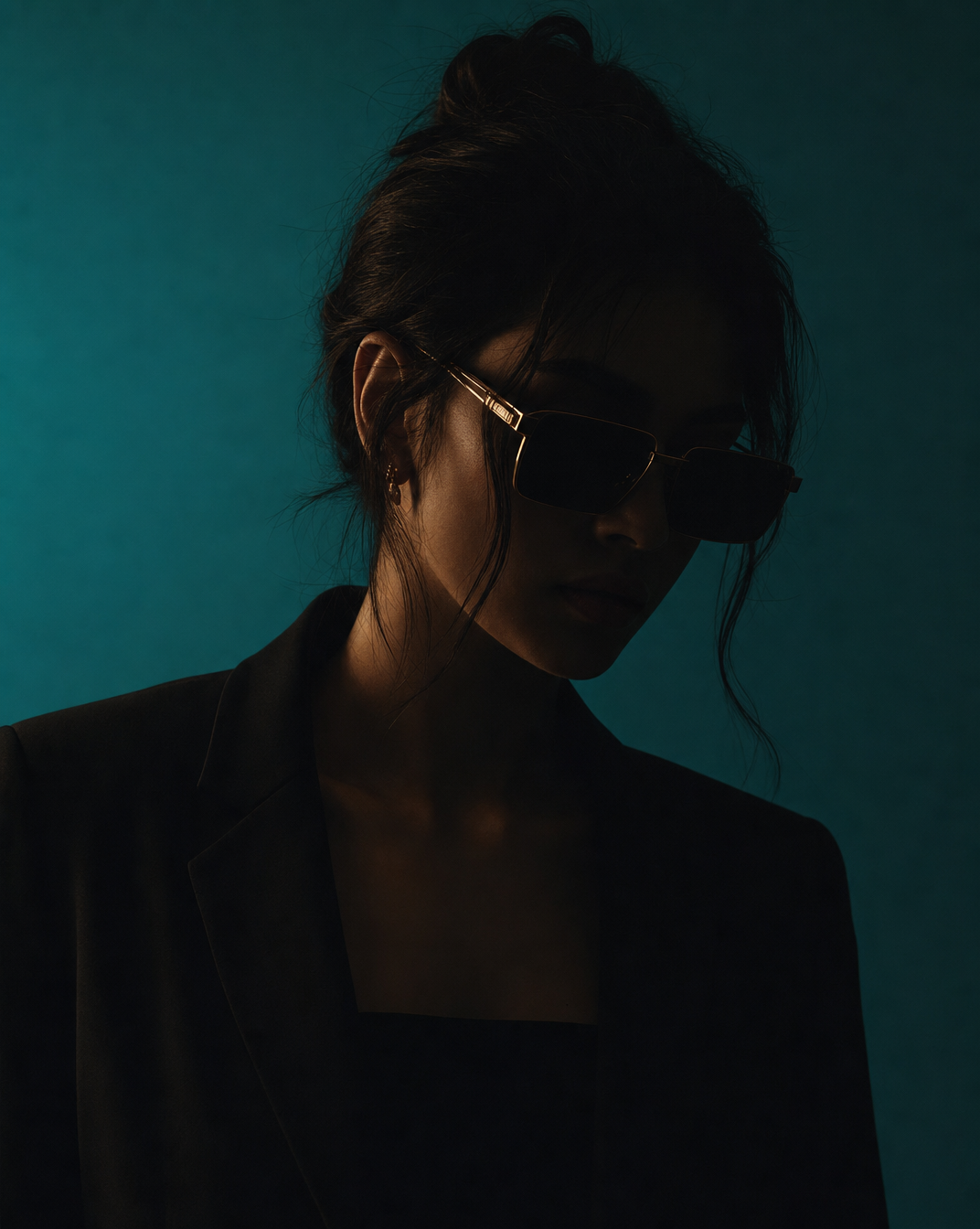
Woman in Teal Light, Shadowed Fashion Portrait
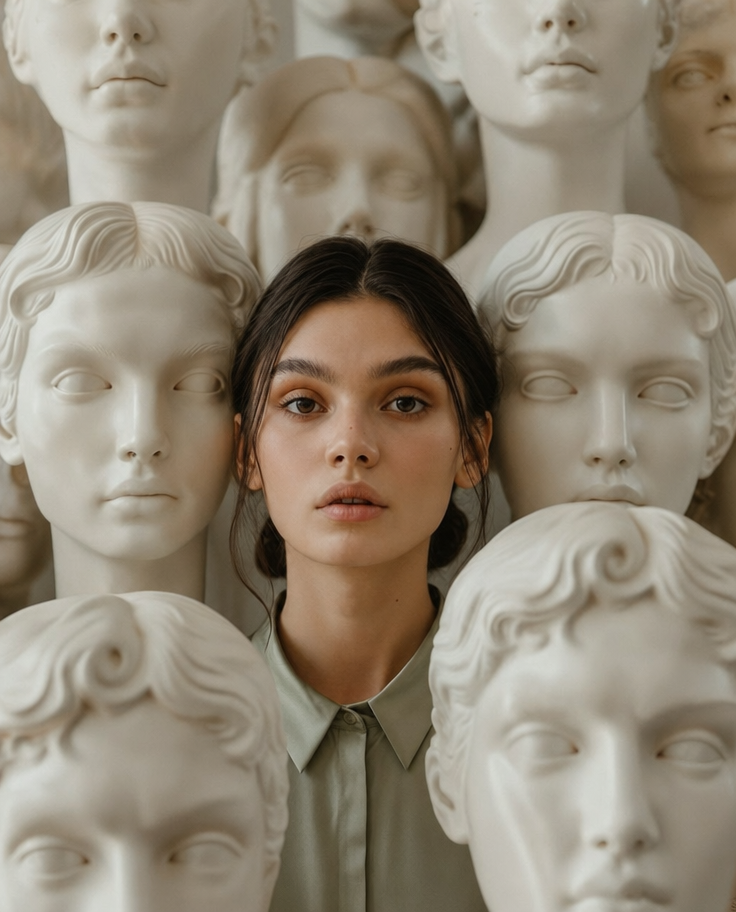
Eerie Elegance Among Marble Busts
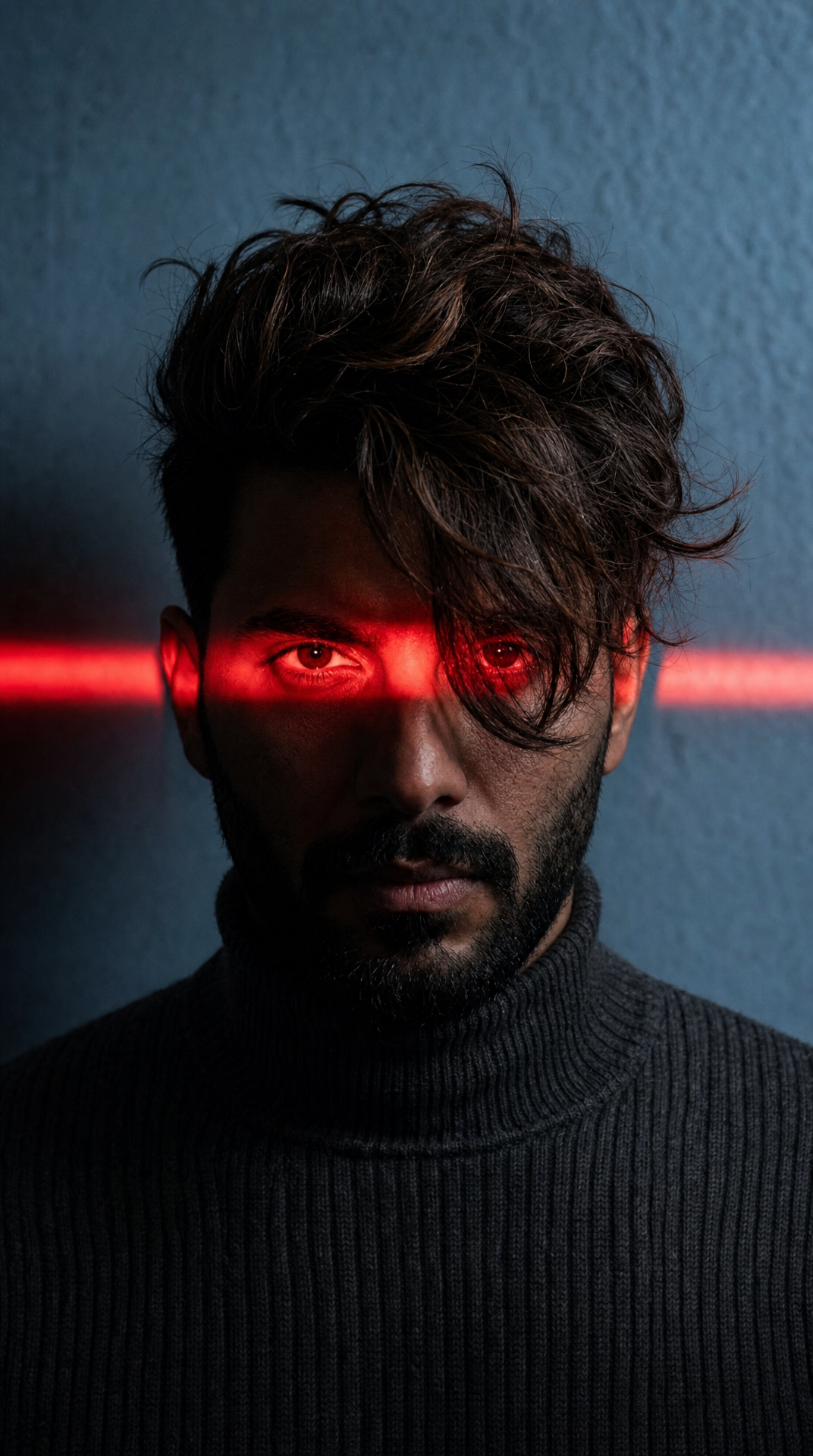
Charcoal turtleneck with red eye-beam
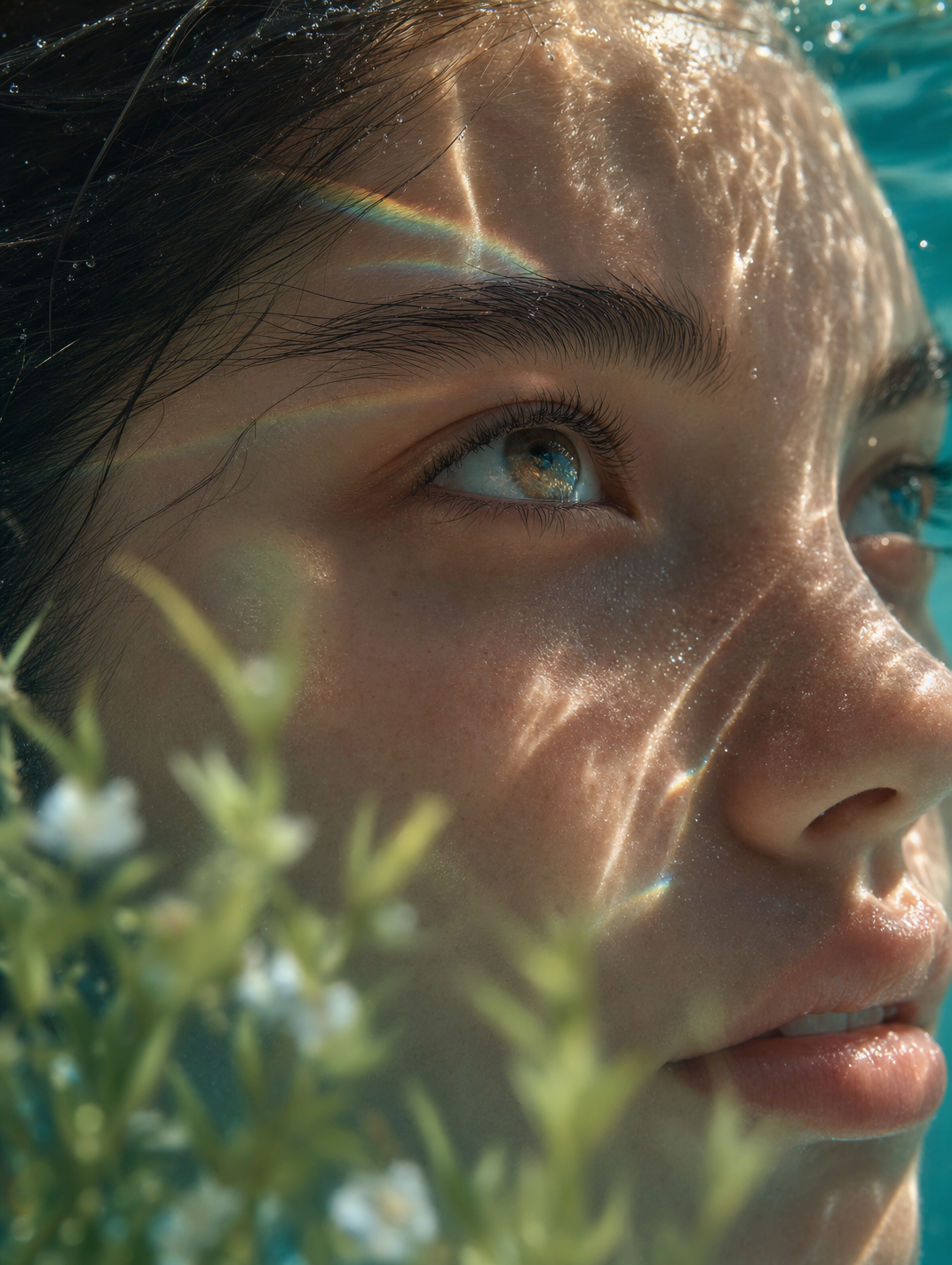
Dreamy Macro Portrait in Cool Water