Why this works
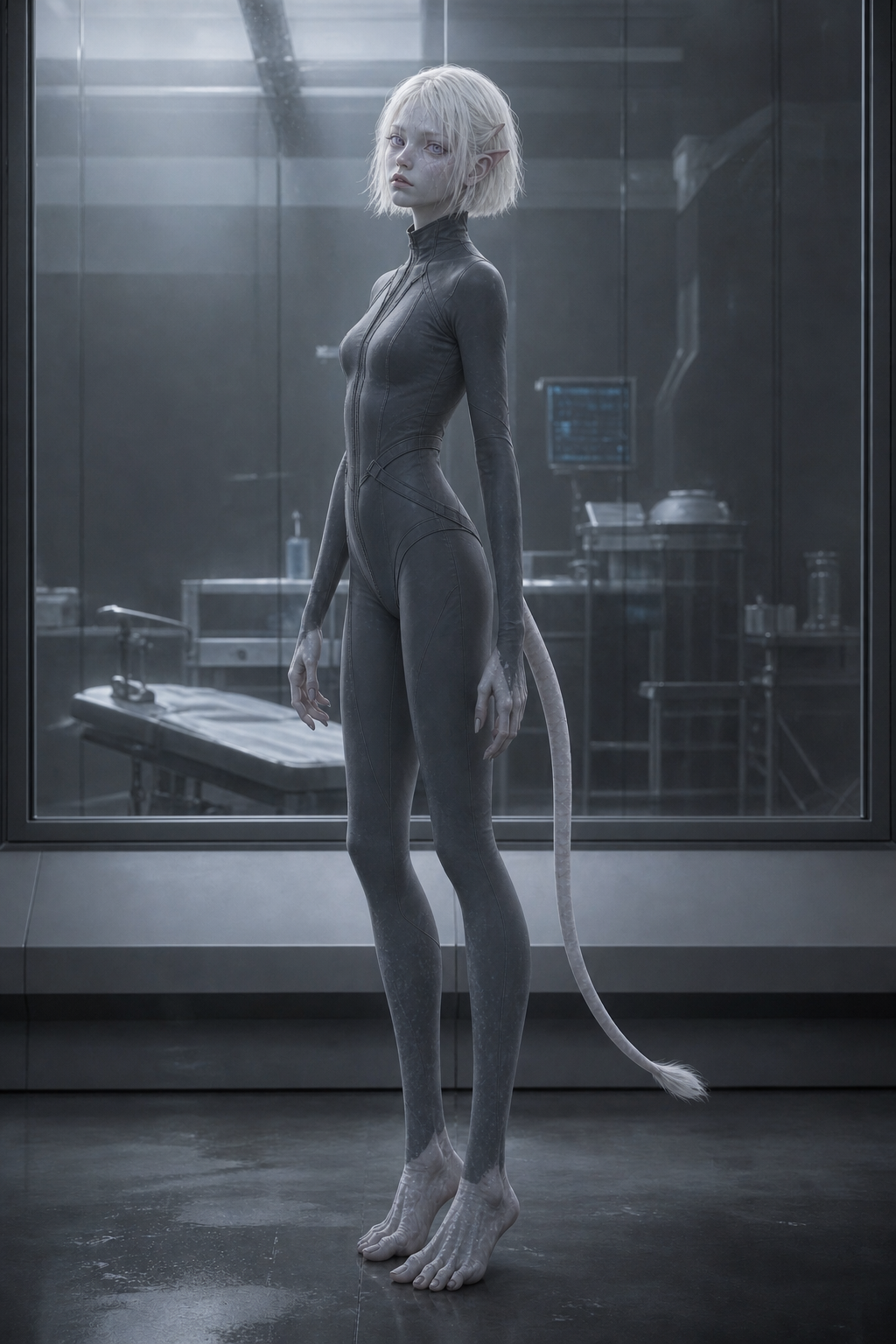
“Photorealistic full-body portrait” establishes the centered, figure-readable composition, while “behind glass” adds a barrier that reinforces the subject’s clinical isolation. The phrases “sterile futuristic laboratory,” “soft blue-gray clinical lighting,” and “eerie cold clinical mood” work together to produce the cold atmosphere, with the dominant black-and-white palette sharpening the contrast between the charcoal-gray bodysuit, pale skin, and laboratory surroundings. “Shallow depth of field” keeps the humanoid prominent against a softened lab, while “subtle biomechanical details and a narrow tail” provide specific sci-fi cues without overtaking the portrait.
FAQ
→How do I make the humanoid’s face and biomechanical features more prominent?
Replace “full-body framing, shallow depth of field” with “three-quarter portrait framing, tight focus on the face and upper torso,” and change “subtle biomechanical details” to “clearly visible biomechanical implants around the temples, neck, and collarbone.” Keep “behind glass” if you want the laboratory barrier to remain part of the composition.
→How do I change the cold clinical mood into a more threatening horror tone?
Replace “soft blue-gray clinical lighting” with “harsh overhead surgical lighting with deep black shadows,” and replace “eerie cold clinical mood” with “oppressive body-horror atmosphere.” Adding “condensation and faint handprints on the glass” gives the existing barrier a more ominous visual function.
→How do I build a series of variations from this laboratory portrait?
Keep “albino humanoid experimental subject,” “realistic skin and material textures,” and “cinematic composition” fixed, then rotate the setting phrase: use “observation chamber with numbered containment panels,” “dim surgical laboratory with suspended instruments,” or “abandoned research lab with flickering monitors.” For consistent variation, retain “full-body framing” and the “charcoal-gray lab bodysuit,” while changing only the environment and lighting phrase.
Learn the technique behind this
- Why can't AI spell, and how do I get readable text in an image? — Older diffusion models had no character-level representation of text, so they produced letterform-shaped texture instead of words.
- How should a prompt be structured, and does word order matter? — A prompt that behaves predictably names one subject first, then what it is doing, then where, then the light, then the lens or medium, then the style.
- Which aspect ratio should I use, and how does it change the image? — Aspect ratio determines what the model composes, not how it's cropped afterwards.
Related prompts
Woman in Teal Light, Shadowed Fashion Portrait
Eerie Elegance Among Marble Busts
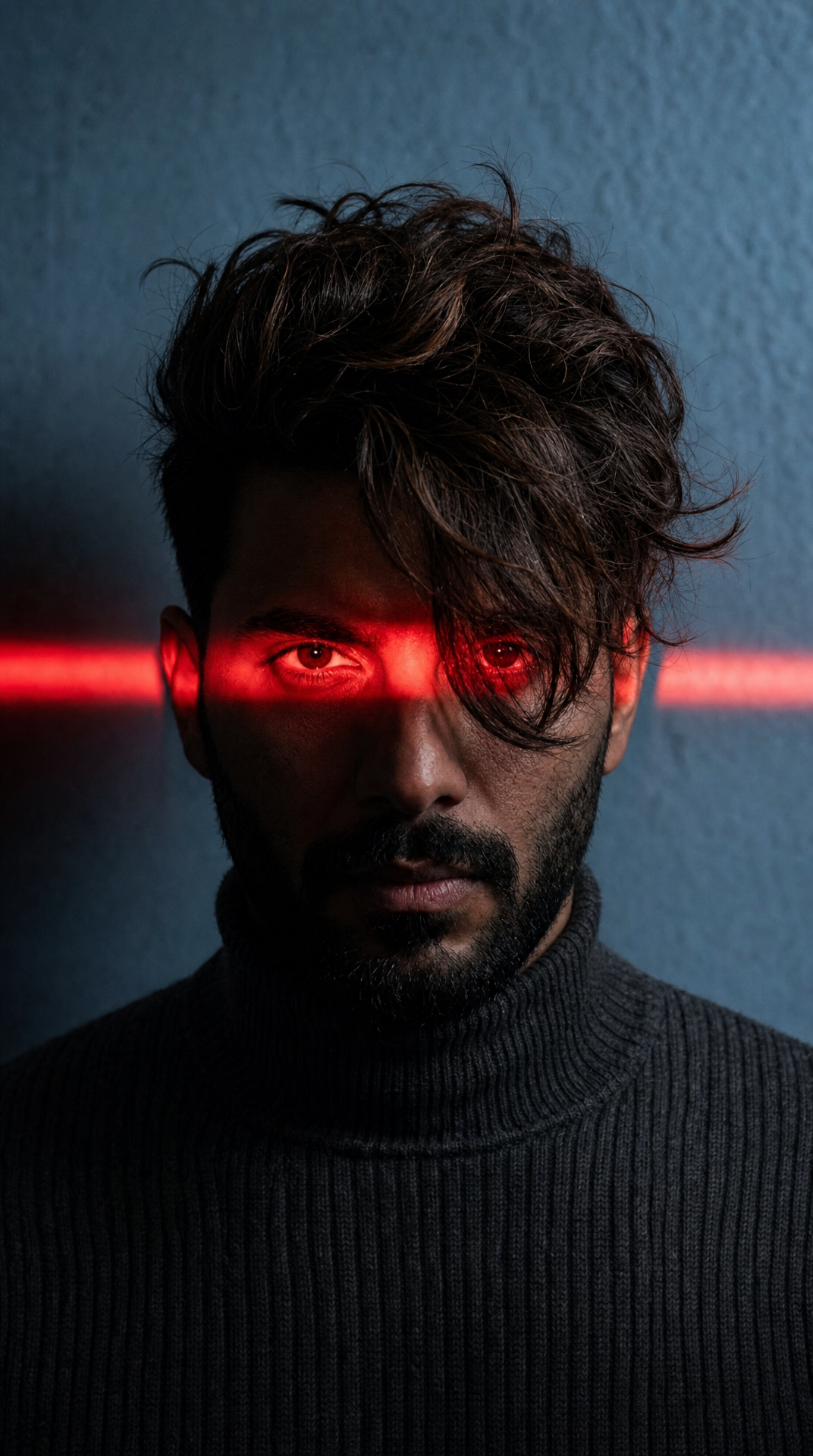
Charcoal turtleneck with red eye-beam
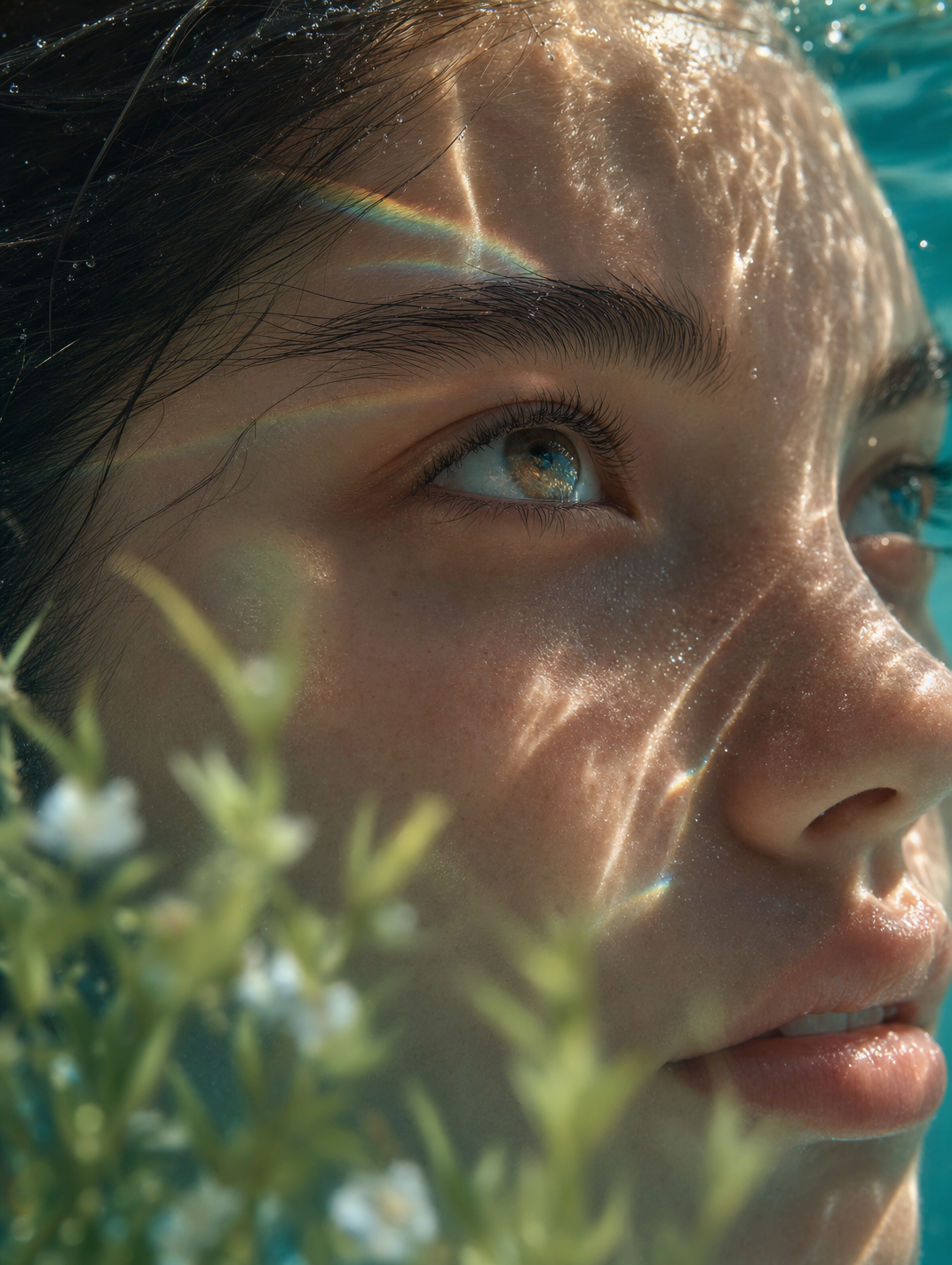
Dreamy Macro Portrait in Cool Water