Why this works
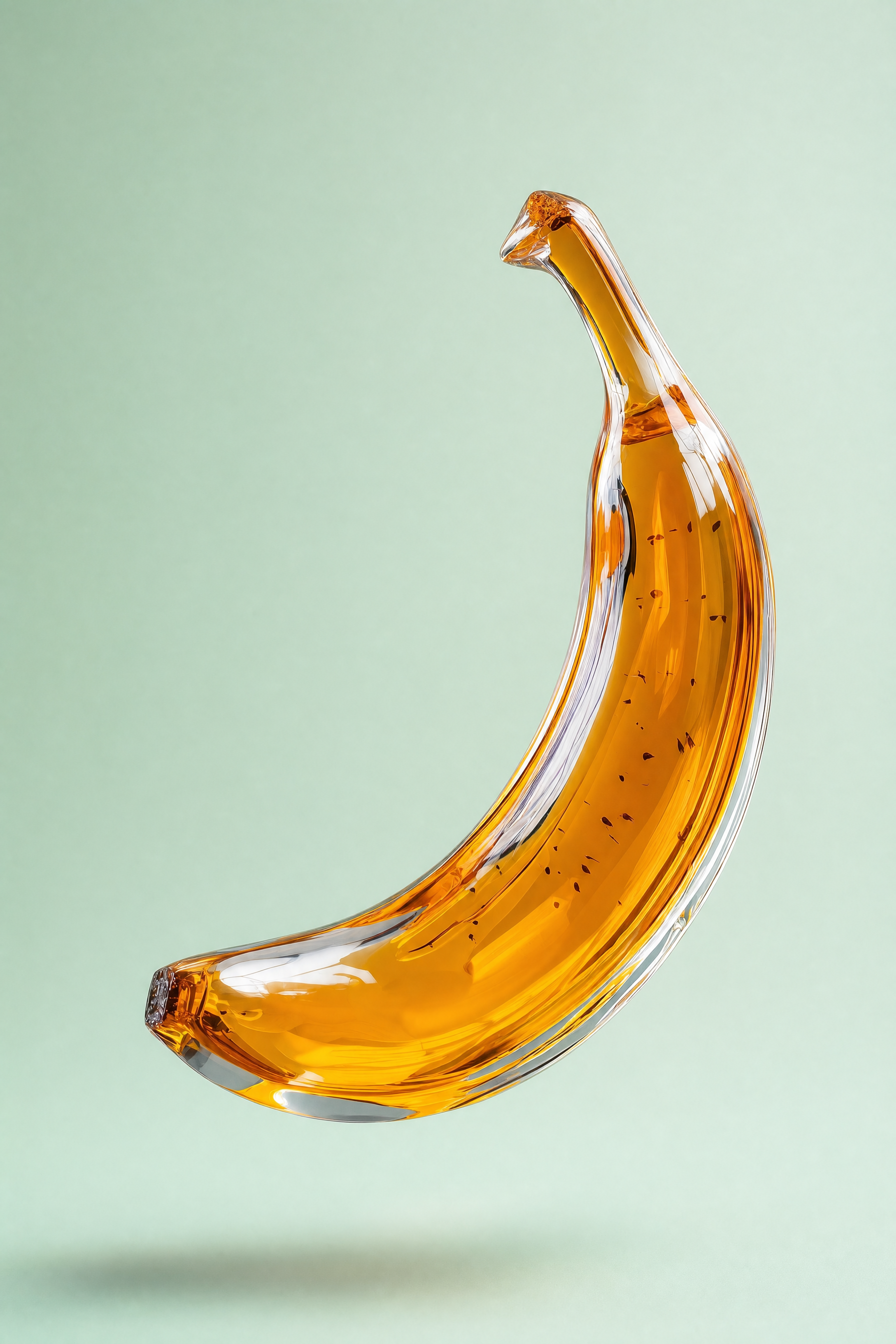
The phrase “transparent glass banana filled with warm amber liquid” supplies the surreal focal point, while “centered composition” and “product-style framing” keep its silhouette immediately readable. “Soft mint-green background with smooth studio gradients” provides the uncluttered field, and “brighter highlights on the glass surface” plus “glossy reflections” define the transparent material; the generated image’s gray-dominant appearance suggests those cool neutral tones outweigh the intended mint-and-amber contrast. “Floating in midair” and “a faint soft shadow below” establish the playful suspension without adding a second visual subject.
FAQ
→How do I make the amber liquid and banana shape more visually dominant?
Replace “soft mint-green background” with “low-contrast pale gray-green background,” and change “warm amber liquid” to “bright translucent golden-orange liquid with strong internal glow.” Add “banana fills most of the frame” after “centered composition” so the subject occupies more of the image.
→How do I turn the playful product shot into a darker, more mysterious image?
Replace “clean studio lighting” and “playful minimalist mood” with “single narrow spotlight, deep surrounding shadows, moody cinematic tone.” Change “faint soft shadow below” to “long sharp shadow beneath and behind the floating banana,” while keeping “glossy reflections” to preserve the glass surface.
→How do I create a series using this prompt with different surreal glass objects?
Keep “photorealistic surreal product shot,” “centered composition,” “product-style framing,” and the mint gradient background unchanged, then replace “transparent glass banana filled with warm amber liquid” with variants such as “transparent glass pear filled with violet liquid,” “glass lemon containing sparkling blue fluid,” or “glass chili filled with red oil.” Match each replacement with a distinct liquid color while retaining “high detail glass and liquid refraction” for a consistent series look.
Learn the technique behind this
- Why can't AI spell, and how do I get readable text in an image? — Older diffusion models had no character-level representation of text, so they produced letterform-shaped texture instead of words.
- How should a prompt be structured, and does word order matter? — A prompt that behaves predictably names one subject first, then what it is doing, then where, then the light, then the lens or medium, then the style.
- Why does the model ignore parts of my prompt? — Ignored instructions are almost always conflicts, counts, or spatial relationships — three things current models handle badly — rather than the model failing to read you.
Related prompts
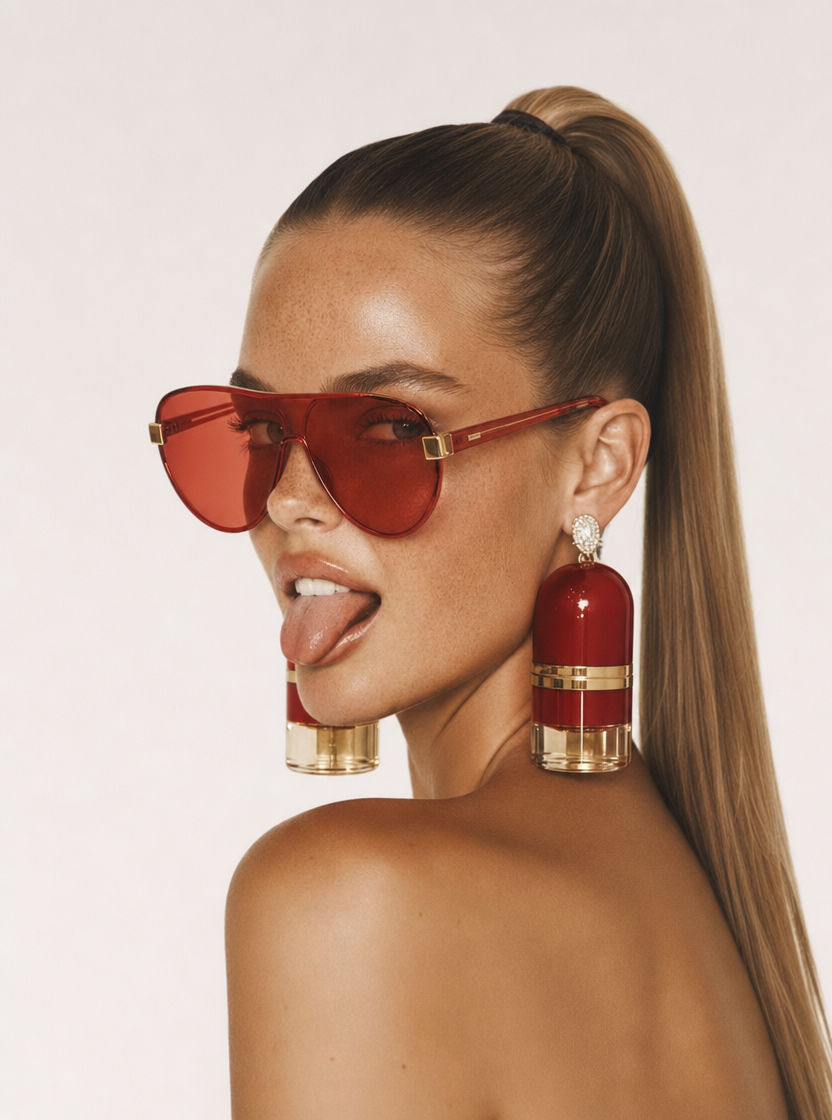
Playful brunette beauty ad portrait
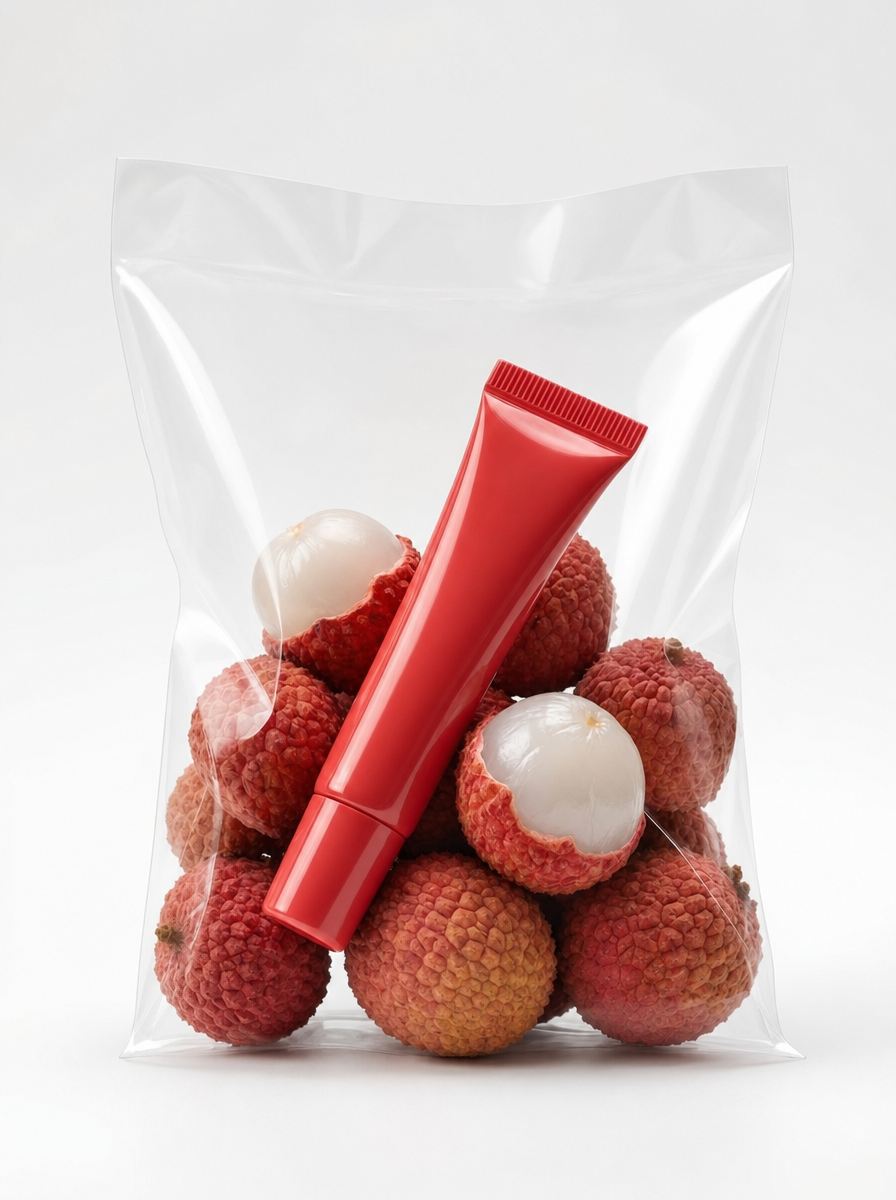
Red Lip Balm with Lychee Freshness
Premium wellness pouch with golden spices
Teal-Accented Bunny Toy Studio Portrait