Why this works
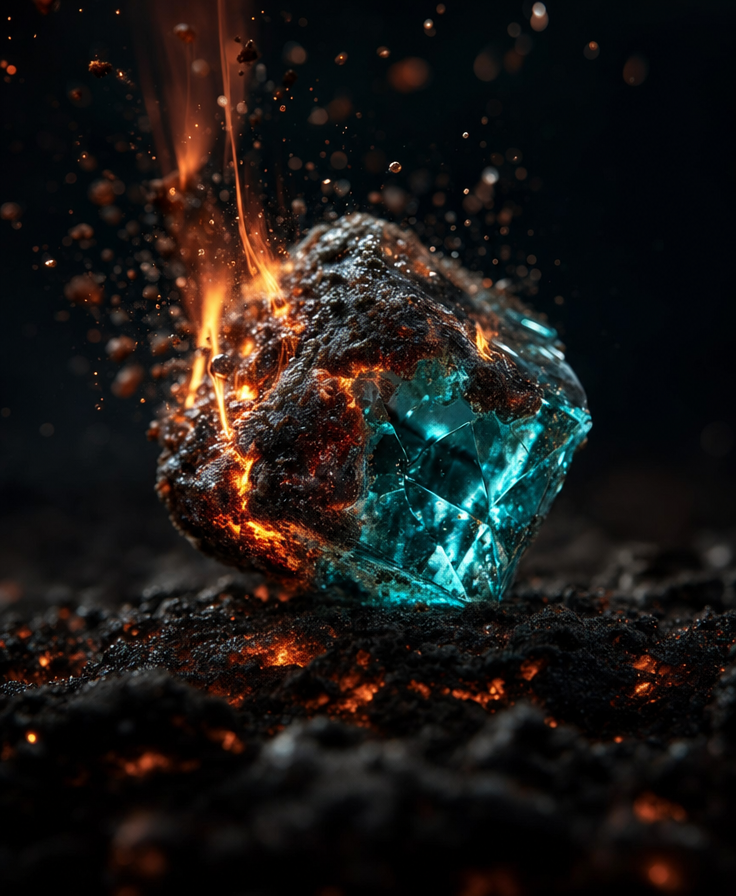
The phrase “photorealistic macro close-up” forces the composition into intimate gemstone detail, while “sharp focus on the hottest section” gives the eye a precise visual anchor. “Deep teal-to-cyan heat color” against “bright orange sparks” creates the dominant teal-orange contrast, with the “dark, gritty volcanic-rock surface” supplying the gray, low-key base. “Low-angle dramatic side lighting” and “intense specular highlights” define the crystal’s sharp geometry, while “molten embers,” “pool-like melt,” and “subtle drifting smoke” make the fragment feel actively transforming rather than merely glowing.
FAQ
→How do I make the molten eruption more central and visually dominant?
Replace “sharp focus on the hottest section of the gemstone” with “the erupting molten core centered and filling most of the frame, with sparks radiating outward.” Change “macro close-up” to “extreme macro close-up” and add “large foreground embers crossing the lens” so the eruption occupies more of the composition.
→How do I shift this from an intense scene to a colder, more mysterious mood?
Replace “deep teal-to-cyan heat color” with “cold electric blue and desaturated violet glow,” and replace “bright orange sparks” with “dim silver-blue sparks.” Change “surreal dramatic intense mood” to “quiet uncanny nocturnal mood,” while keeping “dark moody background” and “subtle drifting smoke” to preserve the obscured, atmospheric setting.
→How do I build a matching series with different gemstone subjects?
Keep the camera, setting, and lighting phrases unchanged, then replace “a faceted gemstone fragment” with a specific subject such as “a cracked opal shard,” “a rough amethyst crystal,” or “a translucent emerald splinter.” Adjust “deep teal-to-cyan heat color” to match each material, such as “violet-to-magenta internal glow” for amethyst, while retaining “ultra-detailed texture and micro-facets” for consistent visual continuity.
Learn the technique behind this
- Why can't AI spell, and how do I get readable text in an image? — Older diffusion models had no character-level representation of text, so they produced letterform-shaped texture instead of words.
- How should a prompt be structured, and does word order matter? — A prompt that behaves predictably names one subject first, then what it is doing, then where, then the light, then the lens or medium, then the style.
- Why does the model ignore parts of my prompt? — Ignored instructions are almost always conflicts, counts, or spatial relationships — three things current models handle badly — rather than the model failing to read you.
Related prompts
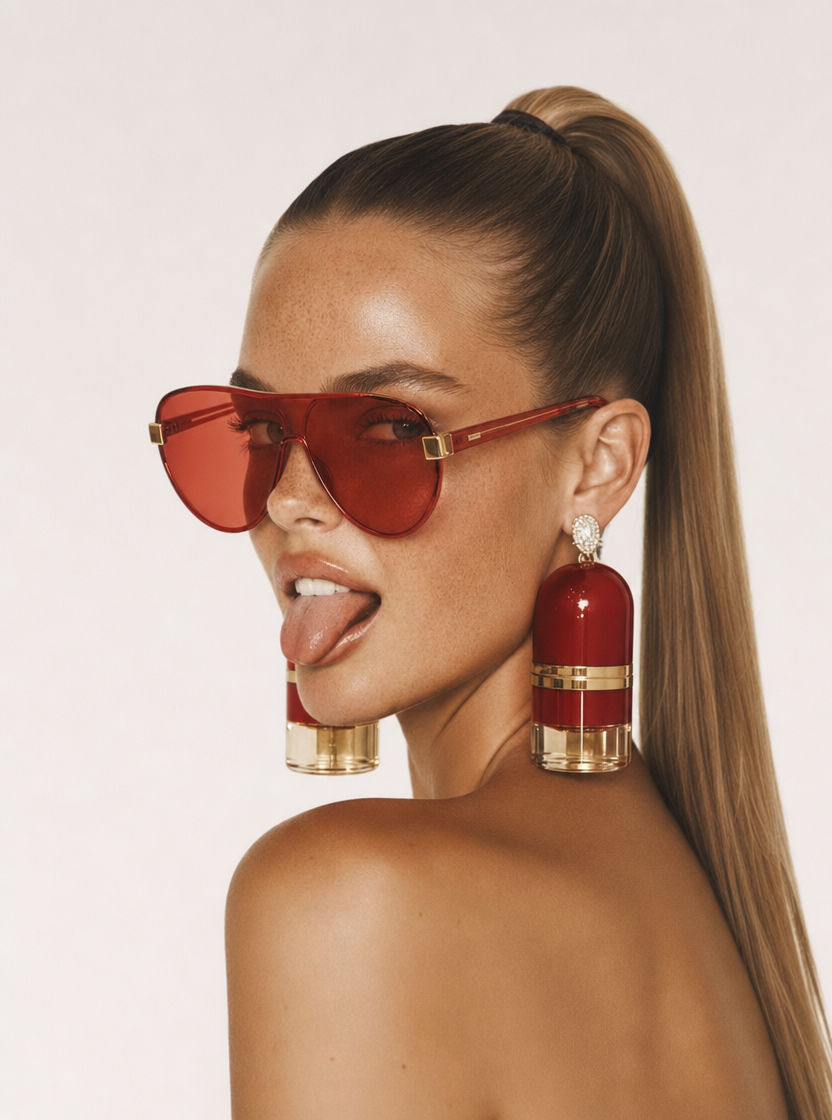
Playful brunette beauty ad portrait
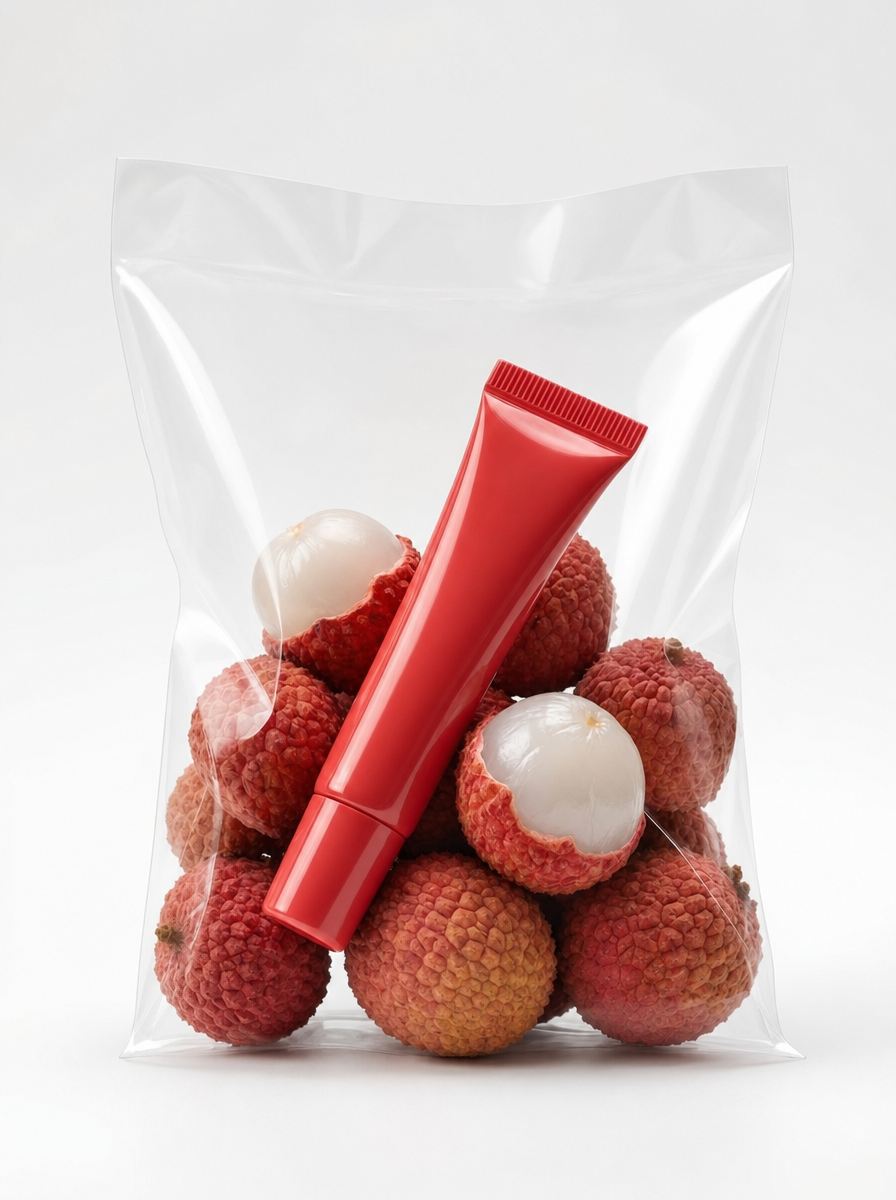
Red Lip Balm with Lychee Freshness
Premium wellness pouch with golden spices
Teal-Accented Bunny Toy Studio Portrait