Why this works
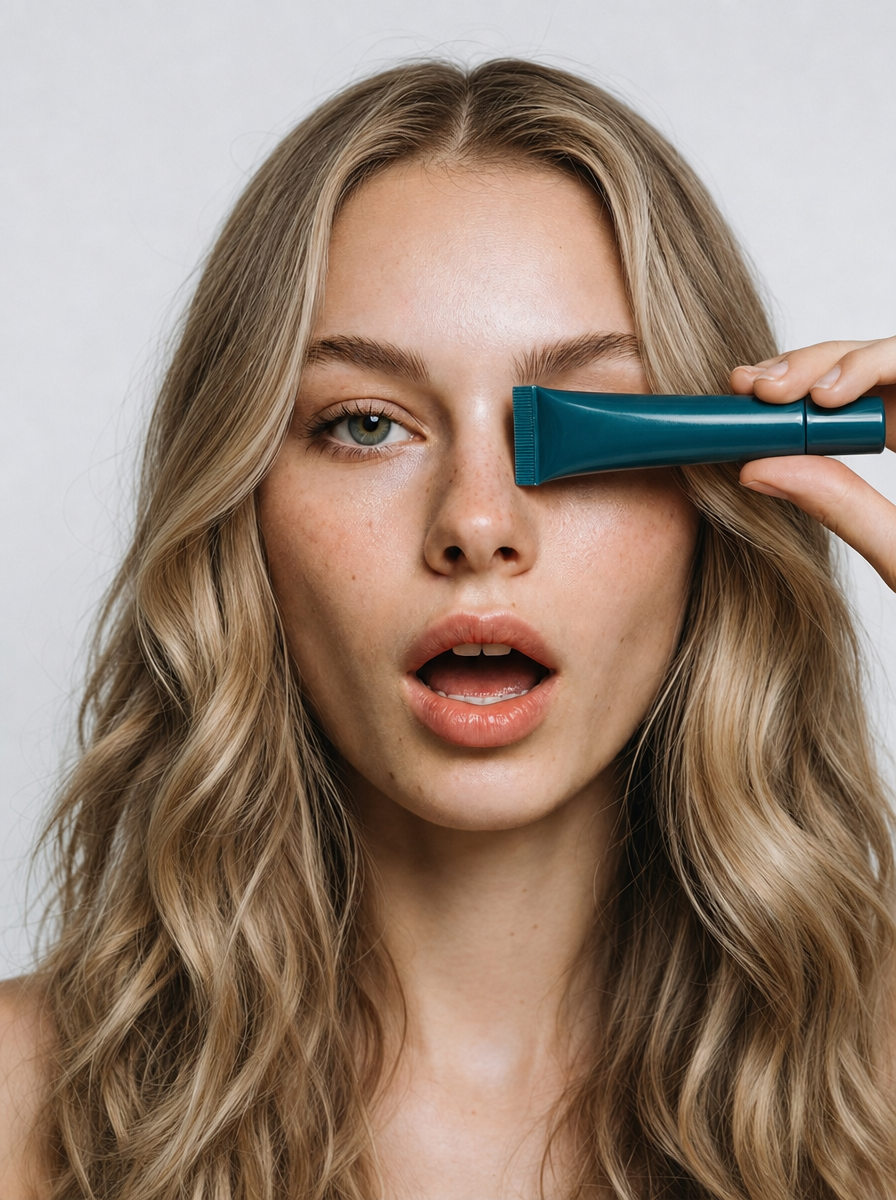
The “front-facing closeup” and “crisp focus on the face and product” make the woman’s eye, lips, and teal tube the immediate visual anchors, while “holding a teal lip gloss tube beside one eye” creates a compact product-and-model composition. “Minimalist neutral warm-gray studio background” removes visual competition and supports the dominant gray and brown tones, while the tube supplies the strongest blue accent. “Soft diffused lighting with gentle catchlights,” combined with “natural makeup” and “subtle matte skin,” gives the portrait a controlled, clean commercial mood rather than a dramatic editorial one.
FAQ
→How do I make the teal lip gloss tube more prominent than the model’s face?
Replace “holding a teal lip gloss tube beside one eye” with “holding an oversized teal lip gloss tube in the foreground, centered beside the lips,” and change “crisp focus on the face and product” to “primary focus on the product, with the face slightly softened.” Keep “front-facing closeup” if you want the model’s expression to remain visible.
→How do I shift this from clean skincare advertising to a moodier luxury beauty campaign?
Replace “soft diffused lighting with gentle catchlights” with “dramatic low-key side lighting with controlled shadow,” and change “minimalist neutral warm-gray studio background” to “deep charcoal studio background.” Swap “natural makeup with subtle matte skin” for “sculpted makeup, luminous skin, and deep berry lips” to introduce stronger contrast while preserving the close portrait format.
→How do I create a coordinated series using different lip gloss shades?
Keep “front-facing closeup,” “holding a [shade] lip gloss tube beside one eye,” and “crisp focus on the face and product” unchanged, then replace “teal” with a controlled shade list such as “coral,” “rose pink,” “clear,” and “deep plum.” Use the same “warm gray” background, “soft diffused lighting,” and “natural makeup” for every image so the tube color becomes the main variation.
Learn the technique behind this
- Why can't AI spell, and how do I get readable text in an image? — Older diffusion models had no character-level representation of text, so they produced letterform-shaped texture instead of words.
- Why does AI get hands and faces wrong, and how do I fix it? — Hands fail because they're small in frame, extremely variable in pose, and self-occluding — the model has less usable signal per pixel than for any other body part.
- How do I keep the same character across multiple images? — Text prompts alone won't hold a face across images — a description defines a type, not a person.
Related prompts
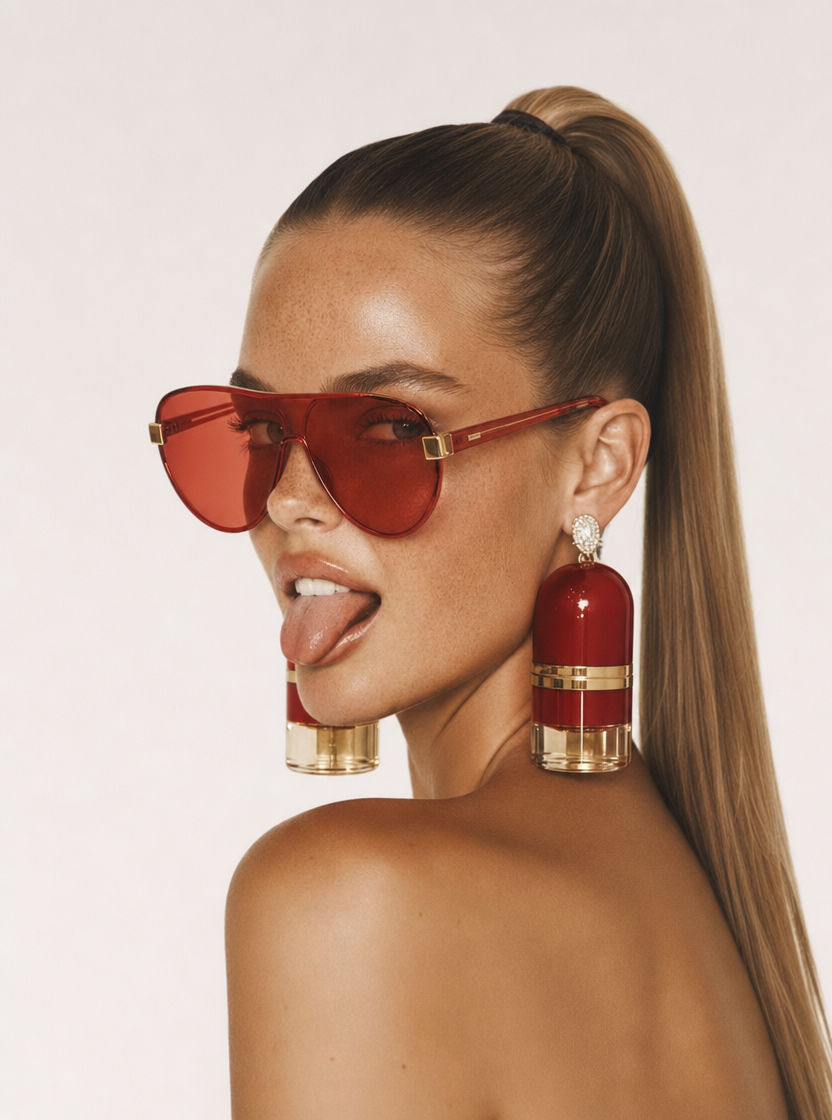
Playful brunette beauty ad portrait
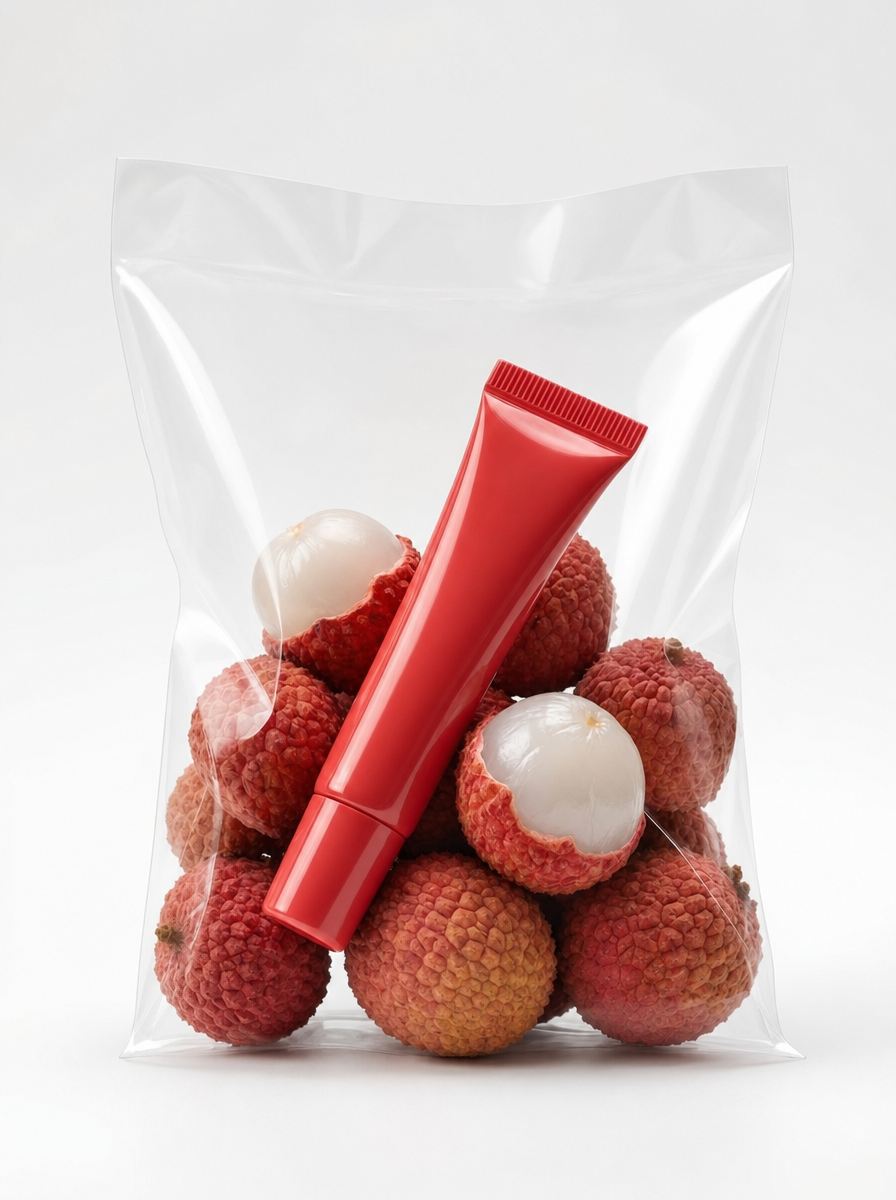
Red Lip Balm with Lychee Freshness
Premium wellness pouch with golden spices
Teal-Accented Bunny Toy Studio Portrait