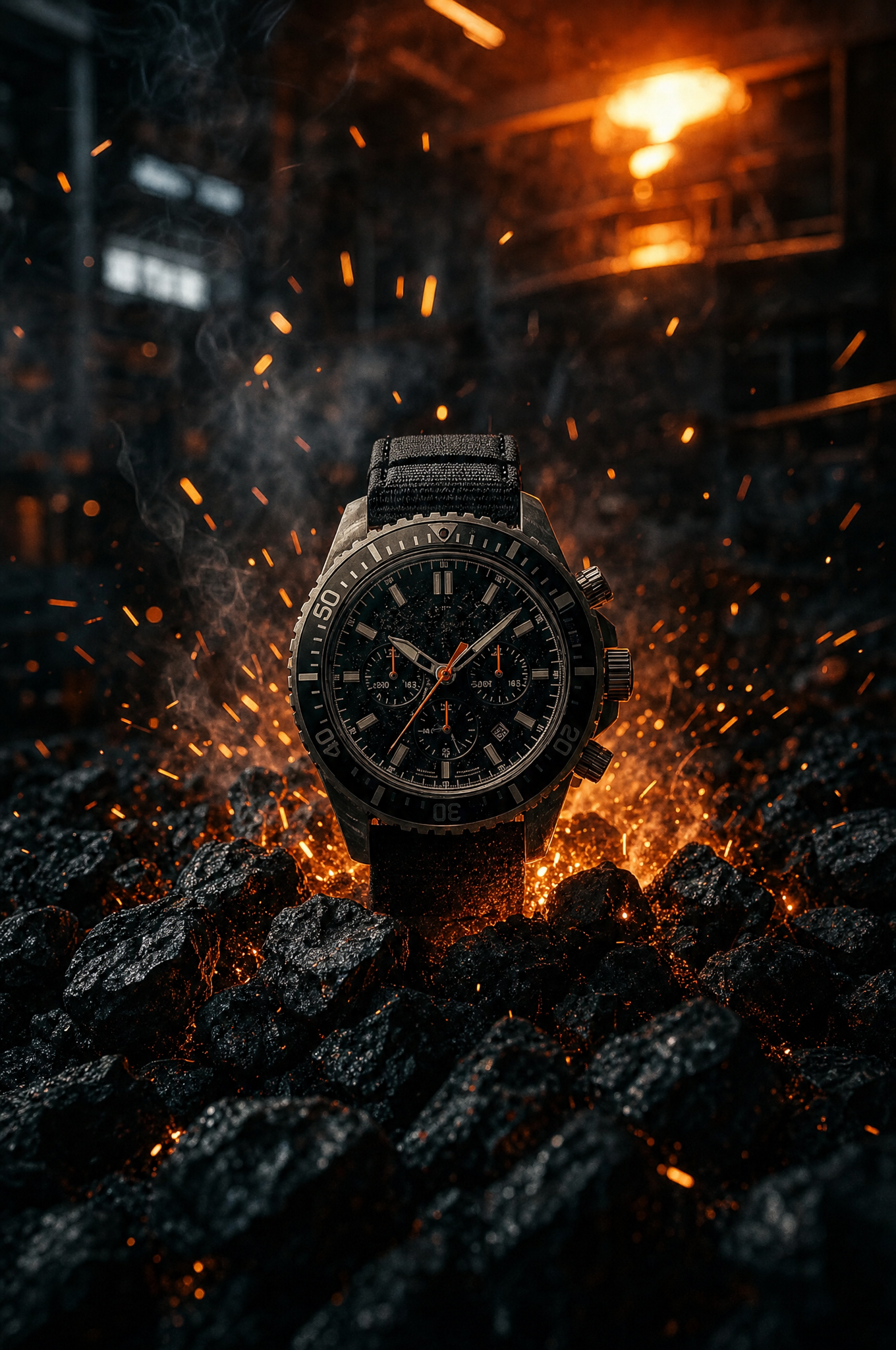
Why this works
The centered close-up and “low angle near the rocks” make the wristwatch the fixed visual anchor, while “shallow depth of field” pushes the jagged foreground and foundry behind it into blur. “Intense backlighting from an overhead furnace glow” supplies the sharp metal rim highlights, and the orange embers against steel-gray smoke, black rocks, and metal produce the image’s hot-versus-industrial color contrast. “Cinematic low-key lighting,” “gritty texture,” and “subtle heat haze” carry the dramatic, abrasive foundry mood through concrete surface and atmospheric details.
FAQ
→How do I make the watch face more prominent and readable?
Replace “close-up product framing with shallow depth of field” with “tight macro product framing with the watch face filling the center of the image, face fully readable,” and add “crisp focus on the dial, hands, numerals, and bezel.” Keep “low angle near the rocks,” but change “shallow depth of field” to “moderate depth of field” so the dial remains sharp.
→How do I make the scene feel colder and less fiery?
Replace “glowing orange embers,” “bright sparks,” and “overhead furnace glow” with “cold blue-white welding sparks, faint cyan furnace light, and pale steel-gray smoke.” Change “orange” in the color direction to “cyan and gunmetal,” while retaining “cinematic low-key lighting” and “sharp rim highlights” for the hard industrial look.
→How do I turn this into a consistent series of rugged watch images?
Keep the subject phrase “rugged military-style wristwatch” and the camera language “centered close-up product framing with shallow depth of field” unchanged. Swap only “industrial foundry with furnace glow” and “jagged black rocks” for controlled settings such as “rain-soaked bunker concrete,” “dusty desert ammunition crate,” or “snow-covered armored vehicle panel,” then replace the matching atmosphere with “cold rain droplets,” “suspended desert dust,” or “fine windblown snow.”
Learn the technique behind this
- Why can't AI spell, and how do I get readable text in an image? — Older diffusion models had no character-level representation of text, so they produced letterform-shaped texture instead of words.
- How should a prompt be structured, and does word order matter? — A prompt that behaves predictably names one subject first, then what it is doing, then where, then the light, then the lens or medium, then the style.
- Do negative prompts work, and what should go in one? — Negative prompts work on models that support a separate negative conditioning channel — mainly Stable Diffusion and FLUX-family models.
Related prompts
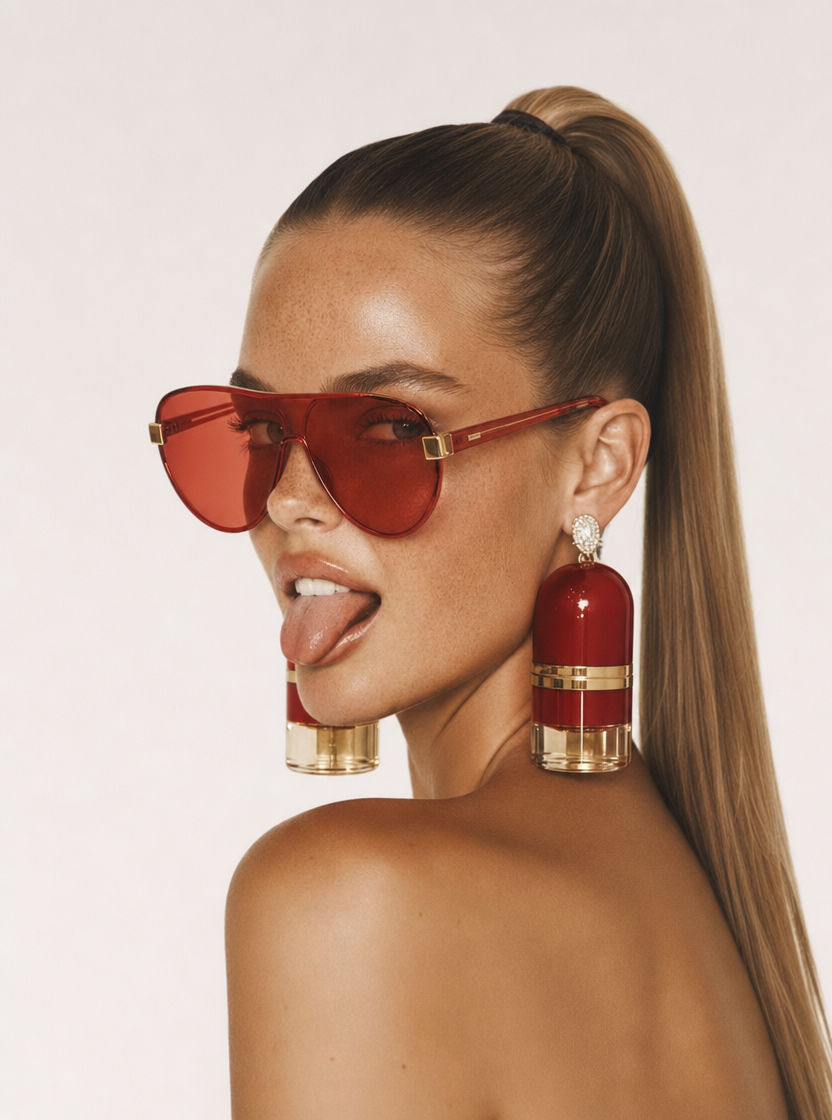
Playful brunette beauty ad portrait
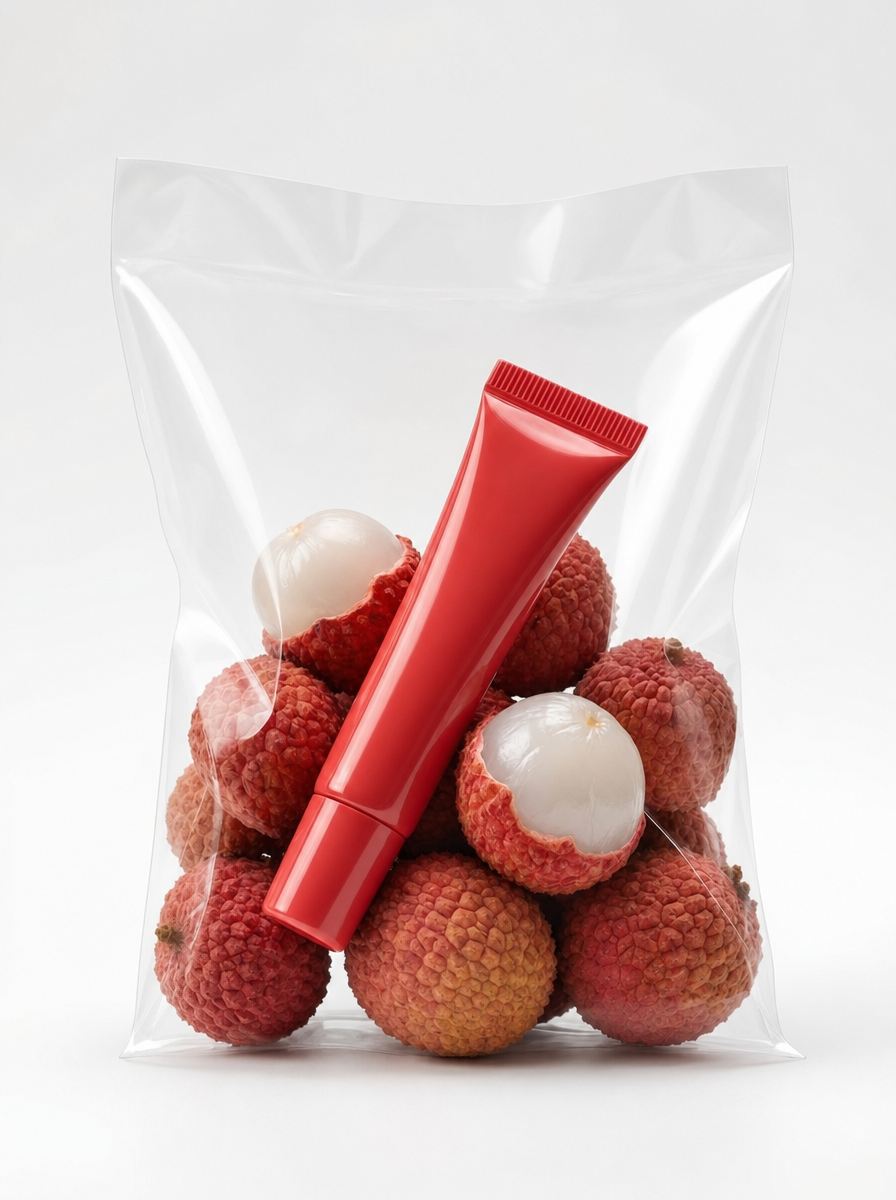
Red Lip Balm with Lychee Freshness
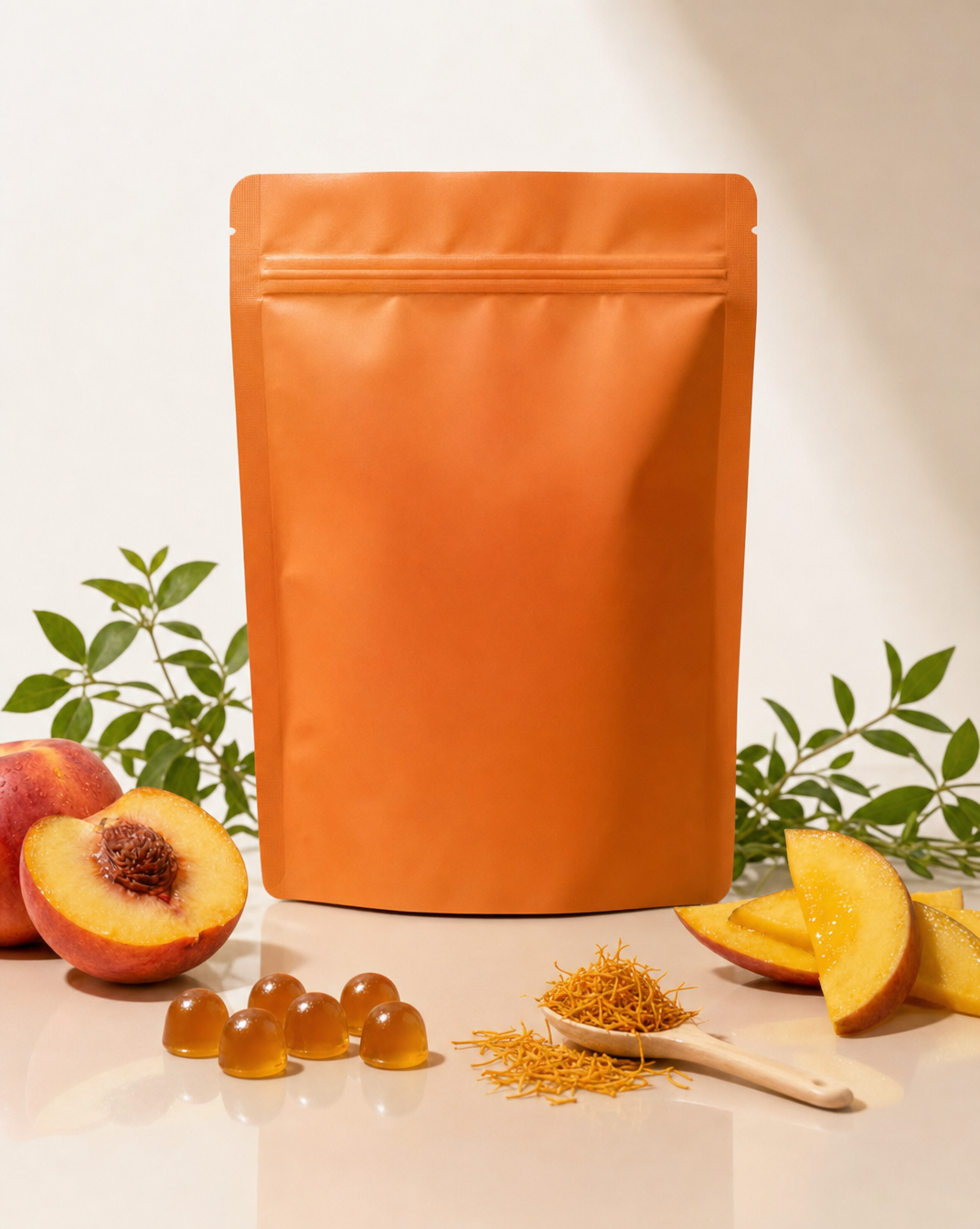
Premium wellness pouch with golden spices
Teal-Accented Bunny Toy Studio Portrait