Why this works
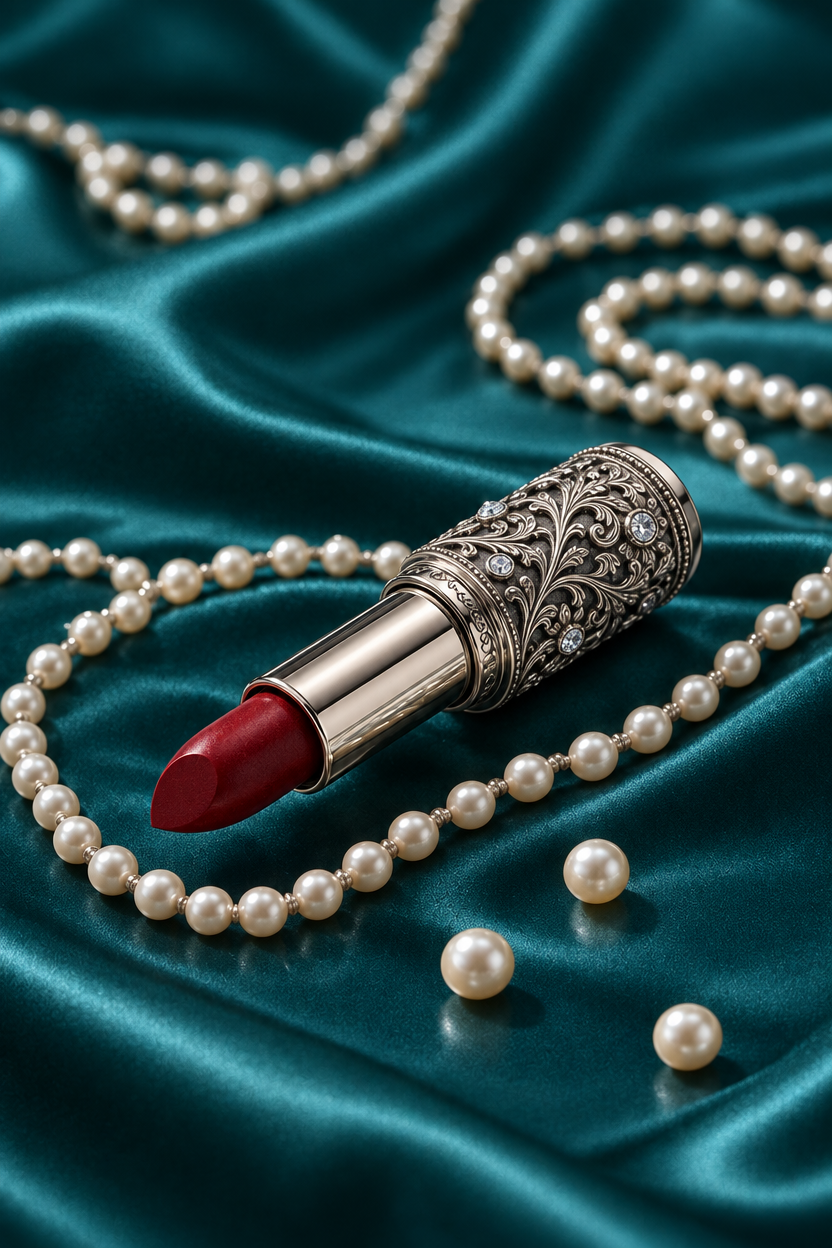
The overhead-flatlay, close still-life framing makes the red lipstick and ornate silver case read as a centered luxury object, while “deep teal satin fabric” supplies a dark, gently reflective ground that separates the red, gray, and white accents. “Soft cool studio lighting with delicate rim highlights” defines the cool glamorous mood, and “crisp glossy reflections” plus “finely detailed textures” makes the lipstick gloss, satin weave, silver filigree, and pearl luster carry the photorealistic finish. The phrase “shallow depth of field” adds selective focus, keeping the case and lipstick dominant while letting the pearl strands and loose cream pearls recede.
FAQ
→How do I make the red lipstick more central and prominent?
Replace “overhead-flatlay” and “close still-life framing” with “centered three-quarter macro product shot, lipstick raised slightly above the fabric.” Change “the lipstick rests on deep teal satin fabric” to “the lipstick stands upright at the exact center on a small satin-covered pedestal,” and add “dominant red focal point, full lipstick sharply in focus.”
→How do I shift this from cool elegance to a warmer, romantic mood?
Replace “soft cool studio lighting” with “warm candlelit studio lighting with amber rim highlights,” and change “deep teal satin fabric” to “burgundy velvet with a subtle warm sheen.” Keep “crisp glossy reflections,” but add “soft golden glow and restrained rose-gold reflections” to move the palette away from the current white-gray coolness.
→How do I create a coordinated series of variations from this prompt?
Keep “premium editorial cosmetics product photography,” “close still-life framing,” and “highly detailed textures” unchanged, then swap the core color and gemstone language in each version. For example, replace “red lipstick” with “coral lipstick,” “berry lipstick,” or “nude rose lipstick,” change “deep teal satin” to “ivory satin,” “plum satin,” or “midnight blue satin,” and replace “small clear gemstones” with “tiny emerald accents,” “pale sapphires,” or “champagne crystals.”
Learn the technique behind this
- Why can't AI spell, and how do I get readable text in an image? — Older diffusion models had no character-level representation of text, so they produced letterform-shaped texture instead of words.
- How should a prompt be structured, and does word order matter? — A prompt that behaves predictably names one subject first, then what it is doing, then where, then the light, then the lens or medium, then the style.
- Do negative prompts work, and what should go in one? — Negative prompts work on models that support a separate negative conditioning channel — mainly Stable Diffusion and FLUX-family models.
Related prompts
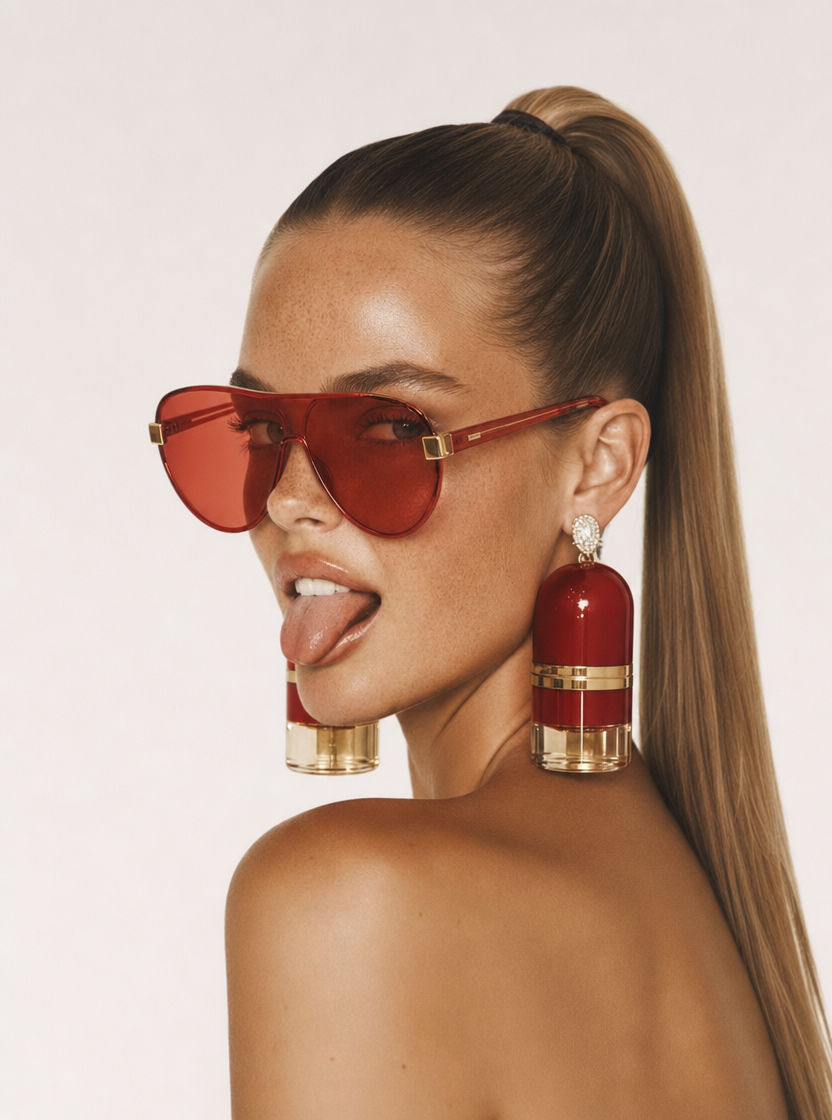
Playful brunette beauty ad portrait
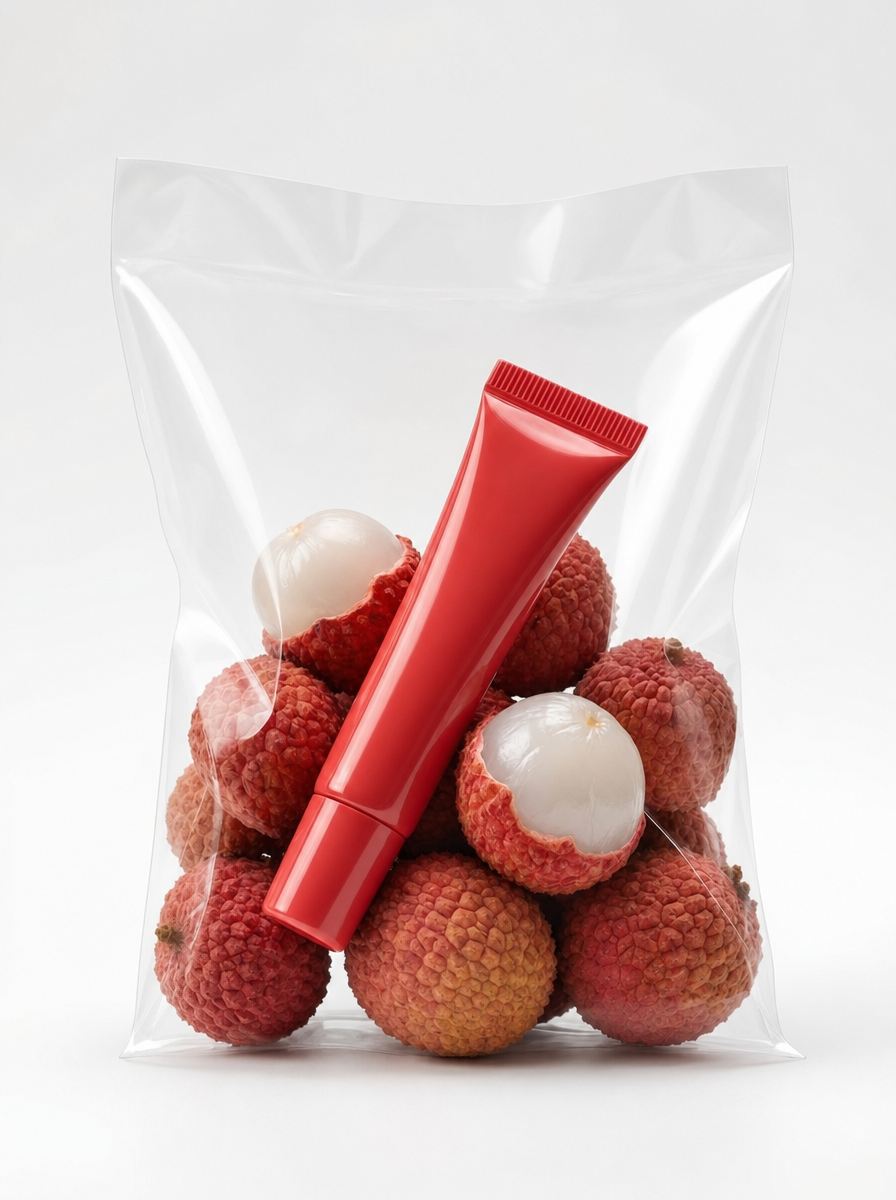
Red Lip Balm with Lychee Freshness
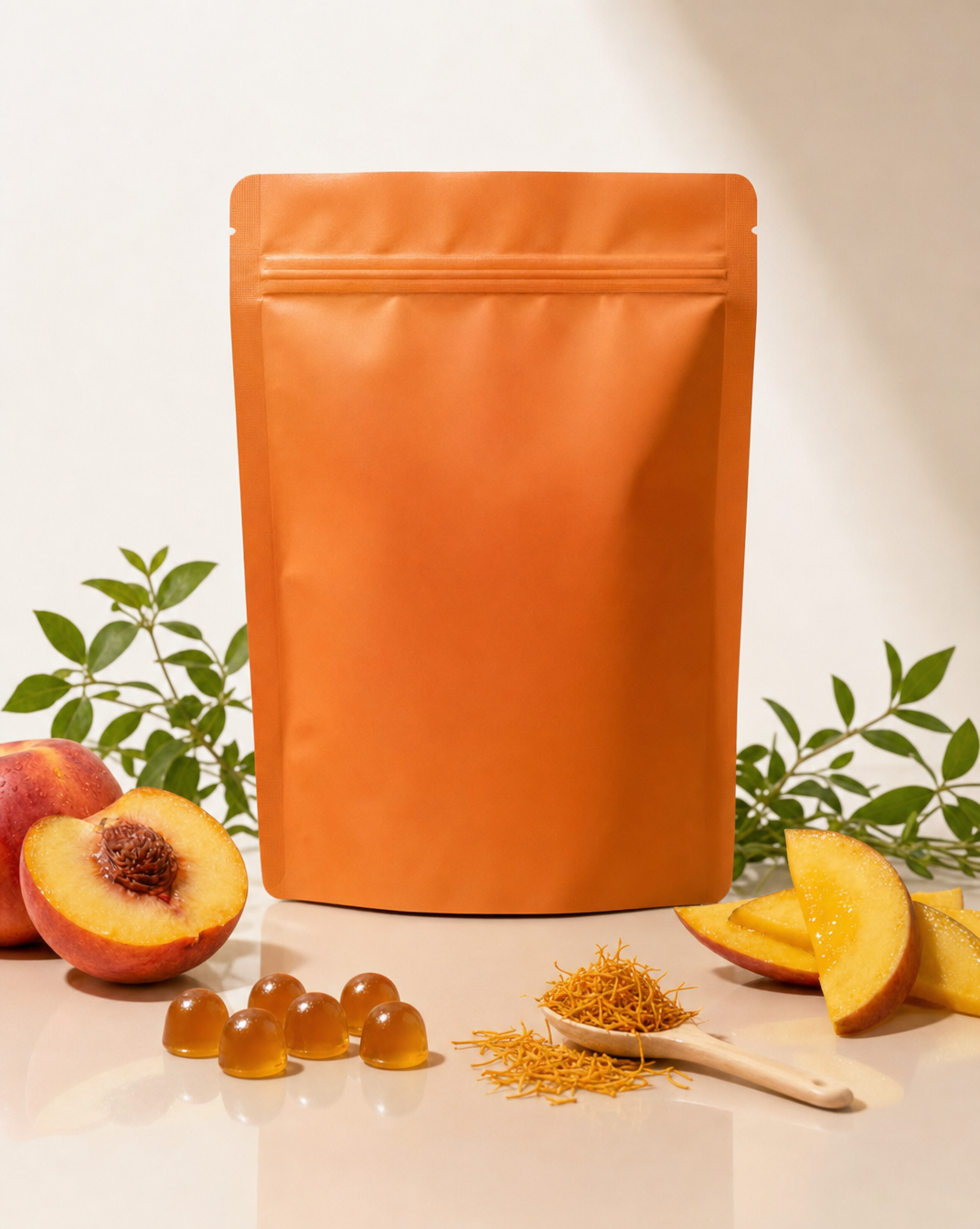
Premium wellness pouch with golden spices
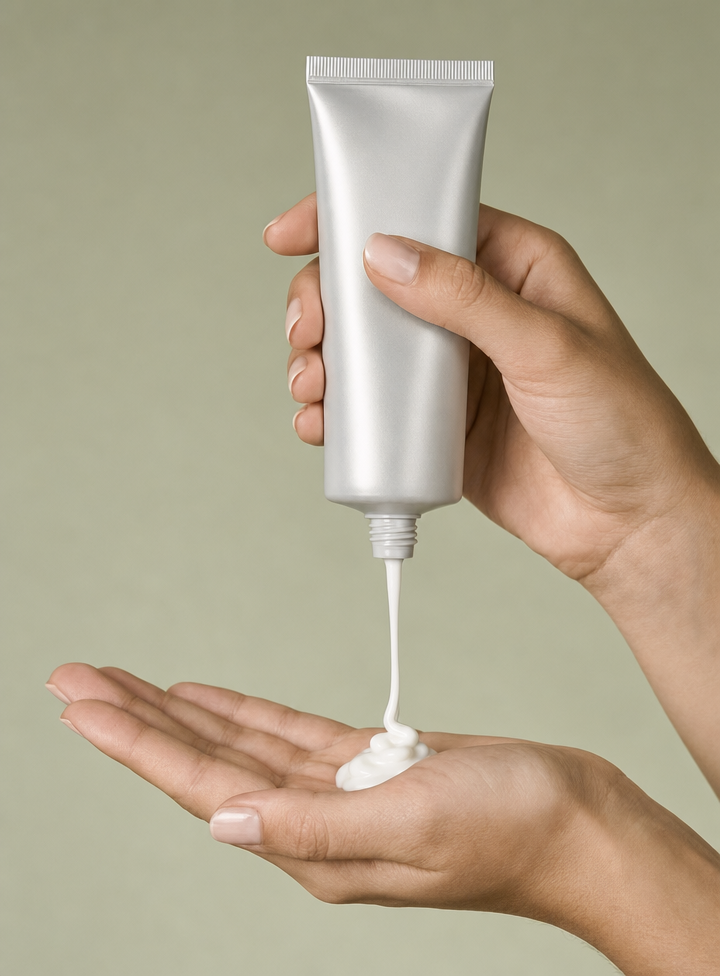
Silver BB cream tube dispensing into palm