Why this works
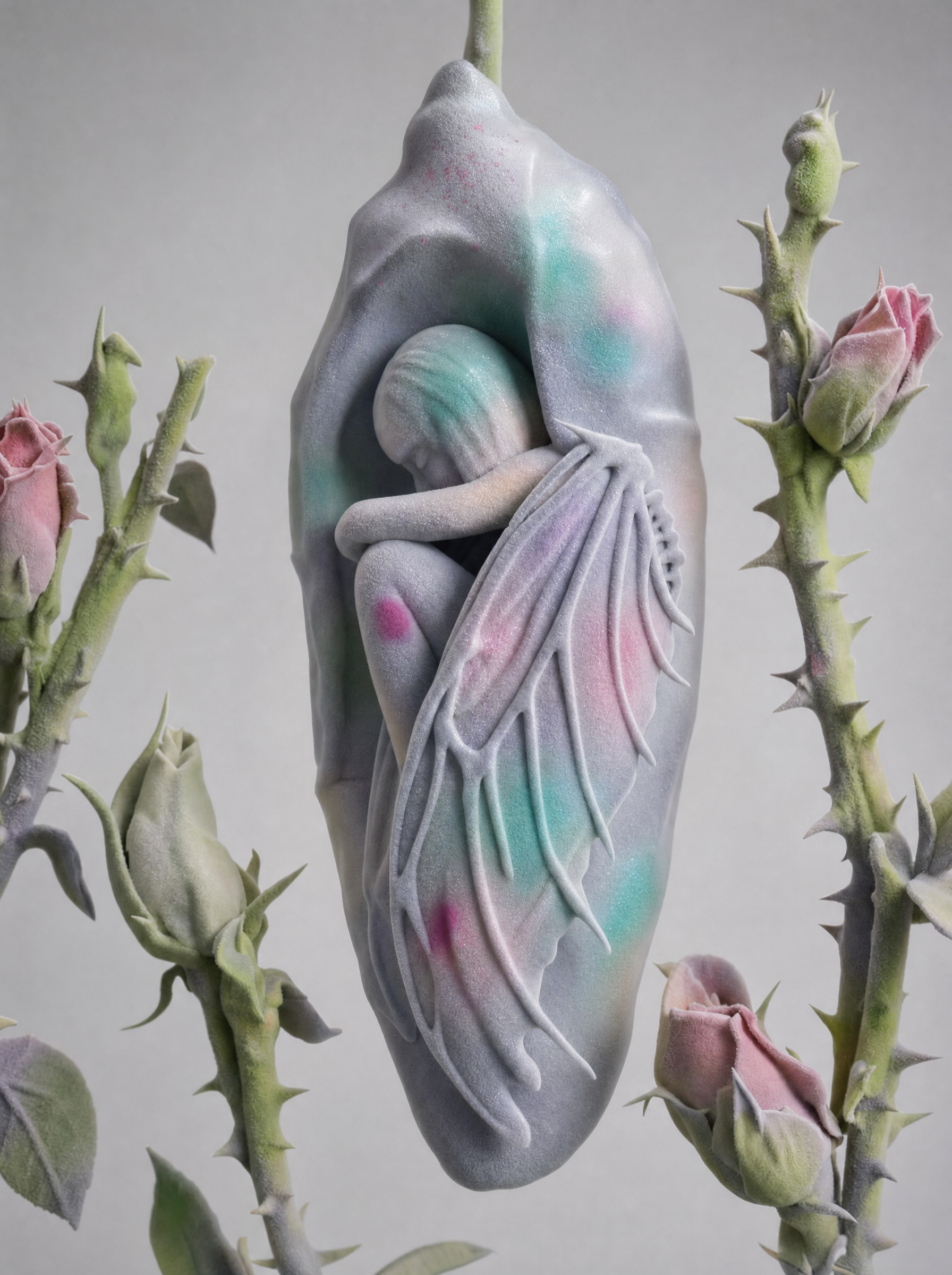
The centered, isolated composition comes directly from “suspended vertically” and “isolated on a clean light-gray background,” giving the cocoon form the visual authority of a product photograph while the surrounding “thorny rose stems and rosebuds” create a controlled frame. Its ethereal, futuristic mood is anchored by the “muted cool-gray pearlescent surface” and “subtle cyan and magenta airbrushed highlights,” while “soft diffused studio lighting with gentle rim light” keeps the green foliage and pink roses delicate rather than dramatic. “Delicate fabric-like folds” and “semi-matte glossy organic texture” supply the tactile focus that makes the surreal form read as a photographed object instead of a flat graphic.
FAQ
→How do I make the cocoon form feel darker and more ominous?
Replace “clean light-gray background” with “deep charcoal-black background” and change “soft diffused studio lighting with gentle rim light” to “hard directional side-lighting with sharp shadows.” Replace “muted cool-gray pearlescent surface” with “blackened iridescent chitinous surface” and change “subtle cyan and magenta airbrushed highlights” to “blood-red and toxic violet accents.”
→How do I make the roses more central instead of treating them as a surrounding frame?
Replace “suspended vertically among thorny rose stems and rosebuds” with “a cocoon form partially concealed within a dense frontal cluster of thorny rose stems and open roses.” Change “centered” product-style framing to “asymmetrical close-up composition with roses dominating the foreground,” and add “sharp focus on the nearest pink rose petals, cocoon receding behind them.”
→How do I build a coordinated series from this image while changing the subject?
Keep “isolated on a clean light-gray background,” “soft diffused studio lighting with gentle rim light,” and “fashion editorial surreal still life aesthetic” unchanged as the series rules. Replace “butterfly cocoon-like organic form” with variants such as “pearlescent seed pod,” “folded alien chrysalis,” or “translucent anatomical flower,” while retaining “subtle cyan and magenta airbrushed highlights,” “semi-matte glossy organic texture,” and the same centered product-style framing.
Learn the technique behind this
- Why can't AI spell, and how do I get readable text in an image? — Older diffusion models had no character-level representation of text, so they produced letterform-shaped texture instead of words.
- How should a prompt be structured, and does word order matter? — A prompt that behaves predictably names one subject first, then what it is doing, then where, then the light, then the lens or medium, then the style.
- Do negative prompts work, and what should go in one? — Negative prompts work on models that support a separate negative conditioning channel — mainly Stable Diffusion and FLUX-family models.
Related prompts
Playful brunette beauty ad portrait
Red Lip Balm with Lychee Freshness
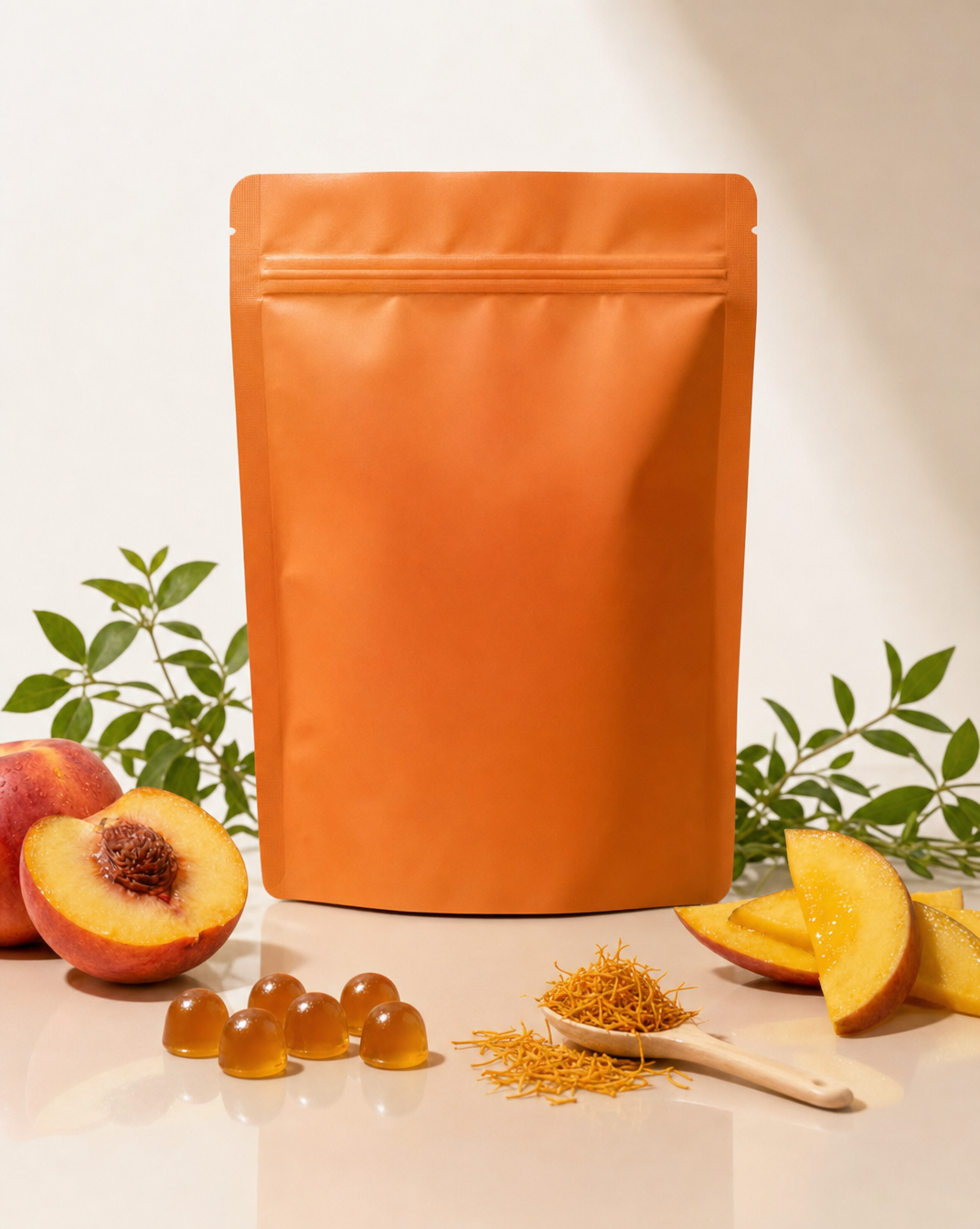
Premium wellness pouch with golden spices

Teal-Accented Bunny Toy Studio Portrait