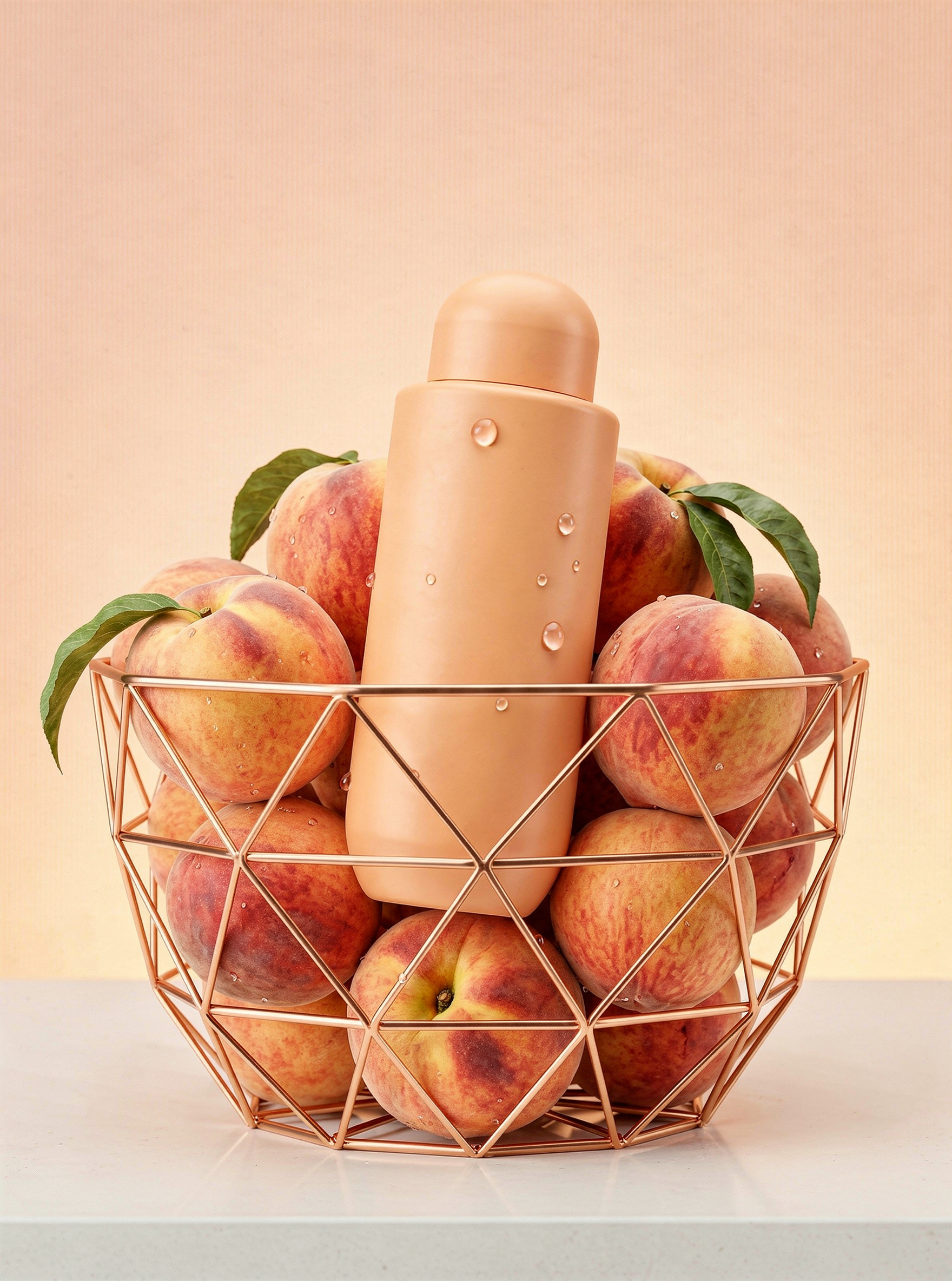
Why this works
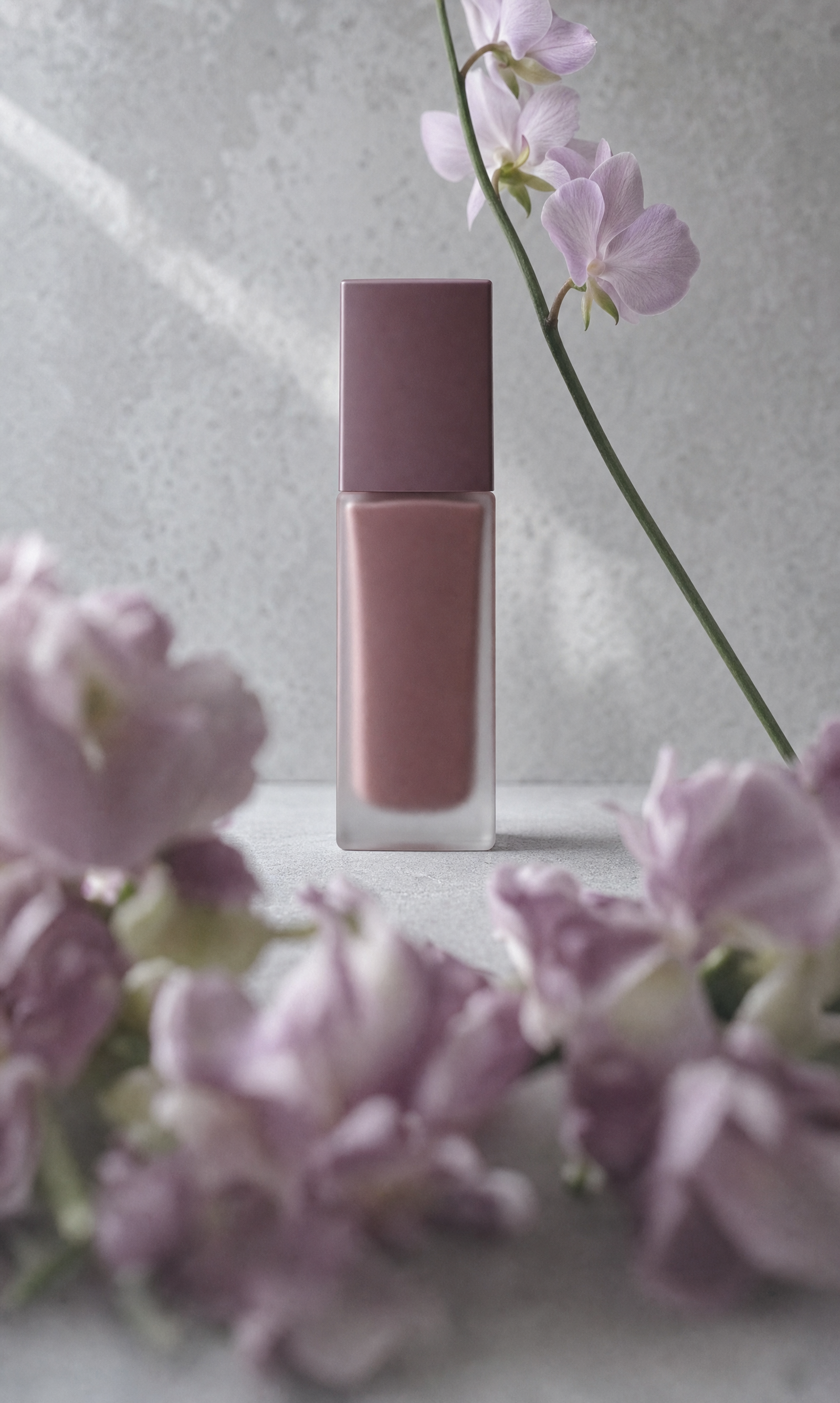
The centered matte deep-rose foundation bottle and “crisp focus on the bottle” establish a clear product-first composition, while “blurred lilac and dusty-rose flowers in the foreground” adds depth without competing for attention. “Soft cool morning window light” and “gentle shadows” create the serene mood, with the pink, purple, and white palette reinforced by the deep-rose bottle, lilac flowers, orchid, and light-gray wall. The phrase “delicate orchid stem curving behind the bottle” supplies a controlled framing gesture, and “ultra-detailed materials and label finish” keeps the image tactile and premium.
FAQ
→How do I change this prompt for a warmer, more luxurious mood?
Replace “soft cool morning window light” with “warm late-afternoon window light with golden highlights,” and change “minimal light-gray textured wall background” to “warm ivory plaster wall with subtle champagne reflections.” Keep “matte deep-rose finish” for the bottle, or replace it with “deep burgundy lacquered finish” for stronger richness.
→How do I make the orchid and flowers more prominent?
Replace “blurred lilac and dusty-rose flowers in the foreground” with “ sharply detailed lilac and dusty-rose flowers framing the bottle on both sides,” and change “delicate orchid stem curving behind the bottle” to “a prominent white orchid arching beside and partly around the bottle.” Replace “crisp focus on the bottle” with “balanced crisp focus on the bottle and surrounding flowers” so the botanical elements retain visible detail.
→How do I build a darker, moodier variation from this prompt?
Replace “minimal light-gray textured wall background” with “deep charcoal stone wall background,” and change “soft cool morning window light” to “narrow directional side light with controlled shadow falloff.” Swap “pink, purple, and white” accents for “deep rose, plum, and charcoal,” while retaining “elegant editorial composition” and “ultra-detailed materials and label finish” to preserve the cosmetic-campaign structure.
Learn the technique behind this
- Why can't AI spell, and how do I get readable text in an image? — Older diffusion models had no character-level representation of text, so they produced letterform-shaped texture instead of words.
- How should a prompt be structured, and does word order matter? — A prompt that behaves predictably names one subject first, then what it is doing, then where, then the light, then the lens or medium, then the style.
- Why does the model ignore parts of my prompt? — Ignored instructions are almost always conflicts, counts, or spatial relationships — three things current models handle badly — rather than the model failing to read you.
Related prompts
Playful brunette beauty ad portrait
Red Lip Balm with Lychee Freshness
Premium wellness pouch with golden spices
Teal-Accented Bunny Toy Studio Portrait