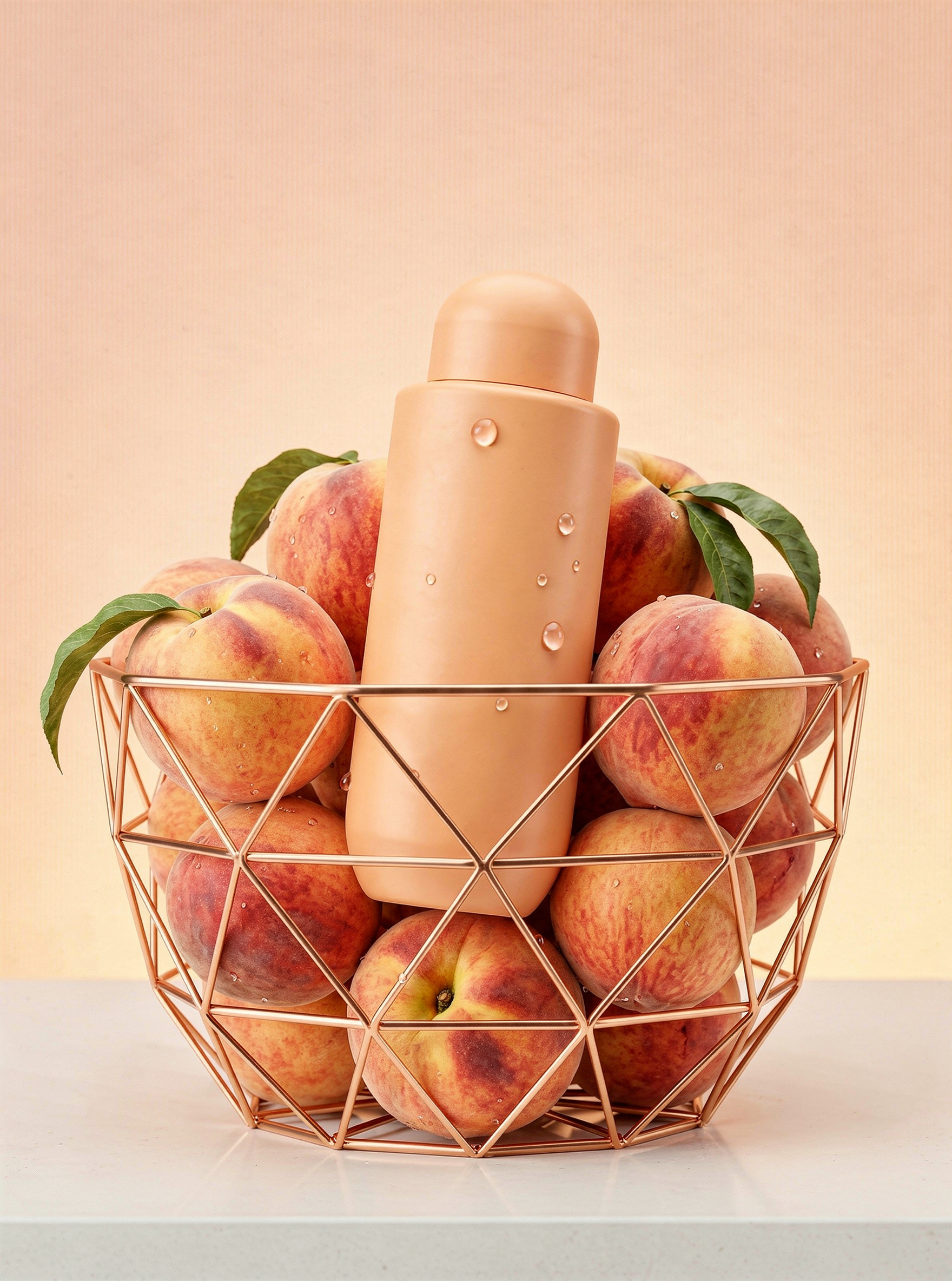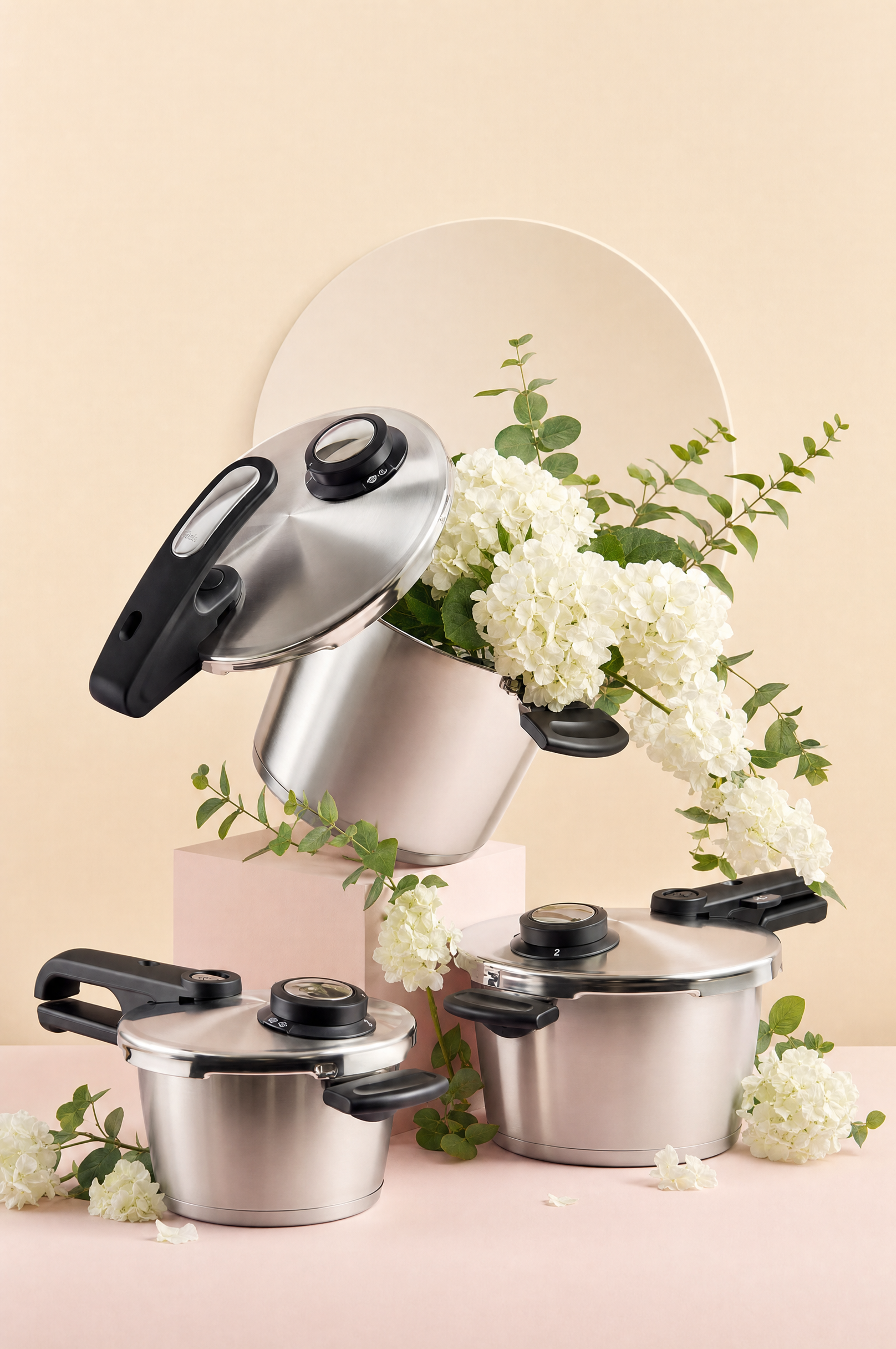
Same prompt, generated with each model separately — click one to see how it holds up.
Why this works
The centered arrangement of “three stainless steel pressure cookers” around a “pale blush-pink pedestal” gives the image a stable, catalog-ready composition, while “elegant negative space” keeps the flowers from competing with the products. “Soft diffused lighting with subtle specular highlights on brushed metal” produces the controlled gray-and-black reflections that define the cookware without making the scene harsh. The warm cream background, blush pedestal, and “fresh white hydrangeas and delicate green foliage” create the soft luxury mood, with white, gray, black, and green forming a restrained palette.
FAQ
→How do I make one pressure cooker the clear focal point?
Replace “three stainless steel pressure cookers arranged” with “one large stainless steel pressure cooker centered in the foreground, with two smaller cookers receding behind it,” and change “sharp focus on the cookware with controlled depth of field” to “sharp focus on the front pressure cooker, with the background cookers softly out of focus.”
→How do I change the soft luxury mood into a darker, more dramatic product scene?
Replace “warm cream background” and “soft diffused lighting” with “charcoal-gray studio background” and “dramatic directional side-lighting with deep shadows and crisp highlights.” Change “pale blush-pink pedestal” to “matte black stone pedestal” to carry the darker tone into the composition.
→How do I build a coordinated series of variations from this prompt?
Keep “commercial product photography,” “centered,” and “ultra-sharp product detail” unchanged, then swap the setting phrase “pale blush-pink pedestal” for consistent alternatives such as “muted sage-green pedestal,” “powder-blue pedestal,” or “warm terracotta pedestal.” Replace “fresh white hydrangeas and delicate green foliage” with flower pairings matched to each colorway, such as “white tulips and olive branches” or “cream ranunculus and eucalyptus.”
Learn the technique behind this
- Why can't AI spell, and how do I get readable text in an image? — Older diffusion models had no character-level representation of text, so they produced letterform-shaped texture instead of words.
- Why does the model ignore parts of my prompt? — Ignored instructions are almost always conflicts, counts, or spatial relationships — three things current models handle badly — rather than the model failing to read you.
- How should a prompt be structured, and does word order matter? — A prompt that behaves predictably names one subject first, then what it is doing, then where, then the light, then the lens or medium, then the style.
Related prompts
Playful brunette beauty ad portrait
Red Lip Balm with Lychee Freshness
Premium wellness pouch with golden spices
Teal-Accented Bunny Toy Studio Portrait