Why this works
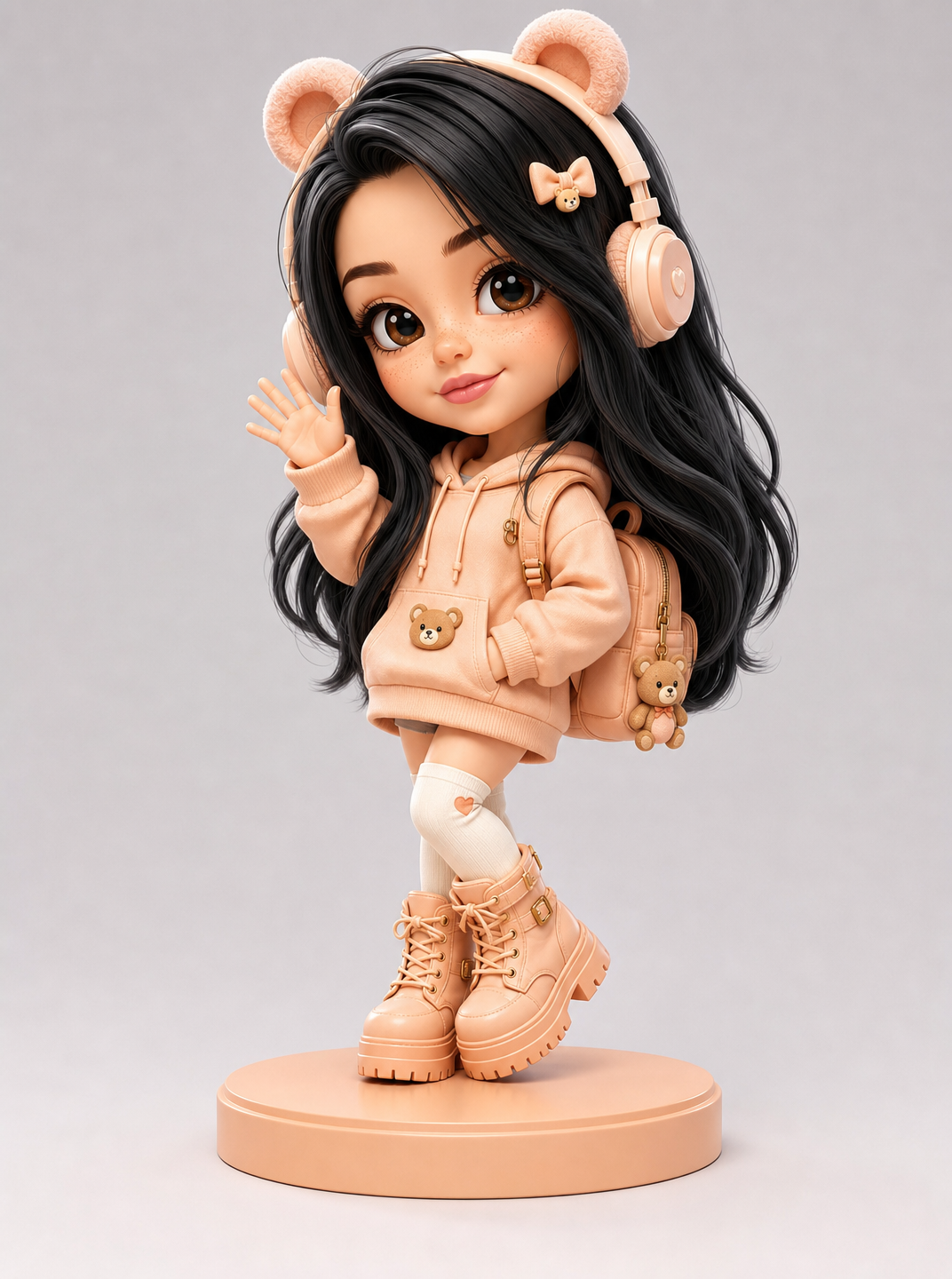
The front-facing product framing and “full figure visible” keep the chibi girl, peach pedestal, headphones, backpack, and cream boots legible in a centered portrait composition. “Soft even lighting,” “crisp reflections,” and “polished materials” produce the clean gray studio field and controlled highlights, while “long silky black hair” supplies the strongest dark contrast against the tan-peach accessories and neutral background. The phrases “oversized glossy eyes” and “ultra-detailed high-end 3D render” concentrate attention on the face and give the miniature its premium collectible finish.
FAQ
→How do I make the headphones and bear details more central and prominent?
Replace “oversized glossy eyes” with “oversized glossy eyes, with the pastel peach bear-ear headphones as the primary focal point,” and expand “subtle bear details” to “clearly visible embroidered bear motifs on the hoodie, headphones, and backpack.” Replace “front-facing product framing” with “front-facing three-quarter product framing, head and upper torso emphasized, accessories fully visible.”
→How do I shift this from a neutral catalog shot to a warmer, more playful mood?
Replace “smooth neutral background” with “soft pastel peach and cream studio background with a gentle gradient,” and change “soft even lighting” to “warm diffused lighting with a subtle peach rim light and soft grounding shadow.” Keep “crisp reflections” and “polished materials” so the warmer palette still reads as a premium designer-toy product render.
→How do I create a series of matching collectible figures from this prompt?
Keep the fixed phrases “Japanese designer toy / collectible display figure aesthetic,” “front-facing product framing,” and “smooth neutral background,” then replace the subject-specific clothing block with variants such as “a cute boy with short silver hair, mint hoodie, rabbit-ear headphones, matching mini backpack, and cream sneakers.” Preserve “round peach pedestal” only if every release shares the same base, or replace it with “round pastel mint pedestal” to color-code the new character.
Learn the technique behind this
- Why can't AI spell, and how do I get readable text in an image? — Older diffusion models had no character-level representation of text, so they produced letterform-shaped texture instead of words.
- Do negative prompts work, and what should go in one? — Negative prompts work on models that support a separate negative conditioning channel — mainly Stable Diffusion and FLUX-family models.
- Why does AI get hands and faces wrong, and how do I fix it? — Hands fail because they're small in frame, extremely variable in pose, and self-occluding — the model has less usable signal per pixel than for any other body part.
Related prompts
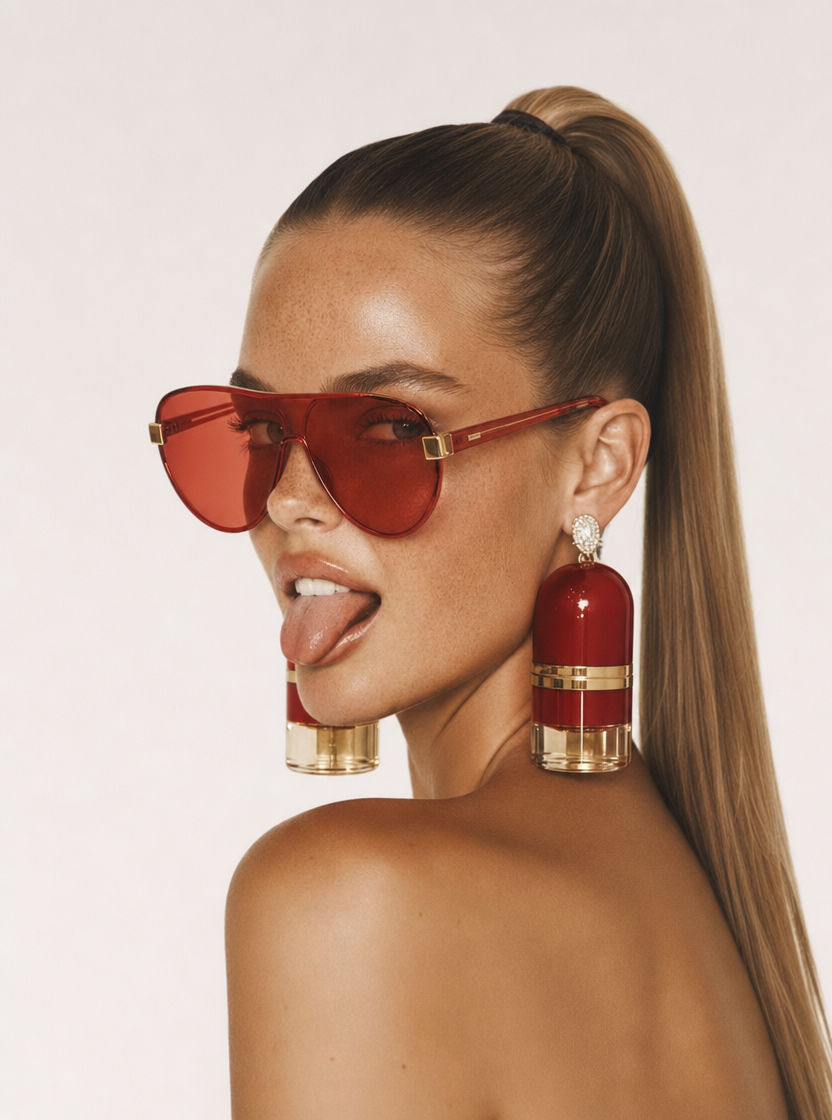
Playful brunette beauty ad portrait
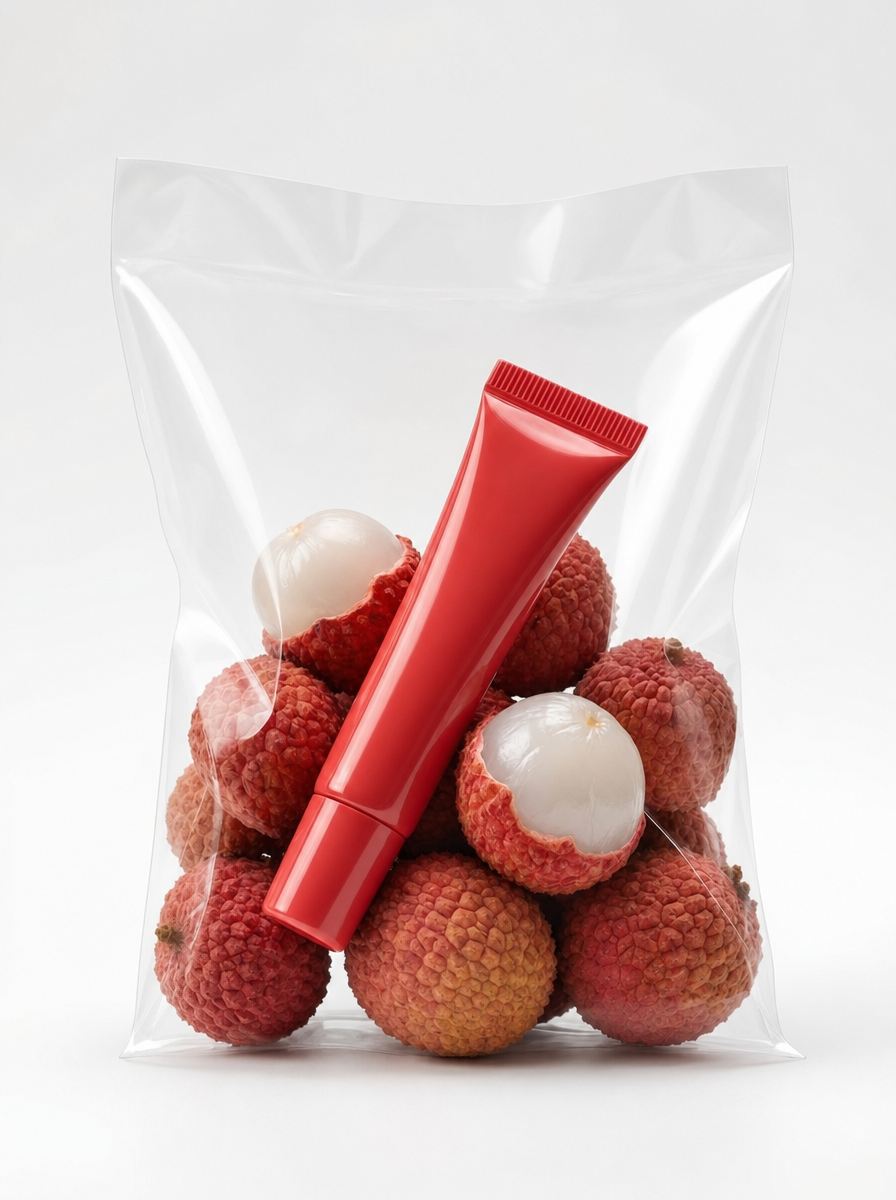
Red Lip Balm with Lychee Freshness
Premium wellness pouch with golden spices

Teal-Accented Bunny Toy Studio Portrait