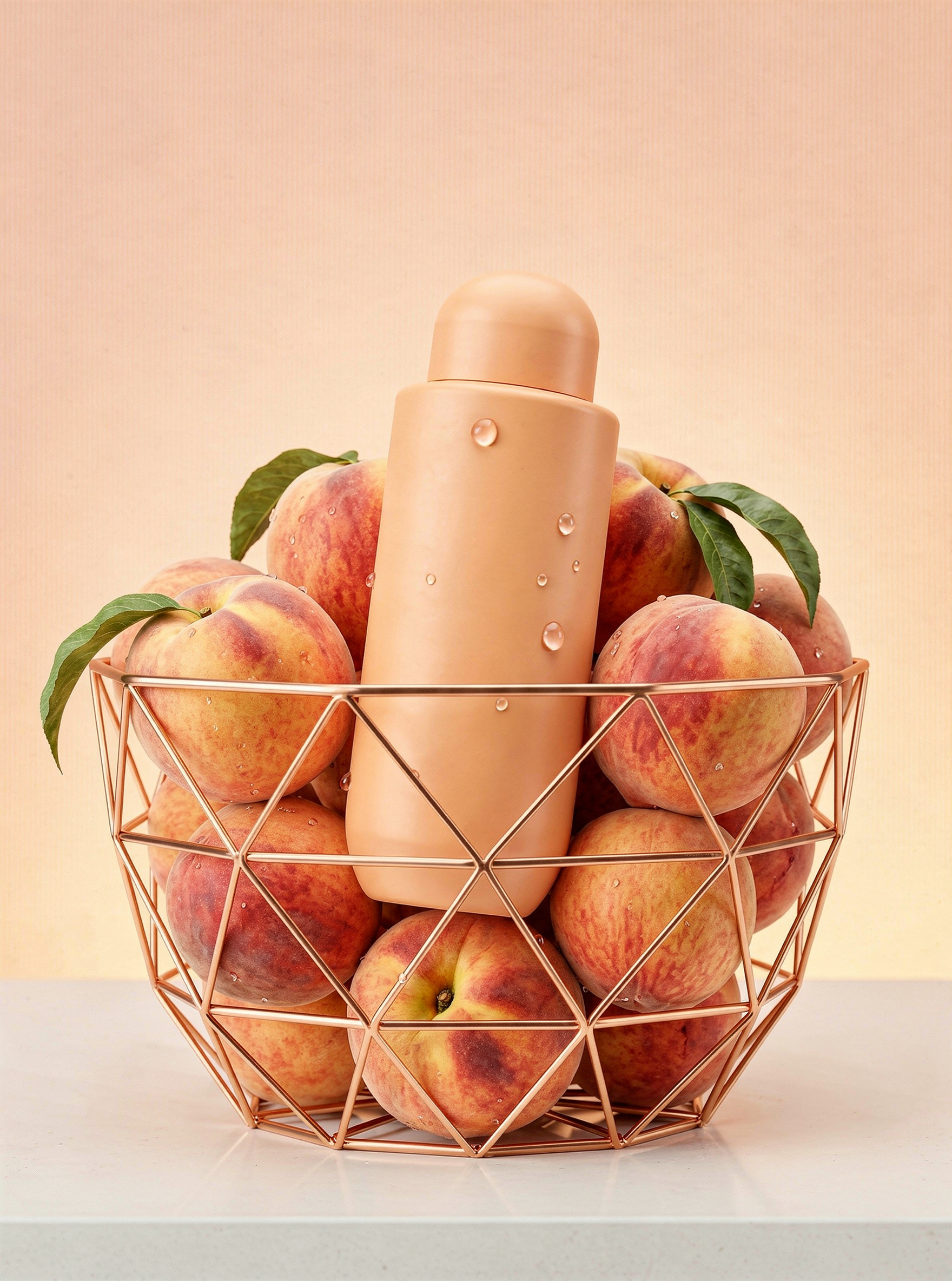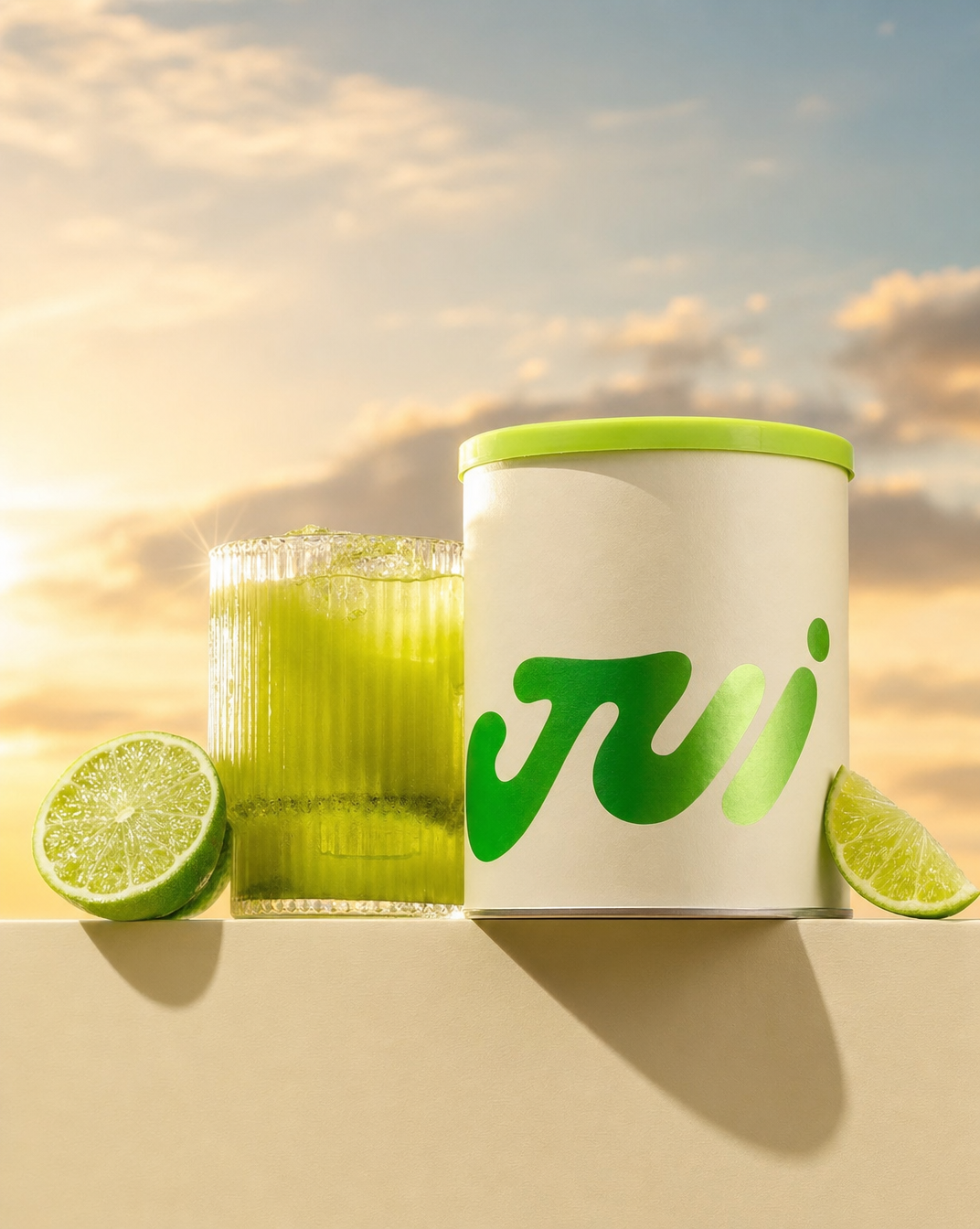
Same prompt, generated with each model separately — click one to see how it holds up.
Why this works
The centered pairing of the “lime-green beverage canister beside a glass of green drink” makes the product and serving suggestion equally legible, while the “pale cream surface” and “warm golden-hour sky” create a clean green-yellow-white color harmony. “Strong natural daylight with warm golden-hour sun haze” supplies the sunny freshness, and “soft realistic shadows” keeps the scene grounded without adding visual heaviness. “Ultra-detailed materials and reflections on the can and glass” plus “crisp garnish texture” directs sharp attention to commercial proof points: packaging finish, liquid clarity, and lime freshness.
FAQ
→How do I make the canister more prominent than the glass?
Replace “a lime-green beverage canister beside a glass” with “a lime-green beverage canister in the foreground, occupying two-thirds of the frame, with a smaller glass behind it.” Add “hero product focus on the canister, glass slightly softened in the background” to shift visual priority while retaining the same setting and palette.
→How do I turn this sunny advertisement into a cooler, more refreshing image?
Replace “warm golden-hour sky with soft sun haze” and “fresh vibrant sunny mood” with “cool pale-blue morning sky with crisp diffused daylight” and “clean, invigorating morning mood.” Change “warm golden-hour” in the lighting phrase to “bright cool daylight,” while keeping “soft realistic shadows” for a controlled product-photography finish.
→How do I create a series of variations without losing the product identity?
Keep “lime-green beverage canister,” “ultra-detailed materials and reflections,” and “clean modern advertising composition” unchanged, then swap the setting phrase “on a pale cream surface with a warm golden-hour outdoor sky background.” Use replacements such as “on a white marble counter with a softly blurred kitchen,” “on a sunlit picnic table with leafy greenery,” or “on a pale aqua surface beside a swimming pool,” while matching each version’s lighting to the new location.
Learn the technique behind this
- Why can't AI spell, and how do I get readable text in an image? — Older diffusion models had no character-level representation of text, so they produced letterform-shaped texture instead of words.
- Do negative prompts work, and what should go in one? — Negative prompts work on models that support a separate negative conditioning channel — mainly Stable Diffusion and FLUX-family models.
- Which aspect ratio should I use, and how does it change the image? — Aspect ratio determines what the model composes, not how it's cropped afterwards.
Related prompts
Playful brunette beauty ad portrait
Red Lip Balm with Lychee Freshness
Premium wellness pouch with golden spices
Teal-Accented Bunny Toy Studio Portrait