Why this works
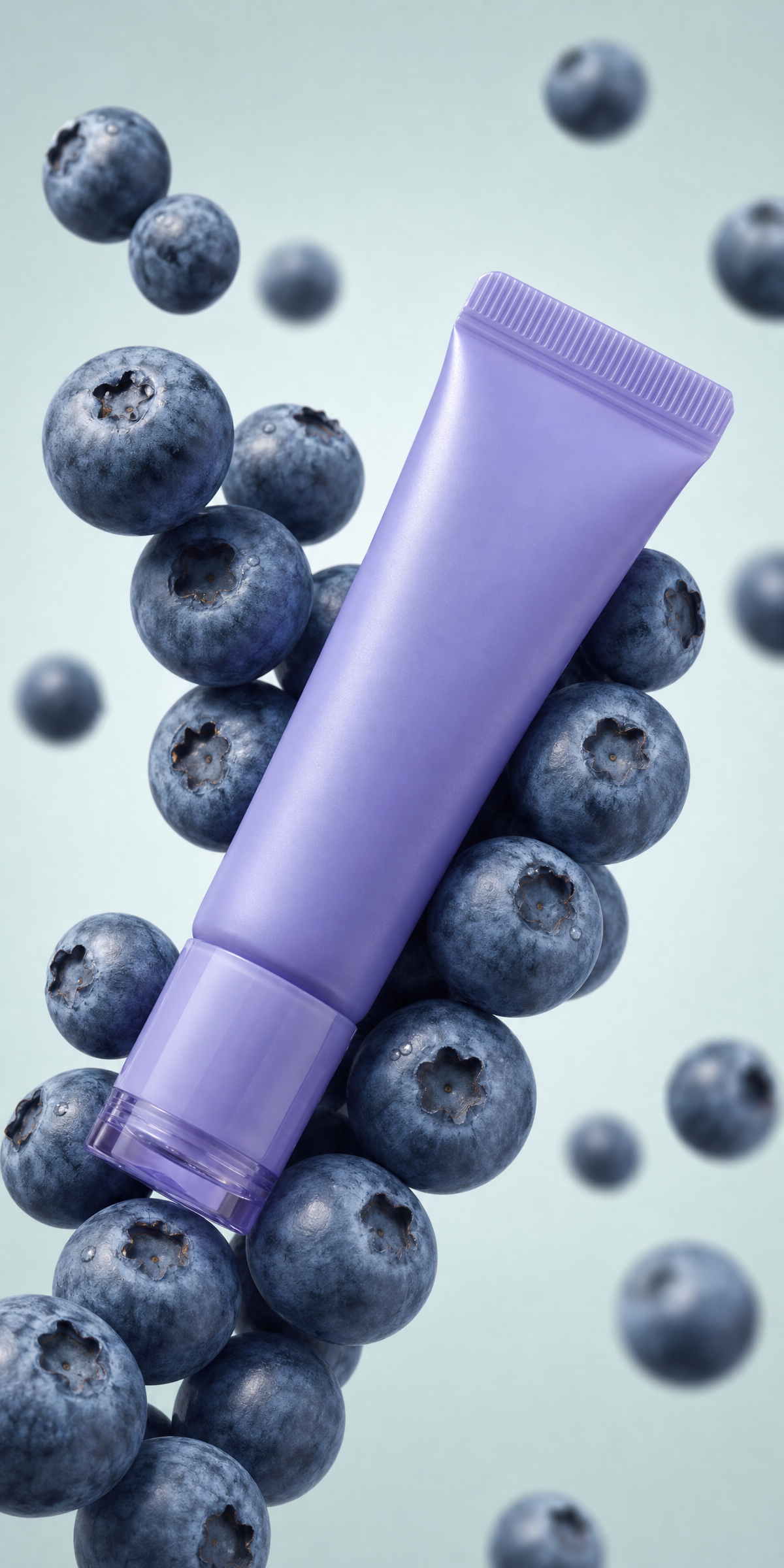
The phrase “lavender lip balm tube with several large floating blueberries” supplies the purple-and-gray subject contrast, while “pale mint-to-white soft gradient” keeps the white background restrained and fresh. “Arranged diagonally from the upper left toward the lower right” gives the centered packshot a controlled sense of movement, and “soft premium studio lighting with clean highlights” produces the polished, luxurious surface treatment. “Shallow depth-of-field feel while keeping blueberries tack-sharp” is the load-bearing focus instruction: it separates the product without sacrificing the crisp fruit detail.
FAQ
→How do I make the lip balm tube more dominant than the blueberries?
Replace “several large floating blueberries” with “three smaller blueberries receding behind the product,” and change “arranged diagonally from the upper left toward the lower right” to “lip balm tube centered and front-facing, blueberries framing it in the background.” Keep “close-up product focus” and add “tube occupies most of the frame.”
→How do I shift this from a luxurious studio mood to a cool, energetic campaign image?
Replace “soft premium studio lighting with clean highlights” with “bright directional cyan-and-violet lighting with crisp specular reflections,” and change “ultra-detailed clean luxury aesthetic” to “bold contemporary beauty campaign aesthetic.” Replace “pale mint-to-white soft gradient” with “electric blue-to-purple gradient background” for a stronger color contrast.
→How do I create a coordinated series with different lip balm flavors?
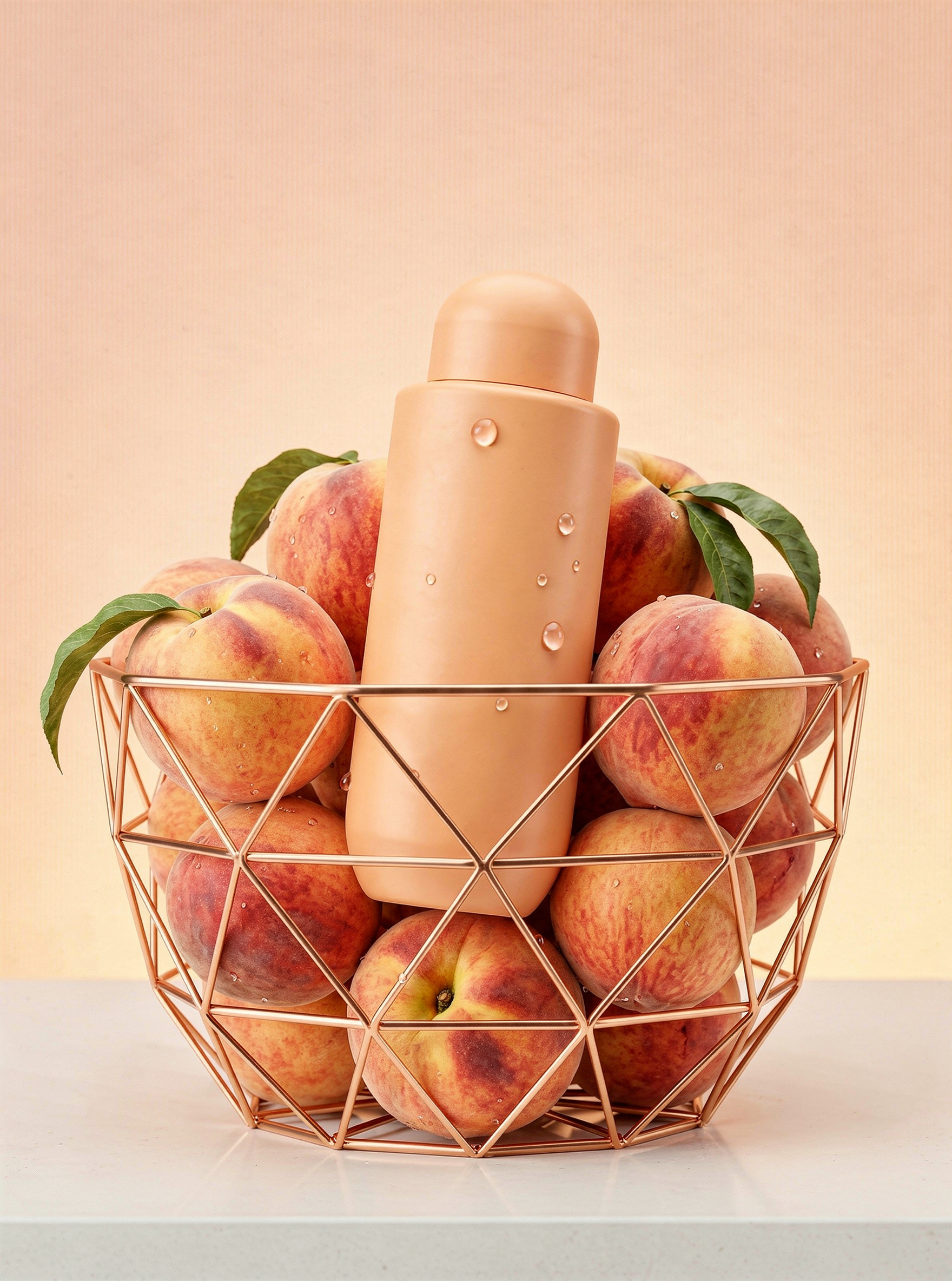
Keep “minimal high-end packshot composition,” “packshot framing,” and “arranged diagonally from the upper left toward the lower right” unchanged, then swap “lavender lip balm tube” and “large floating blueberries” for flavor pairs such as “peach lip balm tube with sliced peaches” or “coral lip balm tube with raspberries.” Replace “refined color-matched aesthetic” with “fruit, packaging, and background matched to the flavor palette” so every variation retains the same visual system.
Learn the technique behind this
- Why can't AI spell, and how do I get readable text in an image? — Older diffusion models had no character-level representation of text, so they produced letterform-shaped texture instead of words.
- Why does the model ignore parts of my prompt? — Ignored instructions are almost always conflicts, counts, or spatial relationships — three things current models handle badly — rather than the model failing to read you.
- How do I keep one consistent style across a whole set of images? — Style consistency is more achievable than character consistency because style lives in describable attributes.
Related prompts
Playful brunette beauty ad portrait
Red Lip Balm with Lychee Freshness
Premium wellness pouch with golden spices
Teal-Accented Bunny Toy Studio Portrait