Why this works
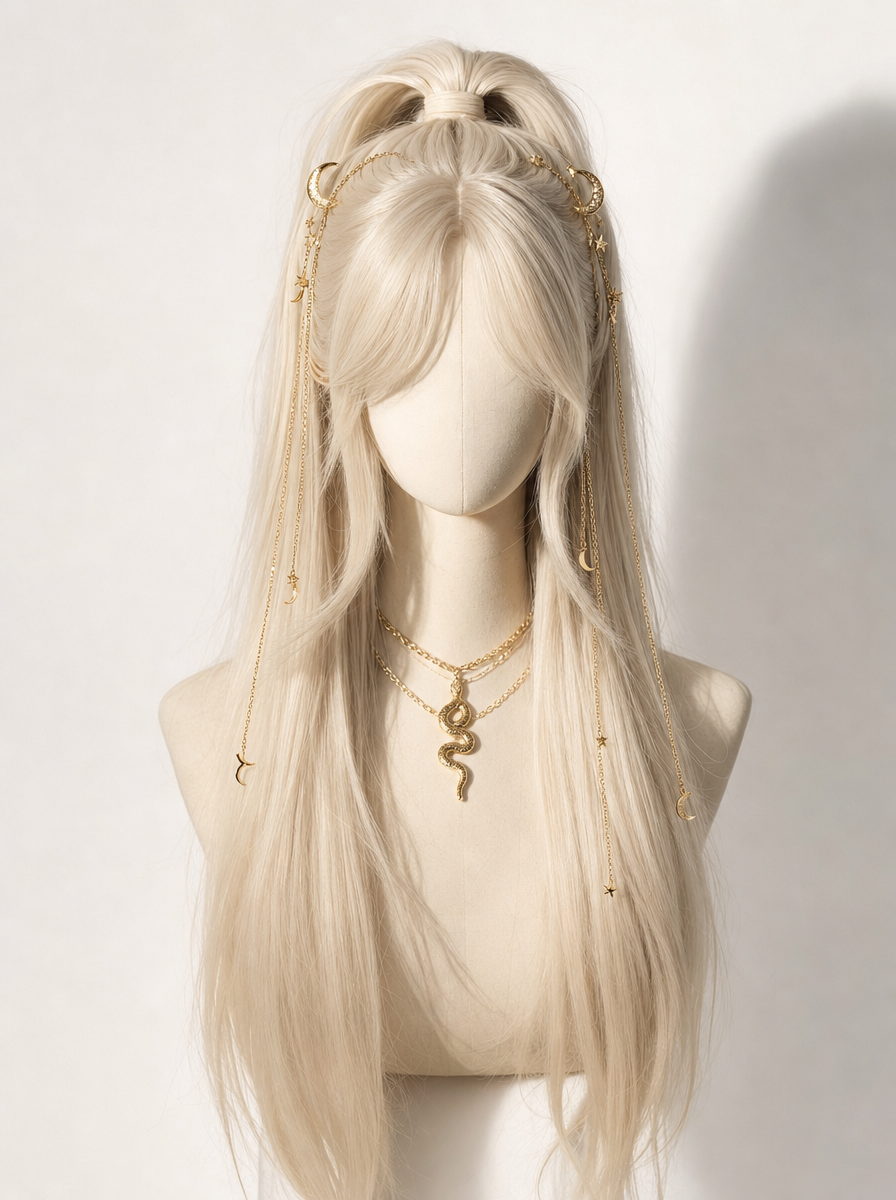
The phrase 'dramatic directional side lighting with deep shadows' is doing the heavy lifting on mood here - it's what turns a simple wig display into something dark and mysterious rather than a flat catalog shot, carving the platinum hair into planes of highlight and shadow. 'Faceless mannequin head' strips away any competing focal point, so the eye has nowhere to go but the 'gold chains and crescent moon-shaped charms woven through the strands,' which is why the gold reads as jewelry-store precious against the beige wig rather than costume-y. 'Plain white background' combined with 'straight-on centered product photography view' keeps the composition rigidly symmetrical, which lets the asymmetry of the 'wispy face-framing pieces' feel deliberate rather than messy. The 'luxury product photography style' tag is what keeps the shadows controlled and glossy instead of tipping into horror territory.
Learn the technique behind this
- Why can't AI spell, and how do I get readable text in an image? — Older diffusion models had no character-level representation of text, so they produced letterform-shaped texture instead of words.
- How should a prompt be structured, and does word order matter? — A prompt that behaves predictably names one subject first, then what it is doing, then where, then the light, then the lens or medium, then the style.
- Which aspect ratio should I use, and how does it change the image? — Aspect ratio determines what the model composes, not how it's cropped afterwards.
Related prompts
Playful brunette beauty ad portrait
Red Lip Balm with Lychee Freshness
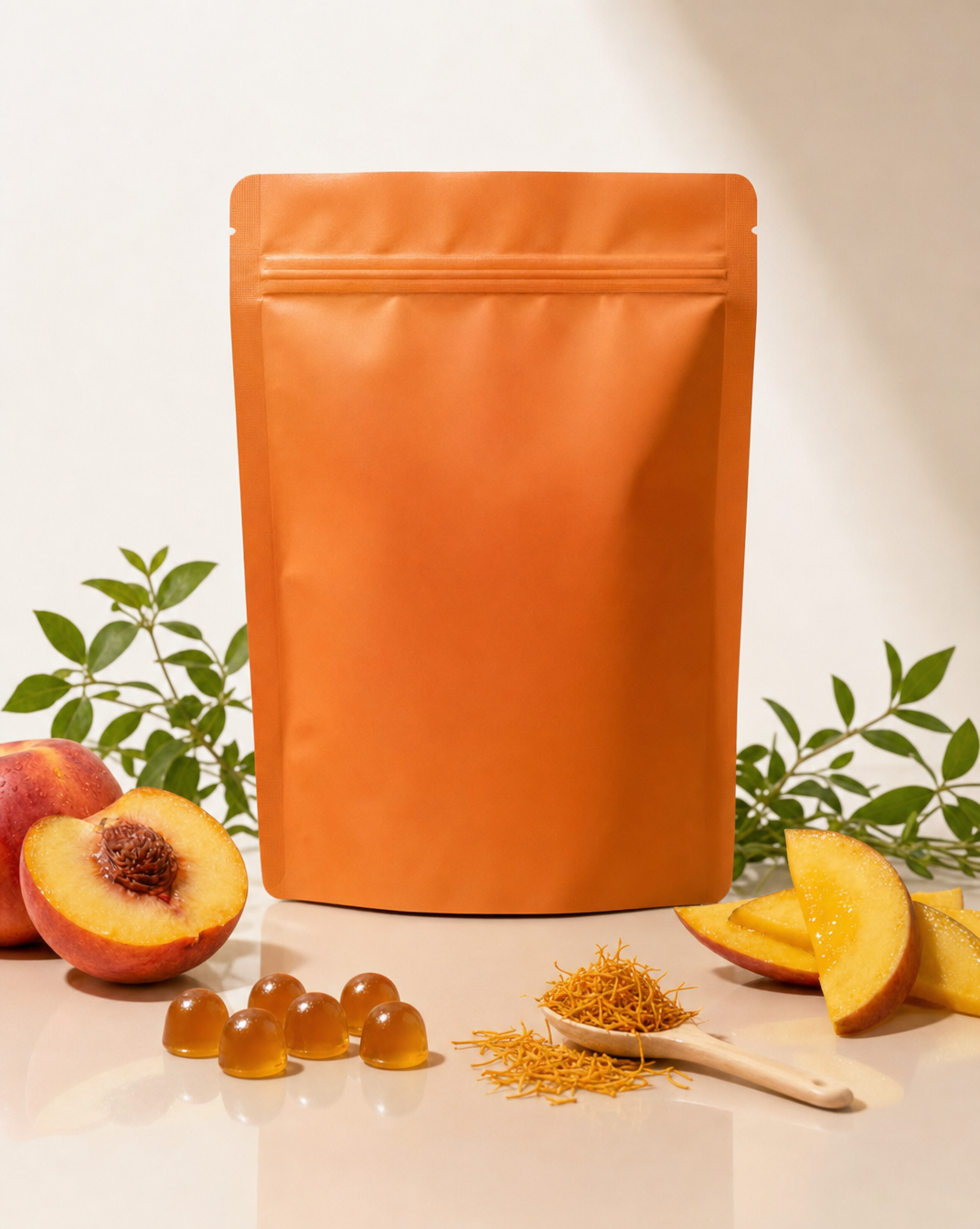
Premium wellness pouch with golden spices
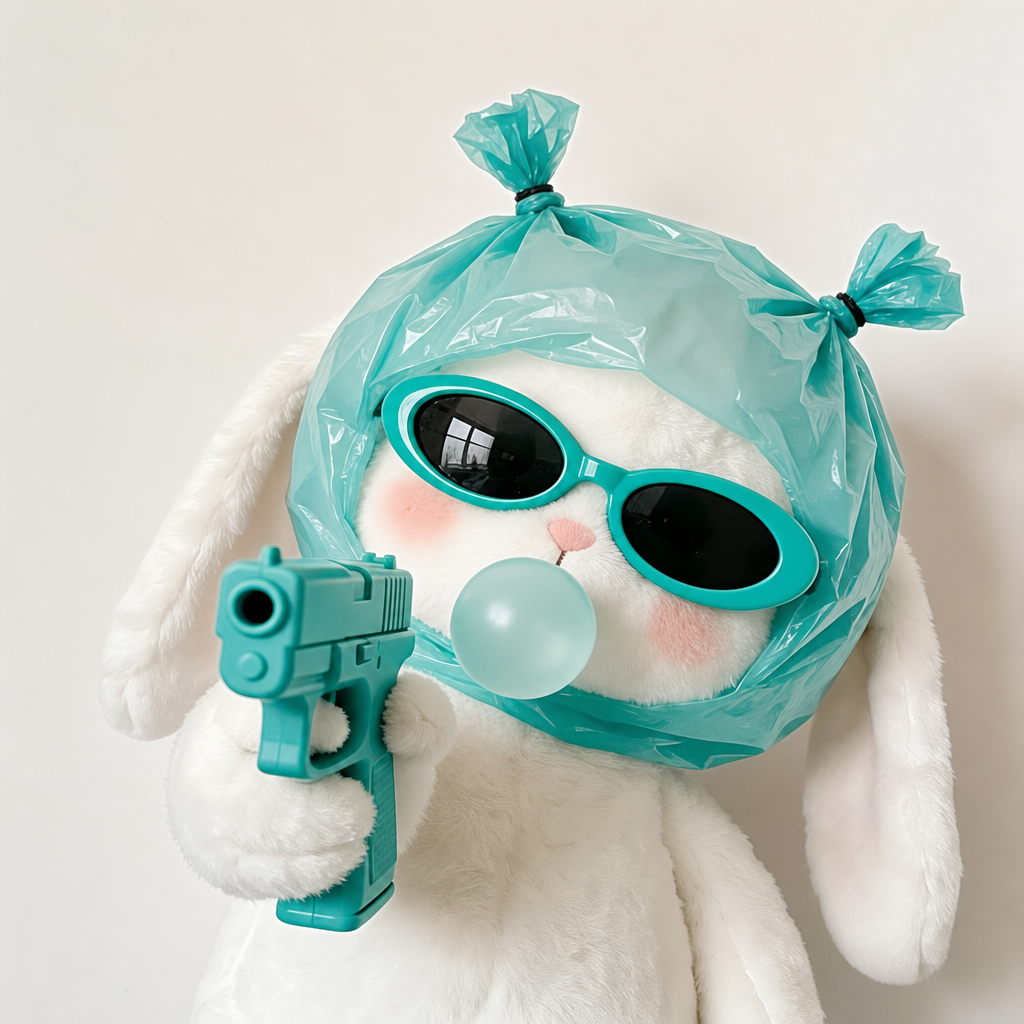
Teal-Accented Bunny Toy Studio Portrait