Why this works
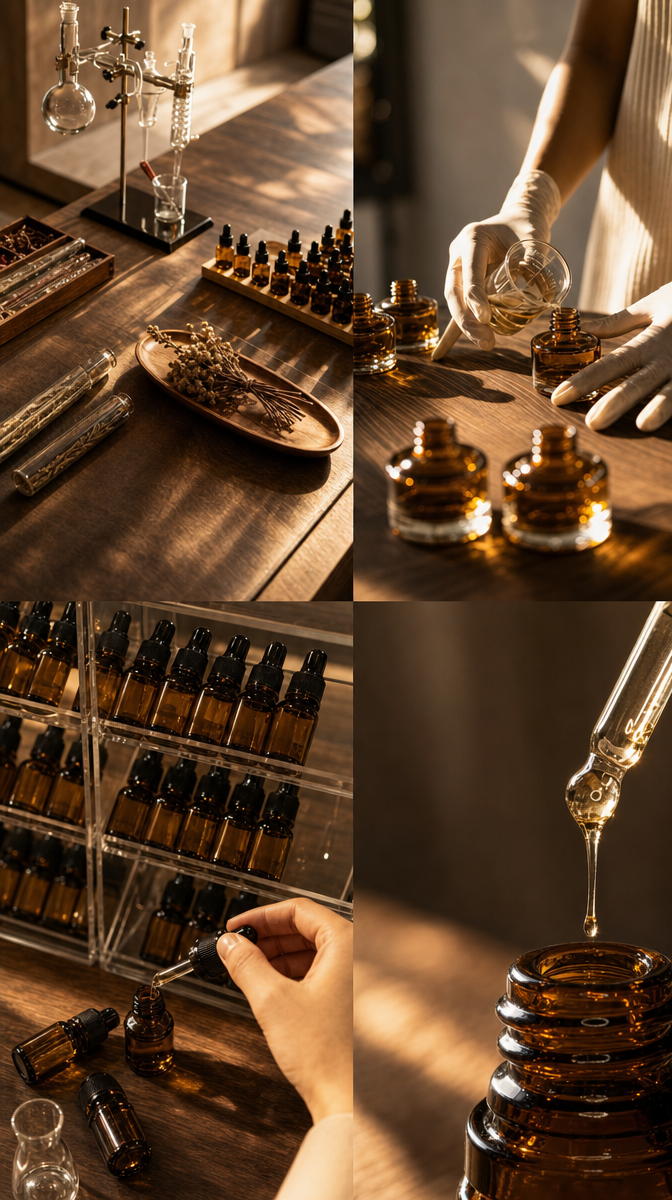
“Close-up tabletop framing” makes the pouring hands and amber jars the immediate focal point, while “shallow depth of field emphasizing glass reflections and hand activity” separates them from the arranged bottles and sample vials. The warm, refined mood comes specifically from “warm late-afternoon window light with soft shadows” and the “honey-gold, walnut-brown, and cream color palette,” reinforced by the darker walnut surface and amber glass. “Candid-action” keeps the scene feeling like a captured blending step rather than a static catalog arrangement, while “highly detailed glass reflections” supplies the polished product-photography finish.
FAQ
→How do I make the liquid pour and gloved hands more central and prominent?
Replace “close-up tabletop framing” with “extreme close-up centered on the gloved hands and pouring stream,” and change “shallow depth of field emphasizing glass reflections and hand activity” to “very shallow depth of field with the pouring stream, fingertips, and receiving jar in sharp focus.” Reduce “amber dropper bottles are still arranged neatly” to “only two softly blurred bottles at the rear edge” so the background does not compete.
→How do I shift this from warm artisanal luxury to a cooler clinical laboratory mood?
Replace “warm late-afternoon window light with soft shadows” with “cool diffuse overhead laboratory lighting with crisp controlled shadows,” and substitute “honey-gold, walnut-brown, and cream” with “white, pale gray, and muted blue.” Change “dark walnut tabletop” to “matte white laboratory work surface” and “refined artisanal studio atmosphere” to “sterile contemporary formulation laboratory.”
→How do I create a coordinated series of variations from this skincare scene?
Keep “photorealistic minimalist product photography,” “close-up tabletop framing,” and “highly detailed glass reflections” unchanged, then vary one controlled phrase per image: replace “slightly golden-tinted liquid” with “milky white serum,” “clear rose-infused oil,” or “pale green botanical extract.” Maintain “amber glass jars” and the same “warm late-afternoon window light” so the liquid color and ingredient action become the consistent series variables.
Learn the technique behind this
- Why can't AI spell, and how do I get readable text in an image? — Older diffusion models had no character-level representation of text, so they produced letterform-shaped texture instead of words.
- How should a prompt be structured, and does word order matter? — A prompt that behaves predictably names one subject first, then what it is doing, then where, then the light, then the lens or medium, then the style.
- Why does AI get hands and faces wrong, and how do I fix it? — Hands fail because they're small in frame, extremely variable in pose, and self-occluding — the model has less usable signal per pixel than for any other body part.
Related prompts
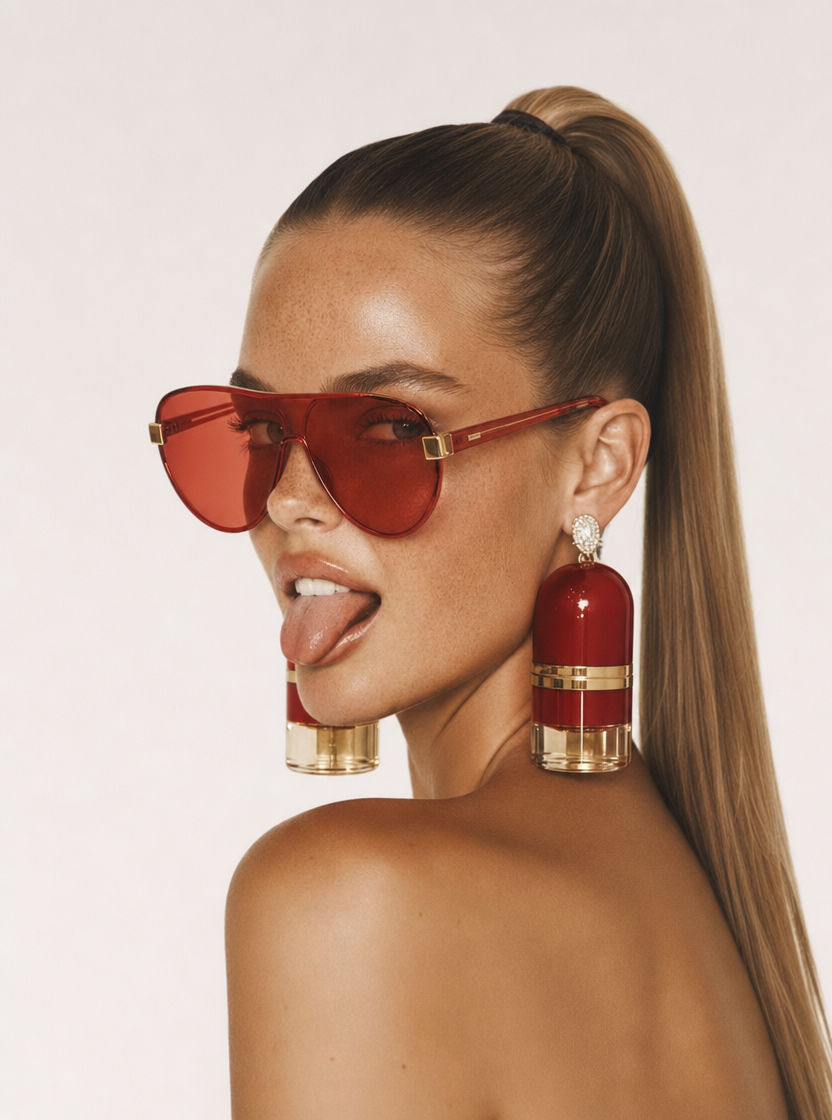
Playful brunette beauty ad portrait
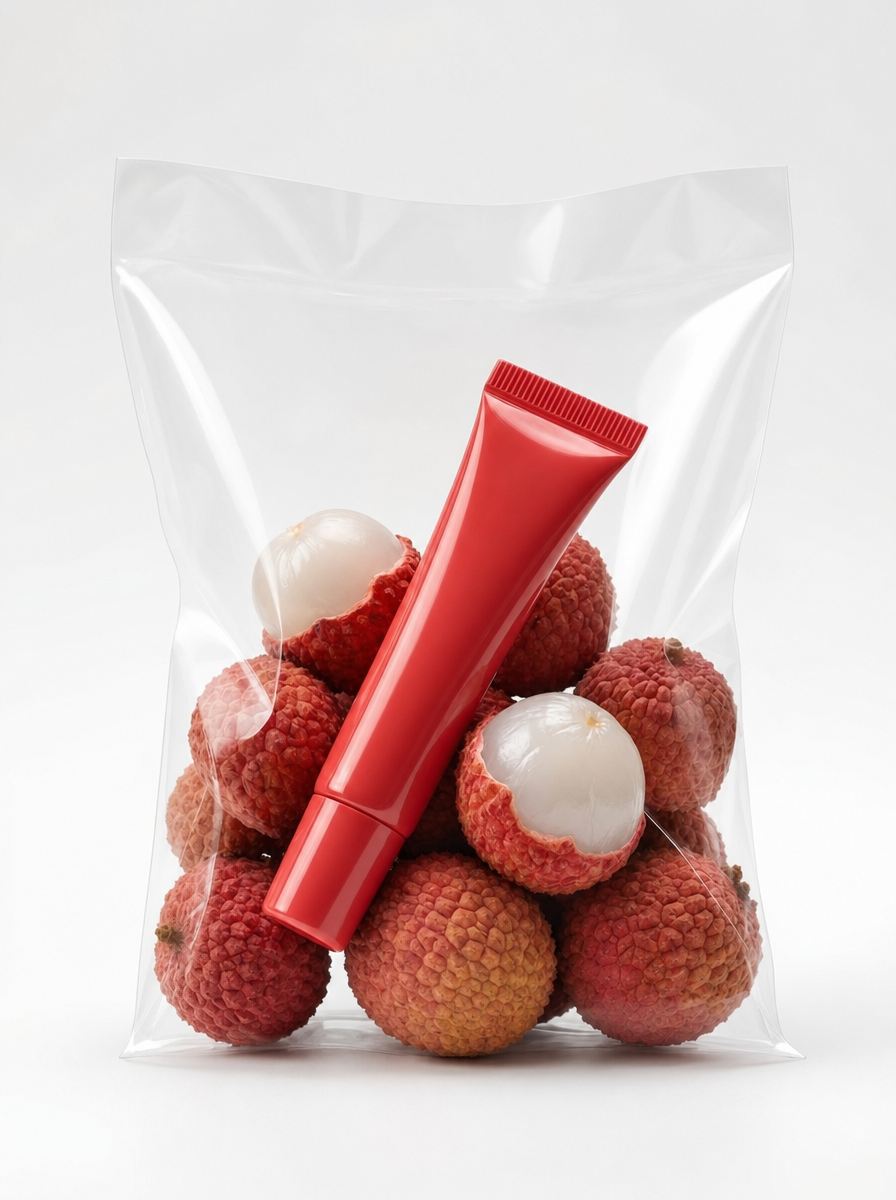
Red Lip Balm with Lychee Freshness
Premium wellness pouch with golden spices
Teal-Accented Bunny Toy Studio Portrait