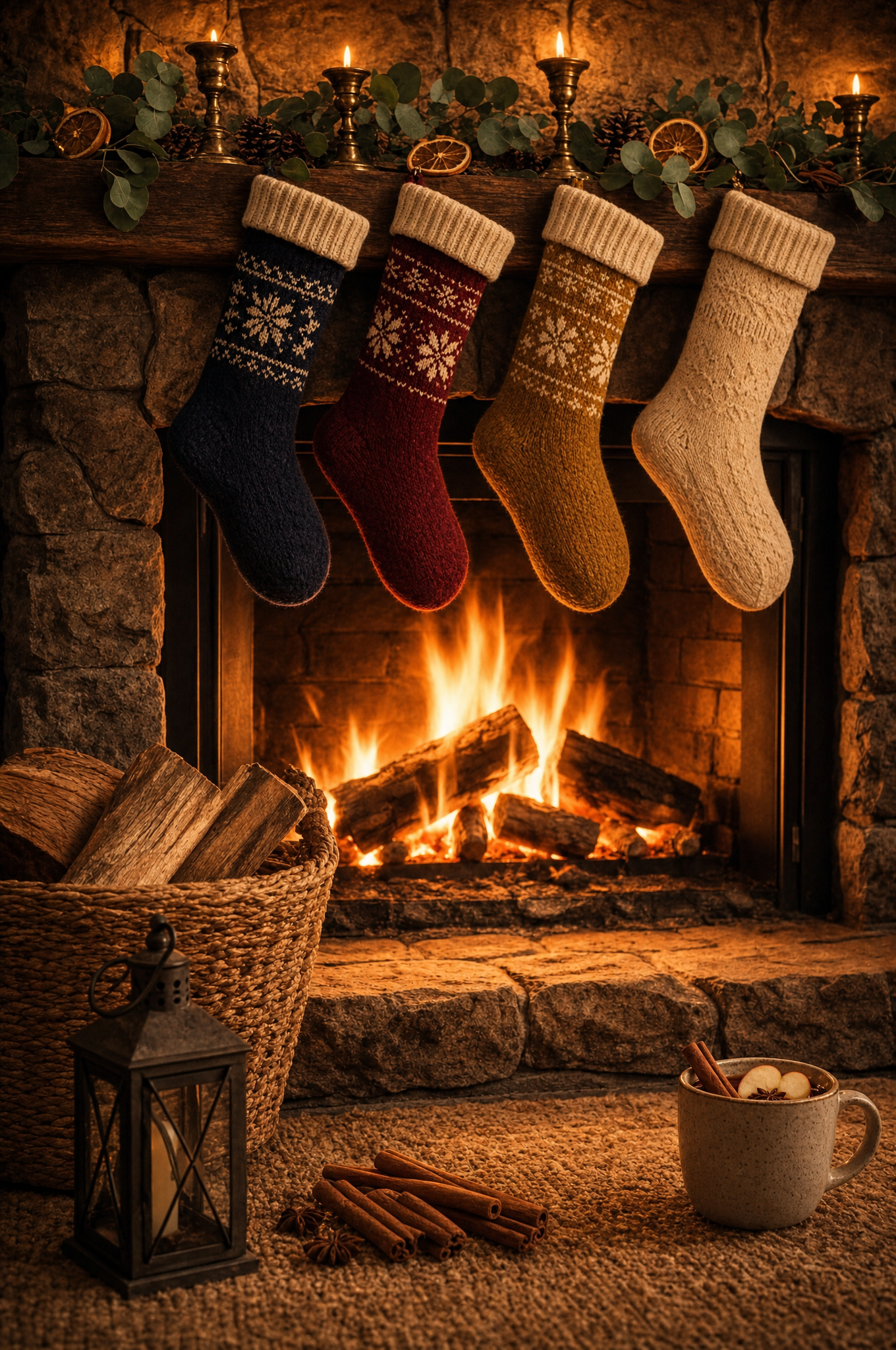
Why this works
The dominant orange, brown, and crimson palette comes straight from naming actual jewel-toned objects rather than describing a color scheme abstractly: 'burgundy' and 'gold' stockings, 'dried orange slices', 'cinnamon sticks', and 'spiced apple cider' all bake those hues into the scene before any lighting is applied. 'Warm amber firelight casting soft shadows on the stone' is what gives the image its glow and depth on the stone texture, not the palette instruction alone. The 'close, intimate framing emphasizing foreground mug and mantel details' phrase is the load-bearing camera direction that forces the centered composition and makes the cider mug read as the nearest, largest object, pulling the eye in before it travels up to the stockings and garland. Small litter details like 'scattered cinnamon sticks on the floor dusted with light snow' add the nostalgic, lived-in feel rather than a staged studio shot.
FAQ
→How do I make the fireplace itself the main subject instead of the mug in the foreground?
Drop 'close, intimate framing emphasizing foreground mug and mantel details' and replace it with something like 'wide framing centered on the stone fireplace and dancing flames, mug and mantel details visible but secondary.' Also move 'a steaming mug of spiced apple cider' later in the sentence so it reads as background dressing rather than the first-described object.
→How do I shift the mood from cozy nostalgic to something more dramatic or moody?
Swap 'intimate rustic winter holiday atmosphere' for 'dark, moody winter atmosphere' and change 'warm amber firelight casting soft shadows on the stone' to 'stark firelight with deep shadows and high contrast on the stone.' You could also trade 'rich warm and jewel-tone color palette' for 'muted, desaturated palette with pockets of ember-orange light' to pull it away from festive warmth.
→How do I build a series of variations from this same prompt?
Keep the structure but rotate the stocking colors and garland type each time, for example swap 'navy, burgundy, gold, and cream' for 'forest green, silver, rust, and ivory' and 'eucalyptus garland' for 'pine and holly garland.' You can also vary the foreground object by replacing 'a steaming mug of spiced apple cider with a cinnamon stick' with 'a plate of gingerbread cookies' or 'a wrapped gift box with ribbon' to get a new focal point while keeping the fireplace, lighting, and framing language identical.
Learn the technique behind this
- Why can't AI spell, and how do I get readable text in an image? — Older diffusion models had no character-level representation of text, so they produced letterform-shaped texture instead of words.
- How should a prompt be structured, and does word order matter? — A prompt that behaves predictably names one subject first, then what it is doing, then where, then the light, then the lens or medium, then the style.
- Do negative prompts work, and what should go in one? — Negative prompts work on models that support a separate negative conditioning channel — mainly Stable Diffusion and FLUX-family models.
Related prompts

Tabby Cat Reaching for Green Ornament Under Tree
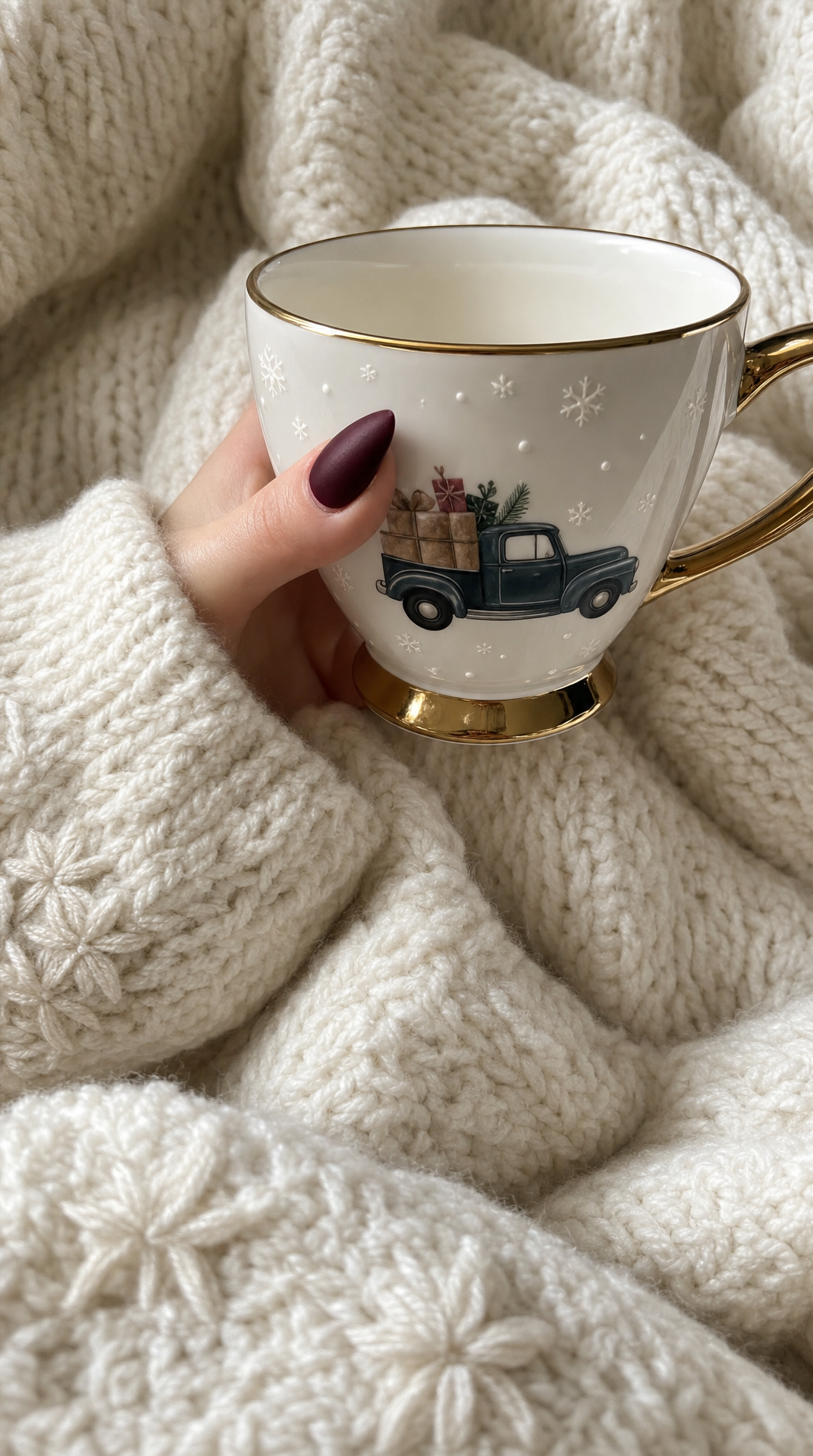
Burgundy nails holding festive snowflake teacup

Emerald jeweled Christmas ornament with blue gems
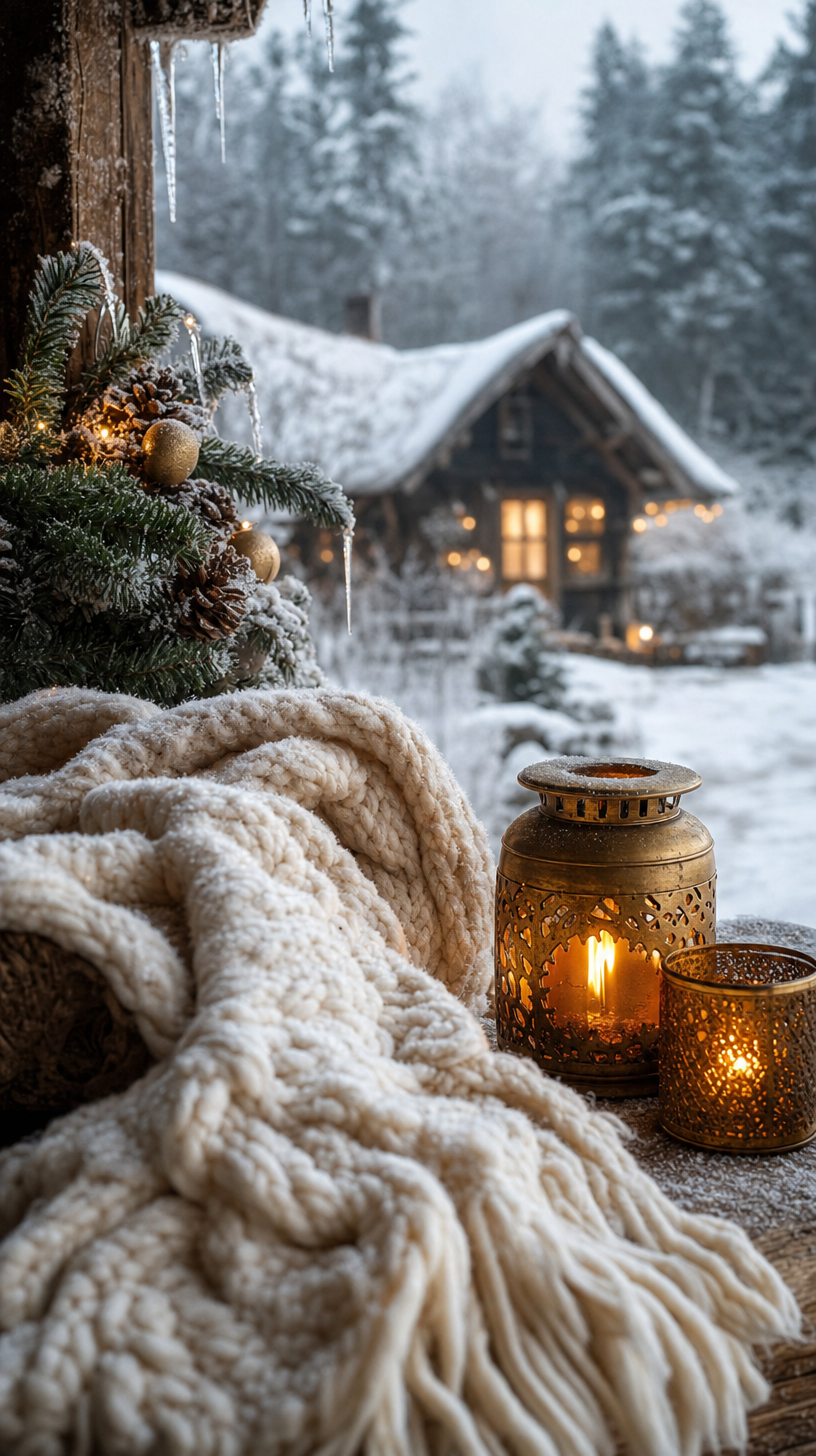
Winter warmth by a frosted woodland cottage