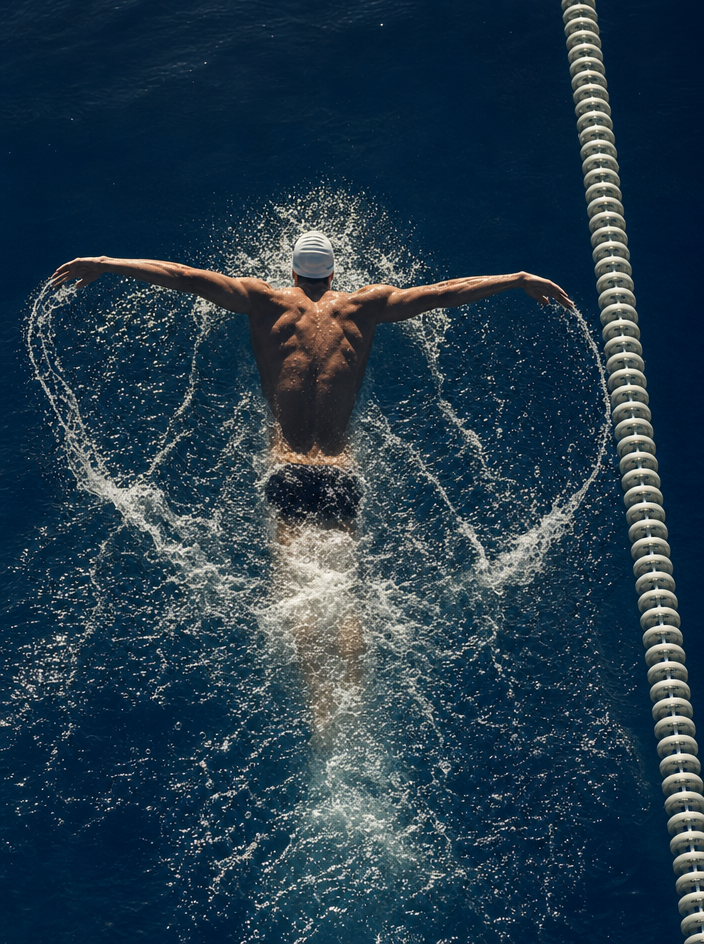
Why this works
The phrase “captured from directly above” and the “tightly” framed overhead view make the swimmer’s wide arm extension and forward body line the immediate compositional focus. “Smaller, tighter splash arcs,” “a clearer trailing wake,” and “individual droplets and ripples rendered realistically” load the image with directional motion while preserving crisp water detail. “Cool cinematic lighting” and “high contrast between the swimmer and the darker blue water” establish the intense dramatic tone, with the light swimmer and lane line explaining the image’s dominant white accent against the blue pool.
FAQ
→How do I make the swimmer more prominent in the frame?
Replace “framed tightly to emphasize the swimmer and water motion” with “extreme close overhead crop, swimmer filling most of the frame from fingertips to feet,” and add “the swimmer centered as the dominant subject.” Keep “captured from directly above” to preserve the top-down geometry.
→How do I make the image feel calmer and less dramatic?
Replace “dynamic, intense, dramatic action” with “quiet, meditative sports portrait,” and change “high contrast between the swimmer and the darker blue water” to “soft, even daylight with gentle tonal separation.” Replace “motion blur at the edges” with “full edge-to-edge sharpness” for a more controlled, serene result.
→How do I create a matching variation with a different swimmer and setting?
Keep the structural phrases “overhead,” “mid-stroke,” “arms stretched out wide,” and “clearer trailing wake,” then replace “competitive swimmer in an indoor pool” with a new subject and location such as “open-water distance swimmer crossing a calm turquoise lake.” Replace “a light-colored lane line runs along the pool edge” with “a faint buoy line recedes diagonally through the water,” while retaining “photorealistic sports photography” and the realistic droplet detail for series consistency.
Learn the technique behind this
- Why can't AI spell, and how do I get readable text in an image? — Older diffusion models had no character-level representation of text, so they produced letterform-shaped texture instead of words.
- How should a prompt be structured, and does word order matter? — A prompt that behaves predictably names one subject first, then what it is doing, then where, then the light, then the lens or medium, then the style.
- Do negative prompts work, and what should go in one? — Negative prompts work on models that support a separate negative conditioning channel — mainly Stable Diffusion and FLUX-family models.
Related prompts
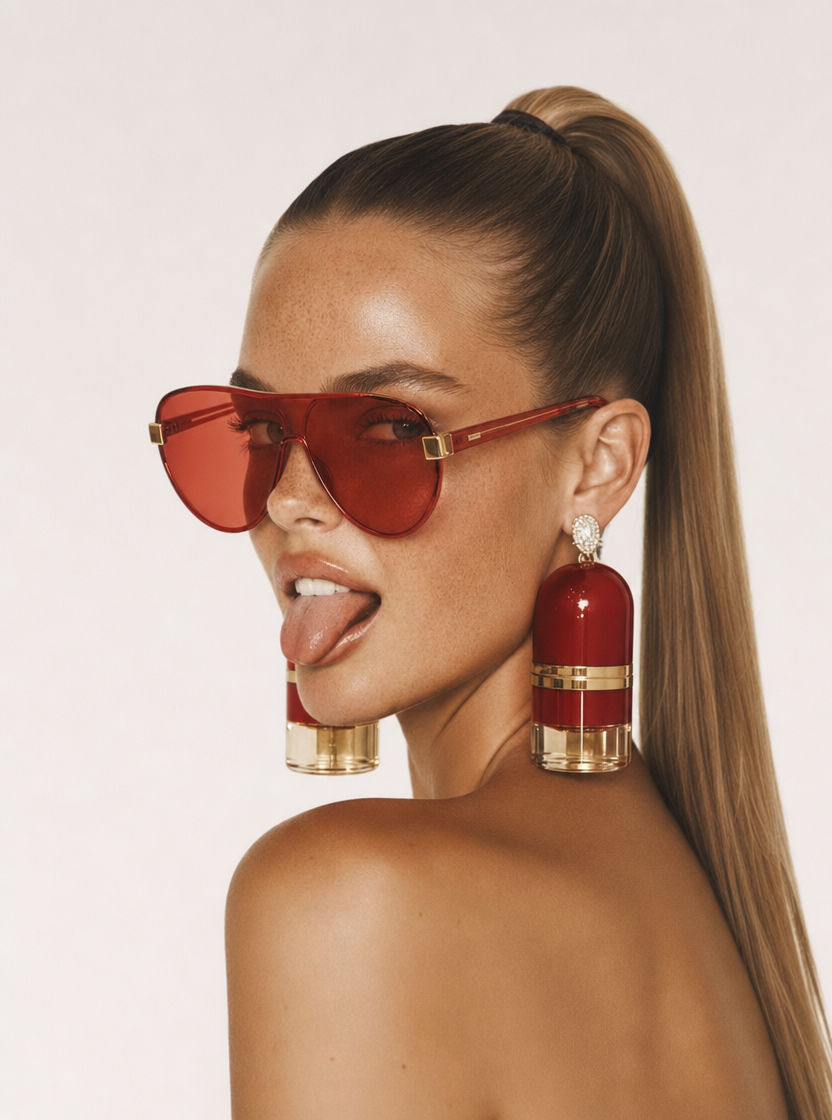
Playful brunette beauty ad portrait
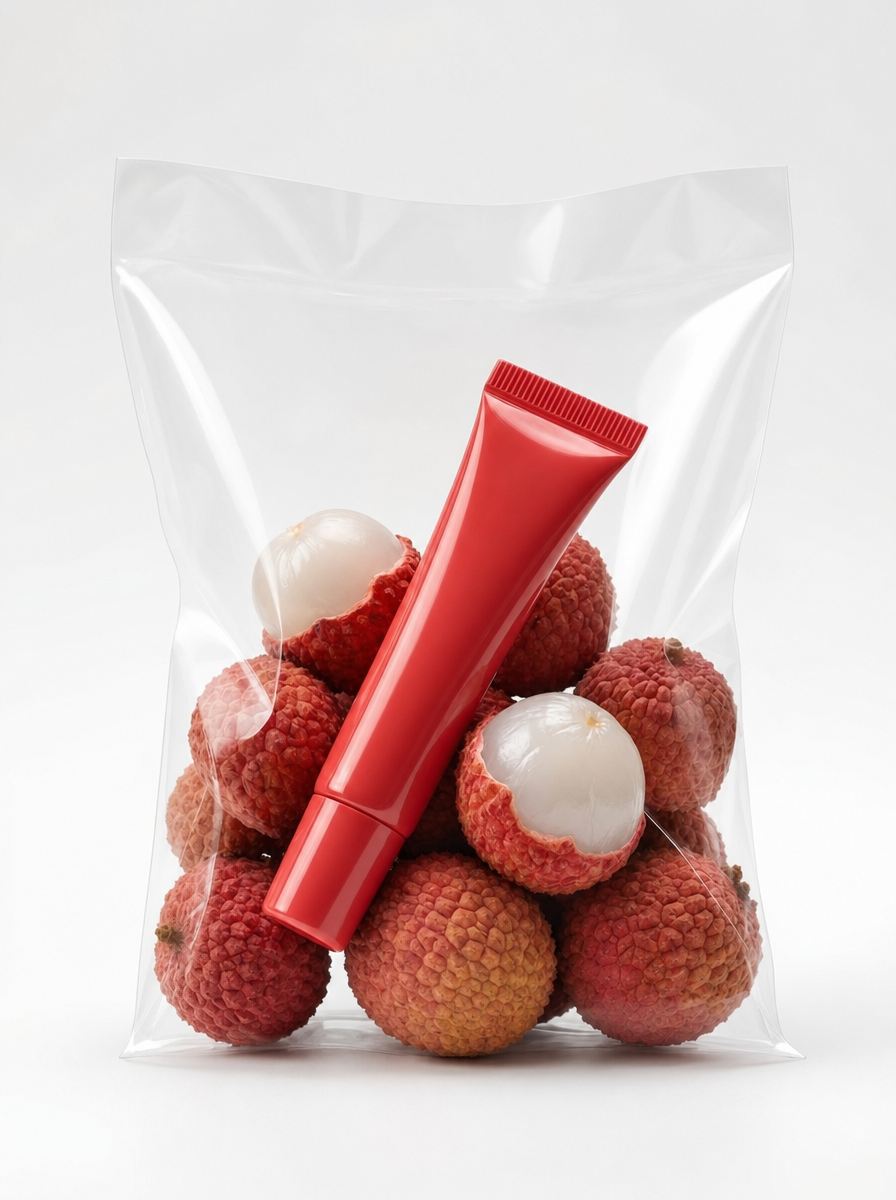
Red Lip Balm with Lychee Freshness
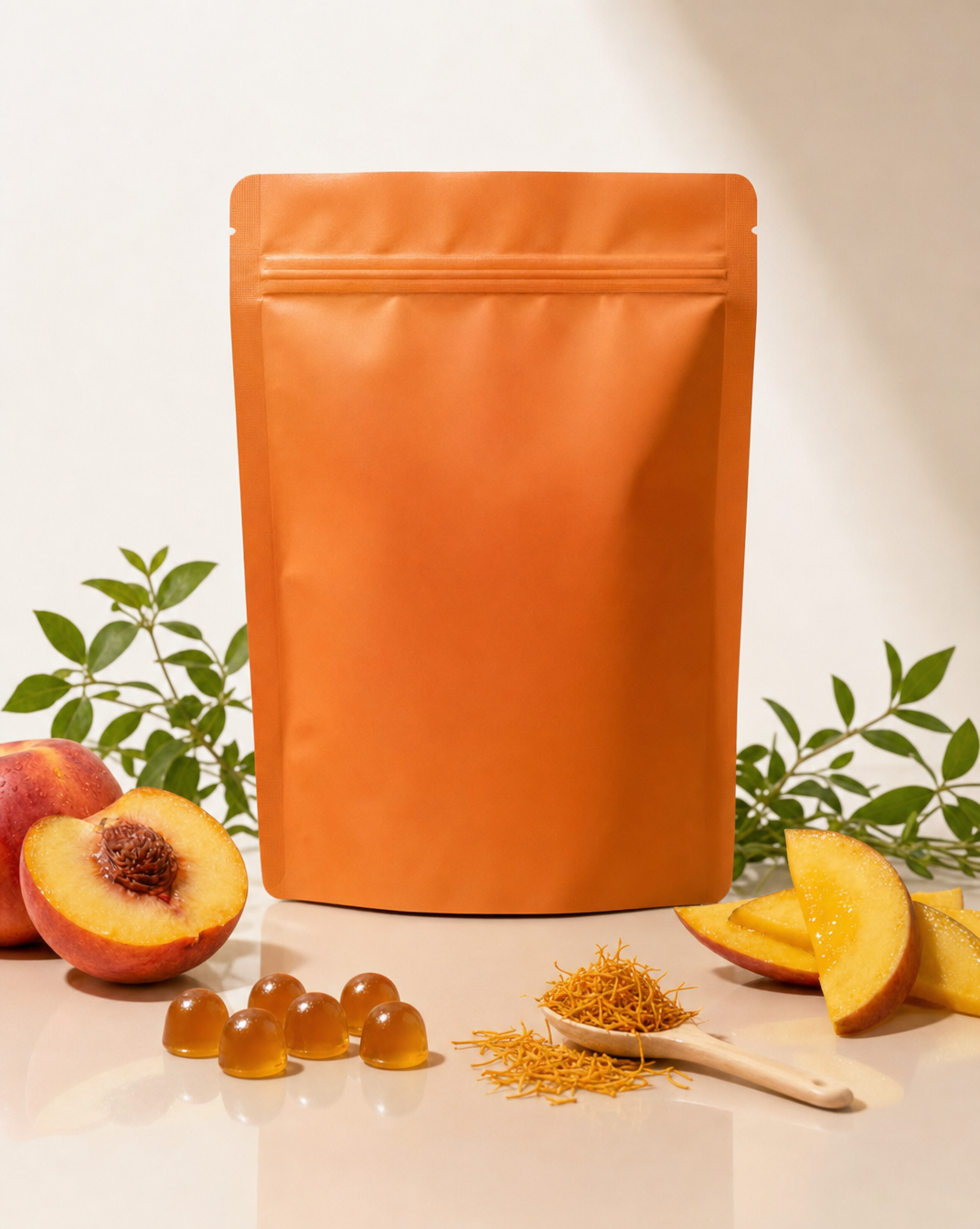
Premium wellness pouch with golden spices

Teal-Accented Bunny Toy Studio Portrait