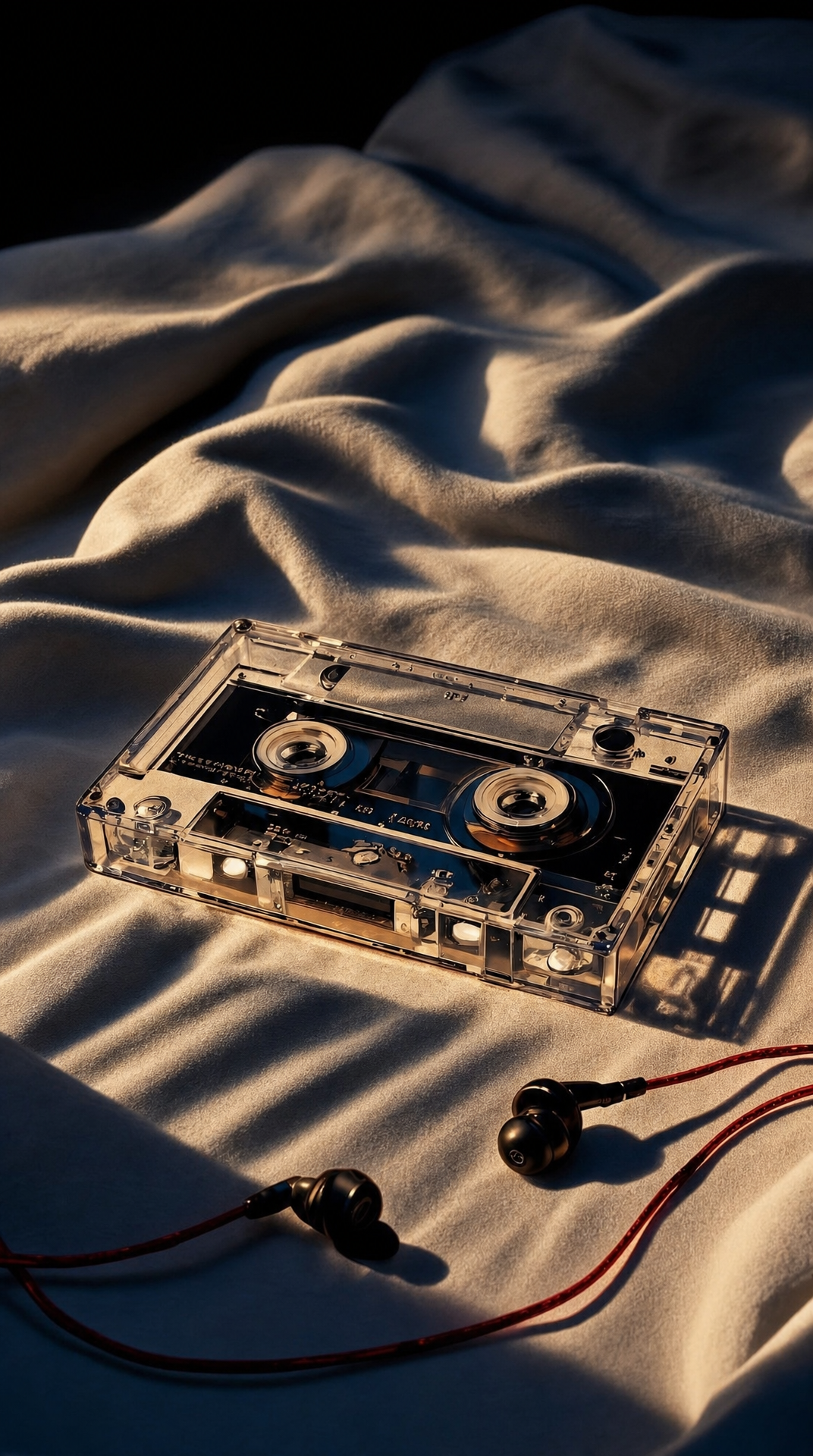
Why this works
The phrase “clear plastic cassette tape resting on rumpled light gray fabric, with red-wired earbuds beside it” establishes the overhead flatlay’s simple still-life structure, while the close-up framing keeps the cassette and cable details dominant. “Warm late-afternoon golden sunlight” supplies the brown warmth visible in the image, and “deep blue shadows” adds the darker, moody contrast behind the mostly black and brown palette. “Shallow depth of field” and “subtle dust and wear details” direct attention toward the cassette’s surface, making the nostalgia feel tactile rather than purely color-based.
FAQ
→How do I make the cassette more prominent than the earbuds?
Replace “with red-wired earbuds beside it” with “red-wired earbuds partially cropped at the far edge,” and add “cassette centered and occupying most of the frame.” Keep “close-up composition” but change “shallow depth of field” to “sharp focus across the entire cassette, earbuds softly blurred.”
→How do I shift this from warm nostalgia to a colder, more ominous mood?
Replace “warm late-afternoon golden sunlight” with “cold overcast window light,” and replace “deep blue shadows” with “hard charcoal shadows with faint cyan spill.” Change “nostalgic retro mood” to “quiet abandoned-media mood,” while retaining “realistic reflections across the cassette plastic” for stark highlights.
→How do I create a series of variations without losing the retro still-life identity?
Keep “photorealistic still life,” “clear plastic cassette tape,” “subtle dust and wear details,” and “close-up composition with shallow depth of field” fixed. For each variation, replace “rumpled light gray fabric” with settings such as “sun-faded wooden desk,” “scuffed bedroom carpet,” or “dusty record-store counter,” and swap “red-wired earbuds” for “coiled orange headphones,” “a handwritten track list,” or “a portable cassette player.”
Learn the technique behind this
- Why can't AI spell, and how do I get readable text in an image? — Older diffusion models had no character-level representation of text, so they produced letterform-shaped texture instead of words.
- How should a prompt be structured, and does word order matter? — A prompt that behaves predictably names one subject first, then what it is doing, then where, then the light, then the lens or medium, then the style.
- Do negative prompts work, and what should go in one? — Negative prompts work on models that support a separate negative conditioning channel — mainly Stable Diffusion and FLUX-family models.
Related prompts
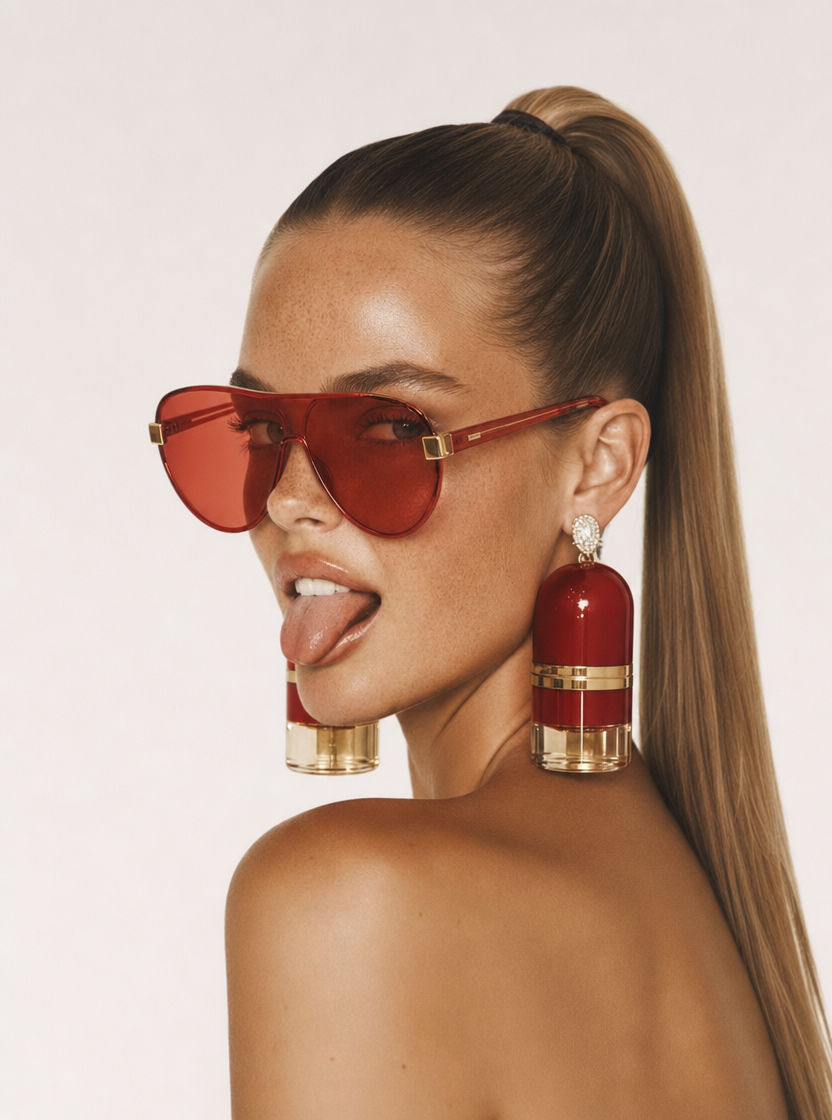
Playful brunette beauty ad portrait
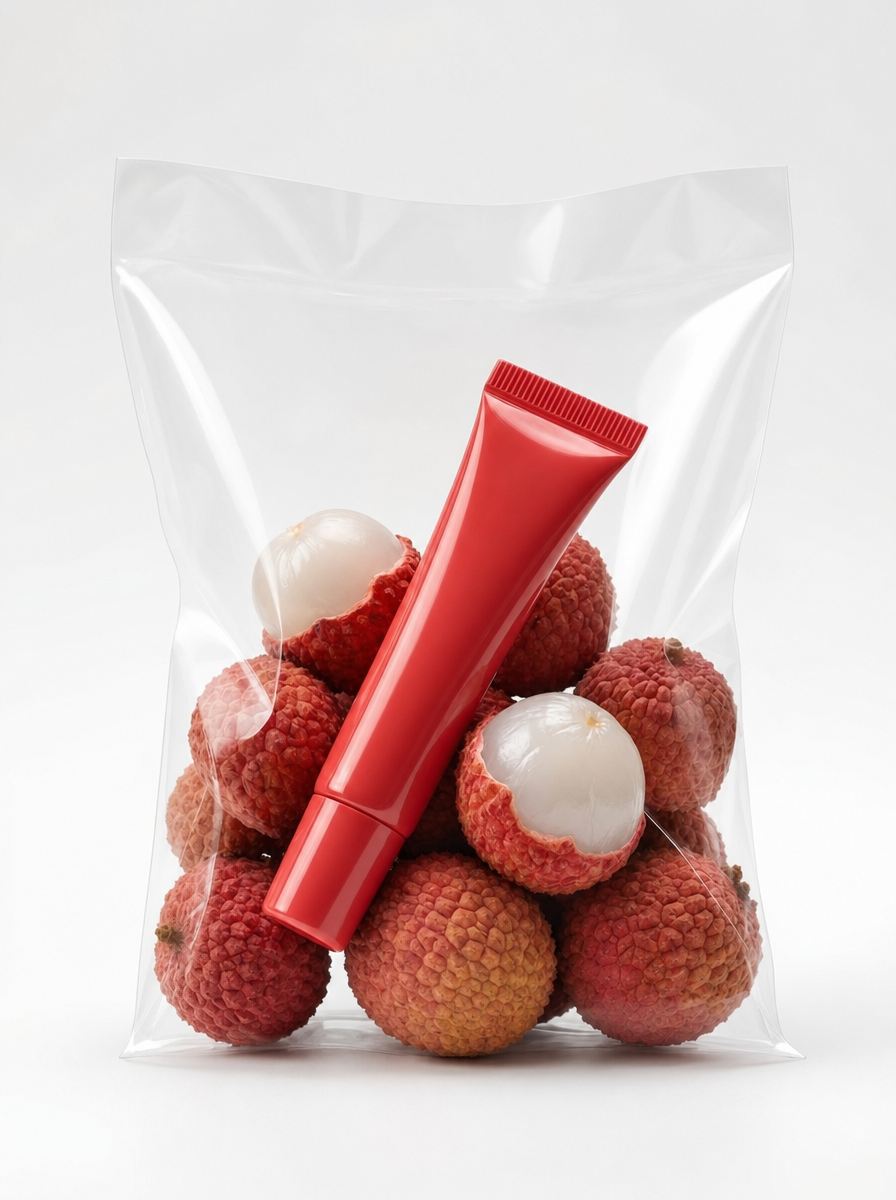
Red Lip Balm with Lychee Freshness

Premium wellness pouch with golden spices
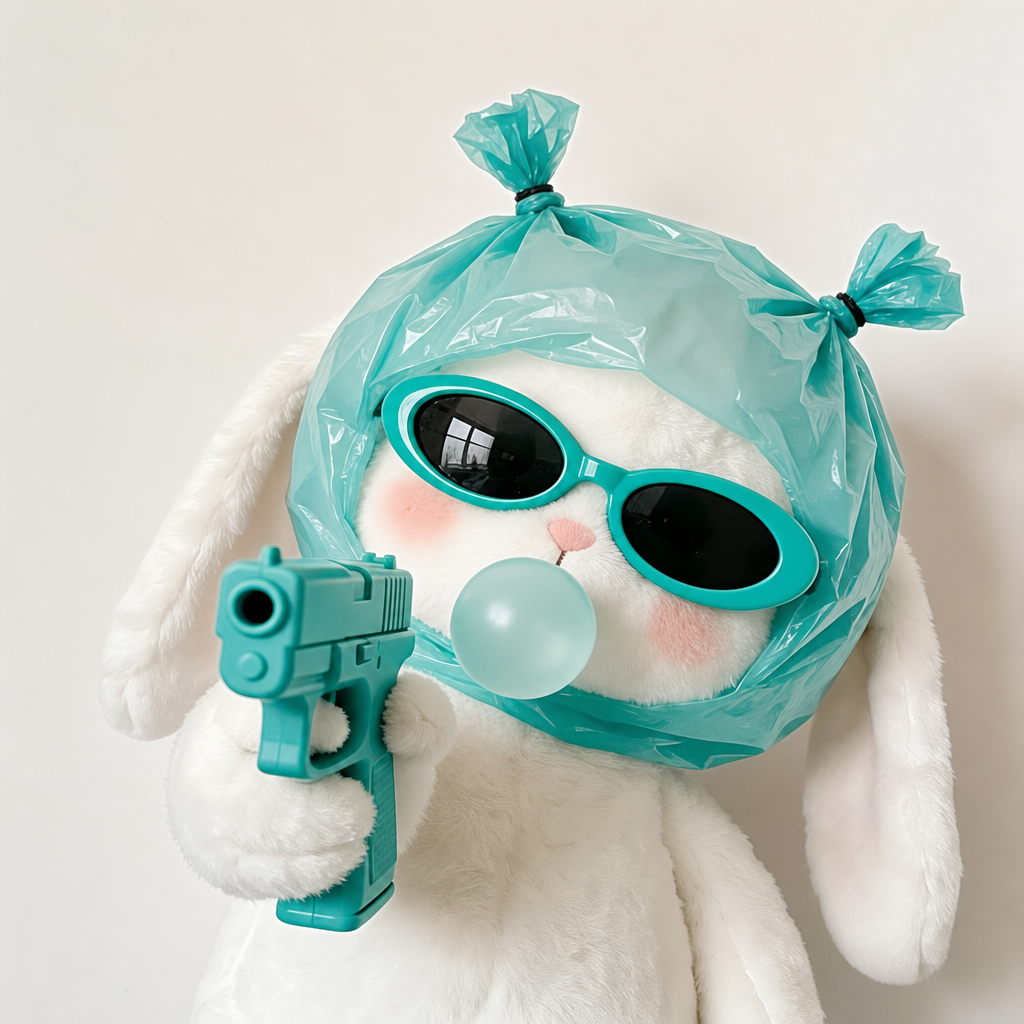
Teal-Accented Bunny Toy Studio Portrait